

If you regularly use heat to style your hair, then the term ‘heat damage’ isn’t unfamiliar to you. While there are definitely ways to prevent your hair from being damaged, that doesn’t mean it can’t sneak up on you. When that happens, some stylists recommend cutting off all the damaged hair and starting over. But what if you don’t want to do that? The good news is that you may not need to take such drastic measures to restore your hair’s health.
Identifying Heat-Damaged Hair
When you’re busy with everyday life, it can be easy to miss the signs that your hair isn’t as healthy as it should be. Though hot tools may be great for getting the style you want, they can also wear down the cuticles of your hair. The constant heat exposure can break down the cuticles that are supposed to protect the inner layers of your hair strands. With the protective layer gone, your hair’s inner cortex gets damaged and weakened. It’s this damage that affects the strength and elasticity of your hair.
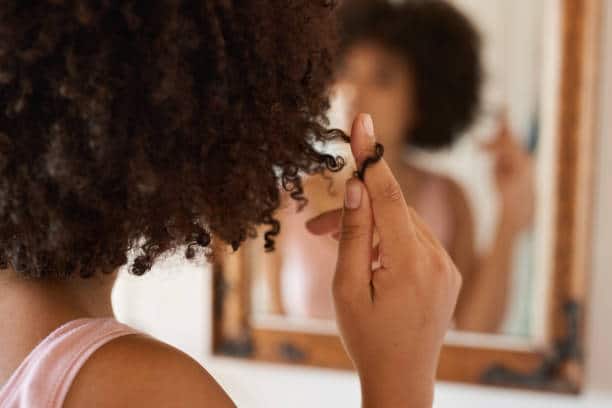
Once your hair is heat-damaged, you may see more breakage, split ends, flyaways, excessive hair shedding, and dryness. Your hair may also become dull, frizzy, rough, and faded. If your hair is naturally curly, you may notice that your curl pattern becomes looser or that your hair gets straighter. Additionally, your hair may have knots and tangles more often.
You May Also Like
RELATED: Heat-Trained Hair vs. Heat-Damaged: What’s the Difference?
How to Repair Your Heat-Damaged Hair
If you’ve noticed any of the signs that your hair is heat-damaged, then your repair process should start immediately, especially if you’re trying to avoid the big chop. The first thing you need to do is put all the hot tools away. That includes curling irons, flat irons, and blow dryers. When you wash your hair, it’s best to focus on air drying so there’s no damaging heat involved.
You May Also Like

Since you’re focused on rebuilding your hair, though, it’s important to note that air drying is more than simply letting your hair dry naturally. You need to use hair products that moisturize and nourish your hair while it air dries. When you do this, your hair will come out bouncy and frizz-free.
Another thing that can damage your hair while it’s trying to heal is chemicals. Whether that means straighteners or color treatments, they’re not doing your hair any favors. With your cuticle in bad shape, you don’t have the protection you usually would from what chemicals can do to your hair. It’s a good idea to avoid them altogether.
Repairing heat-damaged hair isn’t just about what you avoid, however. It’s also about what you do consistently. Your wash routine now needs to be designed around moisturizing, strengthening, and restoring your hair. When choosing hair products, opt for those that contain amino acids that will rebuild your hair and are meant to maintain moisture. A deep conditioning mask will also help. Instead of hot water, it’s best to use cool or room temperature water.
You also shouldn’t wash your hair more often than once or twice per week. You need to give your hair a chance to build up healthy oils before you remove them with products. When washing your hair, focus on gently scrubbing your scalp instead of scrunching everything together. After liberally applying your conditioner, take care to gently massage it into your hair. The product should tell you the best amount of time to leave it in and if there’s a heat-free deep conditioning option.
Apart from moisturizing your hair on wash days, you need to keep the moisture levels up all the time. That’s because your hair is more likely to break when it’s dry. This moisturization can take the form of leave-in conditioners, creams, or oils. It’s best to pick one or two that work for your hair type so you don’t weigh your hair down with products.
When it’s time to style your hair, it’s a good idea to choose styles that are gentle and don’t put too much stress on your damaged tresses. Your ends are likely to be the weakest part of damaged hair, so don’t pull on them too much. A wide-tooth comb can also help you to detangle your hair without worsening the damage. Once your hair is styled, you should wear a bonnet or sleep on a silk or satin pillowcase. Doing that helps your hair retain moisture while reducing the odds of there being friction between your hair and the pillow.
Finally, you need to have your hair trimmed every four to six weeks. Though you don’t want to cut all your hair off, that doesn’t mean you can avoid the scissors completely. Even while your hair is healing, damaged hair can have split ends. If you don’t remove these old ends, the damage can spread up your hair shaft and undo all your hard work. Removing them significantly improves your odds of getting your hair healthy again.

RELATED: 5 Reasons Your Hair Isn’t Growing in Protective Styles
Great Natural Moisturizers
As you’re looking for moisturizers that will work for your hair, don’t forget that some of the best ones are natural. Using natural moisturizers is a great way to repair heat-damaged hair while avoiding chemicals. You can use them after a wash or during your daily routine as long as your hair is wet. Honey and avocado oil are great for moisturizing hair. When applying these moisturizers, start at your ends and then work upwards. This is usually recommended because the ends of your hair are usually drier and more damaged. The amount of moisturizer you use can depend on how thick your hair is, its curliness, and your age.
Coconut oil not only moisturizes your hair, but it can also seep into your hair to decrease protein loss. Olive oil can replace some of the oils that your hair is missing while keeping your hair soft. It’s also good for maintaining a healthy scalp. Aloe vera isn’t only good for moisturizing your hair, but it also contains proteolytic enzymes that help to moisturize your hair and scalp. It can also build your hair’s sheen by locking in its natural oils.
Just like your hair didn’t become heat-damaged overnight, the healing process can take some time, too. It’s important to be patient while doing what’s best for your hair. If it feels like a lot to handle on your own, don’t be afraid to reach out to your stylist. They may be able to suggest some great hair products to help you on your journey.