
• Skip to main content
  • Skip to secondary menu
  • Skip to primary sidebar
  • Skip to footer
BlackDoctor.org
Where Wellness & Culture Connect

Where Wellness & Culture Connect

  • Conditions
  • Wellness
  • Lifestyle
  • Longevity
  • Clinical Trials
  • Resources
    • Generational Health
    • Top Blacks in Healthcare 2025
    • Hall Of Fame
    • Clinical Trials Resource Center
    • Obesity Resource Center
    • Cancer Resource Center
    • Wellness on the Yard
    • Immunocompromised Care
    • BDO Resource Library
  • Find A Doctor
  • BDO TV
Home / Health Conditions / Breast Cancer / Bodybuilder’s Battle With Breast Cancer: “Emotionally I Was a Wreck”

Bodybuilder’s Battle With Breast Cancer: “Emotionally I Was a Wreck”

breast cancer
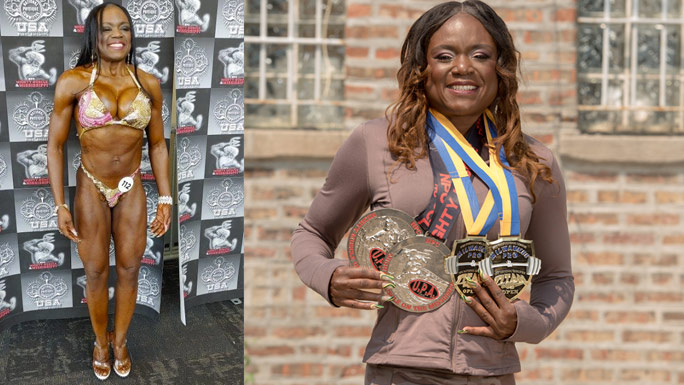
Photo via UChicago Medicine

Four years ago Erica Langley was training to pursue her dream of becoming a competitive bodybuilder, but the pandemic and an unexpected breast cancer diagnosis derailed her plans. 

After her workout, Langley discovered a peach pit-sized lump on her breast. She initially thought she had pulled a muscle while weightlifting. However, the lump didn’t go away so she decided to visit a neighborhood clinic. They immediately sent her to get a mammogram.

RELATED: 5 Mammogram Myths Every Woman Should Know

Her diagnosis

The mammogram detected HER2-positive cancer in two locations in her left breast.

You May Also Like
Psoriatic Arthritis Can Feel Beyond Your Control. Consider a Different Direction. Learn More Here. Psoriatic Arthritis Can Feel Beyond Your Control. Consider a Different Direction. Learn More Here.

“I was scared,” Langley shares. At the time she was five weeks away from her first competition. “And that’s when I really depended on the support of my family and close friends because just emotionally I was a wreck.”

At the time Langley was only in her late 30s so her breast cancer team at UChicago Medicine devised an aggressive and comprehensive treatment plan. They also sent her to UChicago Medicine’s Cancer Risk and Prevention Clinic for genetic testing.

“When a young woman gets breast cancer, we always want to ask why. For Erica, having cancer at a young age signaled that she needed to undergo genetic testing. And it turns out, she had a well-known mutation that puts her at higher risk for breast cancer and other cancers,” University of Chicago Medicine oncologist Olwen Hahn, MD shares.

You May Also Like
Get GLP-1s Delivered to You As Low As $99/Month! Get GLP-1s Delivered to You As Low As $99/Month!

That mutation was the p53 gene. Although the mutation can be inherited, it’s unclear if Langley inherited it because there is no history of breast cancer in her family. Additionally, genetic testing showed that neither of her parents had the mutations. 

Determined to rule out any other forms of cancer, Langley’s care team ordered several cancer screening tests, including a colonoscopy and an upper endoscopy to examine the lining of the esophagus, stomach and duodenum, as well as extensive blood work. All came back negative for cancer.

RELATED: 6 Things to Consider Before Getting Breast Reconstruction

Weighing her treatment options

Because Langley was relatively young, she met with UChicago Medicine’s oncofertility specialists to explore her options for having a biological child in the future because there was a risk that chemotherapy could damage her ovaries or affect her reproductive health.

Ultimately, Langely underwent 20 weeks of chemotherapy, a double mastectomy in April 2019, intravenous targeted therapy, and reconstructive surgery on both breasts.

Despite all of it Langely kept a positive attitude. 

“Even when she was faced with a lot of challenges ahead of her, she maintained the most positive outlook, “plastic and reconstructive surgeon Rebecca Garza, MD says.

For her surgery, Garza had one goal: to make sure Langely felt like her body was restored and complete. It’s the same goal she has for every patient. To accomplish this, Garza put silicone implants over Langley’s pectoral muscles rather than under them as a method to preserve her strength and appearance as a bodybuilder and enhance the physique she needed for competitions.

“These breasts look good! I wanted them to be even bigger than what I got!” Langely says of Garza’s work while laughing. “After everything I went through, they were my consolation prize.”

breast cancer
Photo via UChicago Medicine

Day 1: Just Diagnosed with Breast Cancer

Her return to the gym

After successfully completing one obstacle, Langley’s eyes were on the next: returning to her dream of being a bodybuilder. 

“I can accept, you know, giving something my all and not quite accomplishing what I set out to do, but I can’t accept not trying,” Langley adds.

In November 2020, she returned to the gym. She would show up and train hard for 90 minutes, four times a week after a long and stressful workday as the manager of a microbiology lab, according to Daniel “Bolo” Young, her trainer at ChiTown Fitness in Chicago’s Melrose Park.

As to be expected after a serious bout with breast cancer, Langely would get tired easily. She could barely do a 55-pound squat. However, in just six months, Langley had worked her way up to a 275-pound squat and was on a strict low-carb, high-protein diet that included eating plain chicken six times a day, which didn’t come without her bargaining with her trainer to change the diet.

“Are you eating for taste, or are you eating for a goal?” Bolo asked Langely who decided to stick the diet out.

Langley also tried taking bodybuilding supplements, but most were ruled out by Hahn after she researched how they’d interact with her estrogen-blocking cancer drug, Tamoxifen.

In preparation for her competition, Langley decided to take a few of the supplements that had the least risk much to Hahn’s concern.

“It’s not necessarily something I recommend for my patients, but I knew this competition was important to her, and it was important in her recovery. After she and I had a discussion, she accepted that there was a risk involved in taking these supplements,” Hahn, who insisted on closely monitoring her liver function with extra tests, shares.

Langley was adamant about using supplements due to her fear that as a natural athlete that doesn’t use steroids, she wouldn’t be able to compete against other female bodybuilders who are enhanced by steroids.

However, as competition day arrived, that fear was diminished. Langley was just as muscular as her competitors and won more medals than she could have imagined. In May 2021, after six months of intense training, she took home a 1st, 2nd and 3rd place medal.

Langley gives all the credit to her parents, Isaac and Alisa Langley; her fiancé, Vermine A. Matthews; and his parents, Vermine D. and Shirley Matthews, for showing love and support throughout her treatment and training. 

She also credits her trainer Bolo, who she calls “a true inspiration and hero.” Bolo has no doubt that Langley has a bright future in bodybuilding.

“She knew she was going to get there, even if the journey was going to be difficult,” Garza shares. “The most important thing is that her cancer is treated and that she’s at decreased risk for another cancer. But she worked really hard to be even better than she was when she started this journey.”

Langley hopes her story will inspire and encourage others. 

“Don’t be naive,” she says. “Prior to this, I was working out, I didn’t abuse my body, I didn’t drink excessively or do drugs. It can happen to anyone. I had to rely heavily on my faith and my family. Without those two things, I couldn’t have made it through. There were times I wanted to cry and go into a shell and my family would say, ‘OK, you have five minutes. Do what you need to do’ — At the end of the five minutes, we’ll focus on the positive. That’s what really helped to push me through.”

RELATED: 5 Commonly Overlooked Signs of Breast Cancer

What is HER2-positive breast cancer?

According to the American Cancer Society, “HER2 is a protein that helps breast cancer cells grow quickly. Breast cancer cells with higher than normal levels of HER2 are called HER2-positive. These cancers tend to grow and spread faster than breast cancers that are HER2-negative, but are much more likely to respond to treatment with drugs that target the HER2 protein.”

Because a lump in the breast is the most common symptom of breast cancer, the best way to detect breast cancer is through self-exams and mammograms. You should also weigh your risk factors, which will help you determine if you are at a higher risk of developing breast cancer. If you have a family history of breast cancer, talk with your doctor about whether you should get genetic testing. Lastly, watch out for common breast cancer symptoms. These include:

  • Breast swelling
  • A change in its shape
  • Skin irritation or dimpling
  • Pain in the breast or nipple
  • Redness or thickness of the nipple or breast skin
  • Discharge from the nipple (not breast milk)

If you notice any of these symptoms, contact your doctor.

By Jasmine Smith | Published January 27, 2022

January 27, 2022 by Jasmine Smith

The Latest In Breast Cancer

Why I Did a Trial for TNBC: "It Very Likely Saved And Extended My Life"

Why I Did Clinical Trials for TNBC: “It Very Likely Saved And Extended My Life”

My cancer journey began in 2015 during a routine mammogram that revealed a mass in my breast, which turned out to be Triple-Negative Breast Cancer (TNBC), a rare and aggressive form of the disease. In my 50s and coming from read more about Why I Did Clinical Trials for TNBC: “It Very Likely Saved And Extended My Life”
dense breasts

Have Dense Breasts? Here’s Why a Standard Mammogram Might Not Be Enough

Breast cancer is the most common cancer in women globally. In the United States, about one in eight women will be diagnosed with breast cancer at some point in their lives.  Breast cancer screenings—such as self-exams and mammograms—are crucial for read more about Have Dense Breasts? Here’s Why a Standard Mammogram Might Not Be Enough
Understanding Breast Cancer Clinical Trials for Black Women

Understanding Breast Cancer Clinical Trials for Black Women

Breast cancer is a type of cancer that starts with the growth of cells within the breast tissue.  Several types of breast cancer exist, including:  Ductal carcinoma in situ Invasive breast cancer Triple-negative breast cancer Inflammatory breast cancer Paget disease read more about Understanding Breast Cancer Clinical Trials for Black Women
inflammatory breast cancer

Inflammatory Breast Cancer Symptoms: What Every Woman Should Know

  Inflammatory breast cancer is rare, but it’s aggressive and fast-growing. It can show up suddenly, progress quickly, and may be harder to detect early than other forms of breast cancer. That's why knowing the inflammatory breast cancer symptoms can read more about Inflammatory Breast Cancer Symptoms: What Every Woman Should Know
breast cancer

Fewer Black Women Are Dying from Breast Cancer—Here’s Why

The numbers are stark: Black women are about 40 percent more likely to die from breast cancer compared to white women, even though they are diagnosed at similar rates. This isn't just a statistic; it represents systemic barriers that Susan read more about Fewer Black Women Are Dying from Breast Cancer—Here’s Why
This Black Woman Went From Stage 3 Breast Cancer to Clinical Trials Advocate

This Black Woman Went From Stage 3 Breast Cancer to Clinical Trials Advocate

Javonne Williams' life took an unexpected turn in 2022 when she received a devastating diagnosis: stage three breast cancer. The news was a shock, but Williams faced her diagnosis with determination. She underwent an aggressive treatment plan, including a double read more about This Black Woman Went From Stage 3 Breast Cancer to Clinical Trials Advocate

Primary Sidebar

Subscribe to our newsletter

Icon

Caring for You, Too - Caregiver Workbook

1 file(s) 297 KB
Download

Trending Articles

7 Things You Should Never Do To Lose Weight!

lose weight

12 Reasons Why It Feels Like Your Heart Rate Won’t Slow Down

congestive heart failure symptoms

What Is Congestive Heart Failure?

congestive heart failure

5 Reasons Your Hair Texture Changes

hair texture

4 Ways Black Men Show Signs of Anxiety

signs of anxiety
Find a Culturally Sensitive Doctor

Footer

Where Wellness & Culture Connect

BDO is the world’s largest and most comprehensive online health resource specifically targeted to African Americans. BDO understands that the uniqueness of Black culture - our heritage and our traditions - plays a role in our health. BDO gives you access to innovative new approaches to the health information you need in everyday language so you can break through the disparities, gain control and live your life to its fullest.

Connect With Us

Resource Centers

  • Top Blacks in Healthcare
  • Clinical Trials
  • Wellness on the Yard
  • Cancer
  • Immunocompromised Care
  • About Us
  • Privacy Policy
  • Cookie Policy
  • Terms of Service
  • Careers
  • Advertise With Us
  • Advertising & Sponsorship Policy
  • Daily Vitamina
  • TBH

Copyright © 2025, Black Doctor, Inc. All rights reserved.