• Skip to main content
  • Skip to secondary menu
  • Skip to primary sidebar
  • Skip to footer
BlackDoctor.org
Where Wellness & Culture Connect

Where Wellness & Culture Connect

  • Conditions
  • Wellness
  • Lifestyle
  • Longevity
  • Clinical Trials
  • Resources
    • Generational Health
    • Top Blacks in Healthcare 2025
    • Hall Of Fame
    • Clinical Trials Resource Center
    • Obesity Resource Center
    • Cancer Resource Center
    • Wellness on the Yard
    • Immunocompromised Care
    • BDO Resource Library
  • Find A Doctor
  • BDO TV
Home / Health Conditions / Clinical Trials / This Black Woman is Changing the Face of Clinical Research

This Black Woman is Changing the Face of Clinical Research

This Black Woman is Changing the Face of Clinical Research

Clinical research plays a crucial role in advancing healthcare, but historically, it has lacked diversity both in its workforce and patient populations. Danielle Mitchell, founder and CEO of Black Women in Clinical Research (BWICR), is working to change that. In an interview with Taylyn Washington-Harmon, clinical trials editor of BlackDoctor.org, Mitchell discussed the importance of increasing diversity in clinical research and how her organization is making a difference.

Mitchell founded BWICR in 2019 after attending an investigator meeting where she noticed a stark lack of diversity. “There were only two Black women, including myself,” she recalled. This experience prompted her to create a Facebook group that has since grown into a thriving organization with over 20,000 followers and 10,000 members in its Facebook group.

The mission of BWICR is clear: “to educate, empower, support, and help Black women thrive in the clinical research industry.” Mitchell believes that increasing diversity in the clinical research workforce will naturally lead to more diverse patient populations in clinical trials.

You May Also Like

Psoriatic Arthritis Can Feel Beyond Your Control. Consider a Different Direction. Learn More Here. Psoriatic Arthritis Can Feel Beyond Your Control. Consider a Different Direction. Learn More Here.

Why aren’t there more Black women in clinical trials?

One of the main barriers to participation in clinical trials for Black women is simply not being asked. Mitchell cited a study showing that “80 percent of the women said that they would participate in a clinical trial, but then the number was also high to [close to] 80% said that they had never been asked to participate in a clinical trial.”

Mitchell emphasizes the importance of having Black women represented in clinical research roles. She shared a sto

ry about a woman who felt relieved when a Black female doctor walked in to perform her mother’s breast surgery. “It’s just a level of comfort that people have, especially in the Black community. When you see someone who looks like you, it is an unspoken language a lot of times,” Mitchell explained.

You May Also Like
Get GLP-1s Delivered to You As Low As $99/Month! Get GLP-1s Delivered to You As Low As $99/Month!

How BWICR is changing the clinical trials landscape

BWICR provides resources, networking opportunities, and support for Black women interested in or already working in clinical research. The organization offers resume reviews, interview prep, and a mentorship program. Mitchell’s goal is to create a supportive community where Black women don’t feel isolated in their careers.

When asked about the impact of having more Black women in clinical research, Mitchell emphasized the potential for improving healthcare outcomes. “If we can make steps towards that, then we can make sure that the drugs are safe and effective for the Black community,” she stated. She pointed out that currently, “majority of the drugs are being tested on white males, the Black community is at a disadvantage.”

Mitchell also addressed the FDA’s recent draft guidance pushing for more diversity in clinical trials. She stressed the importance of involving smaller,community-based research sites: “We have to allow these small clinical trial sites to participate in clinical trials… We need to take a step back and look at these smaller sites, and look at what population are we not serving?”

Why choose clinical research as a career path?

The conversation highlighted the need for more awareness about clinical research as a career option. Mitchell noted, “Clinical research is such a hidden career; a lot of people don’t know that it exists. There are not clinical research programs at colleges and universities.”

In closing, Mitchell encouraged everyone to speak up about their health journeys and share information about clinical research. “I think it really has… a lot of times, especially in the Black community, word-of-mouth, you know, that really can do a whole lot when it comes to telling more people about clinical research,” she said.

As BWICR continues to grow and make an impact, Mitchell’s vision for a more diverse and inclusive clinical research landscape is becoming a reality. By empowering Black women to enter and thrive in this field, she’s not only changing individual lives but potentially improving healthcare outcomes for the entire Black community.

For more information about clinical trials, visit our Clinical Trials Resource Center.

By Taylyn Washington-Harmon | Published November 12, 2025

November 12, 2025 by Taylyn Washington-Harmon

The Latest In Clinical Trials

This Reverend Wants to Change How You View Clinical Trials: "We're Not Going to Have Another Tuskegee"

This Reverend Wants to Change How You View Clinical Trials: “We’re Not Going to Have Another Tuskegee”

Reaching Black people on major issues starts with going where they are. Historically, Black churches have been a resource and refuge in their communities, and they’re helping to build trust with clinical trials.   The National Black Church Initiative (NBCI), a read more about This Reverend Wants to Change How You View Clinical Trials: “We’re Not Going to Have Another Tuskegee”
A Clinical Trial Extended the Life of Women With Hard-to-Treat Breast Cancer

A Clinical Trial Extended the Life of Women With Hard-to-Treat Breast Cancer

An experimental hormone therapy pill has shown promise in extending the lives of women with tough-to-treat advanced breast cancer, a new clinical trial shows. The drug, imlunestrant, improved progression-free survival in patients whose breast cancer was driven by the female hormone read more about A Clinical Trial Extended the Life of Women With Hard-to-Treat Breast Cancer
breast cancer

These Two Women Are Amplifying the Voices of Black Triple-Negative Breast Cancer Survivors

While Breast Cancer Awareness is top of mind for most during the month of October, another pervasive aspect of the disease that should be spotlighted all year long is the racial disparities in healthcare, especially toward Black breast cancer patients. read more about These Two Women Are Amplifying the Voices of Black Triple-Negative Breast Cancer Survivors
This Clinical Trial Is Making HIV Treatment Easier for Black People

This Clinical Trial Is Making HIV Treatment Easier for Black People

Black Americans are disproportionately affected by HIV/AIDS in the United States, facing a staggering 42 percent of new HIV infections despite only making up 13 percent of the population. This disparity translates to poorer health outcomes, with Black Americans experiencing read more about This Clinical Trial Is Making HIV Treatment Easier for Black People
clinical trials

5 Reasons to Enroll Yourself in Clinical Trials

Finding newer medicines and medical devices requires constant effort from scientists to find a better cure for patients. Clinical trials are field tests conducted on volunteers and are the final steps for a given scientific product development before bringing it read more about 5 Reasons to Enroll Yourself in Clinical Trials
Stage 4 Lung Cancer: Why I Said Yes to a Clinical Trial

Stage 4 Lung Cancer: Why I Said Yes to a Clinical Trial

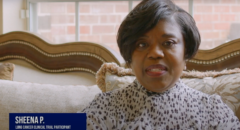
In March 2020, Sheena P. was diagnosed with stage 4 lung cancer, which came as a huge shock to her and her family. She decided to participate in a clinical trial based on a recommendation from her oncologist. When they read more about Stage 4 Lung Cancer: Why I Said Yes to a Clinical Trial

Primary Sidebar

Subscribe to our newsletter

Icon

Caring for You, Too - Caregiver Workbook

1 file(s) 297 KB
Download

Trending Articles

Weight Loss Challenge: Lose 10 Pounds In 2 Weeks!

lose 10 pounds in 2 weeks

Stage 4 Lung Cancer: Why I Said Yes to a Clinical Trial

Stage 4 Lung Cancer: Why I Said Yes to a Clinical Trial

Top 10 Ways to Improve Your Digestion Naturally

digestion

This Clinical Trial Is Making HIV Treatment Easier for Black People

This Clinical Trial Is Making HIV Treatment Easier for Black People

A Clinical Trial Extended the Life of Women With Hard-to-Treat Breast Cancer

A Clinical Trial Extended the Life of Women With Hard-to-Treat Breast Cancer
Find a Culturally Sensitive Doctor

Footer

Where Wellness & Culture Connect

BDO is the world’s largest and most comprehensive online health resource specifically targeted to African Americans. BDO understands that the uniqueness of Black culture - our heritage and our traditions - plays a role in our health. BDO gives you access to innovative new approaches to the health information you need in everyday language so you can break through the disparities, gain control and live your life to its fullest.

Connect With Us

Resource Centers

  • Top Blacks in Healthcare
  • Clinical Trials
  • Wellness on the Yard
  • Cancer
  • Immunocompromised Care
  • About Us
  • Privacy Policy
  • Cookie Policy
  • Terms of Service
  • Careers
  • Advertise With Us
  • Advertising & Sponsorship Policy
  • Daily Vitamina
  • TBH

Copyright © 2025, Black Doctor, Inc. All rights reserved.