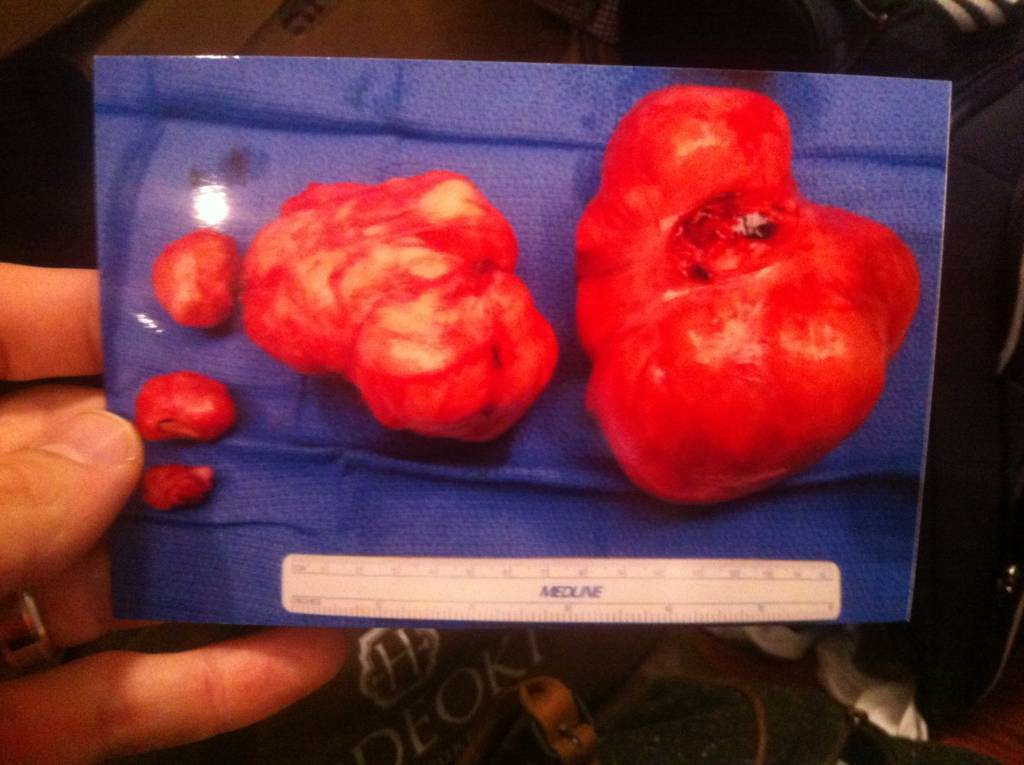
Uterine fibroids are tumors or lumps made of muscle cells and other tissue that grow within the wall of the uterus. Fibroids may grow as a single tumor or in clusters.
A single fibroid can be less than one inch in size or can grow to eight inches across or more. A bunch or cluster of fibroids can also vary in size.
Where do uterine fibroids grow?
Most fibroids grow within the wall of the uterus. Health care providers put fibroids into three groups based on where they grow:
You May Also Like
•Submucosal (pronounced sub-myou-co-sul) fibroids grow just underneath the uterine lining.
•Intramural (pronounced in-tra-myur-ul) fibroids grow in between the muscles of the uterus.
•Subserosal (pronounced sub-sir-oh-sul) fibroids grow on the outside of the uterus.
Some fibroids grow on stalks (also called peduncles, pronounced ped-uncles) that grow out from the surface of the uterus, or into the cavity of the uterus.
What are the symptoms of uterine fibroids?
Many women don’t feel any symptoms with uterine fibroids. But fibroids can cause the following symptoms:
•Heavy bleeding or painful periods
•Bleeding between periods
•Feeling “full” in the lower abdomen—sometimes called “pelvic pressure”
•Urinating often (results from a fibroid pressing on the bladder)
•Pain during sex
•Lower back pain
•Reproductive problems, such as infertility, multiple miscarriages, and early onset of labor during pregnancy
You May Also Like

What causes uterine fibroids?
Currently, we know little about what causes uterine fibroids. Scientists have a number of theories, but none of these ideas explains fibroids completely. Most likely, fibroids are the end result of many factors interacting with each other. These factors could be genetic, hormonal, environmental, or a combination of all three. Once we know the cause or causes of fibroids, our efforts to find a cure or even prevent fibroids will move ahead more quickly.
Does having uterine fibroids mean that a woman will be infertile or unable to have children?
In some cases, fibroids can prevent a woman from getting pregnant through natural methods. However, advances in treatments for fibroids and infertility have greatly improved the chances for a woman to get pregnant, even if she has uterine fibroids.
Researchers are still looking into what role, if any, uterine fibroids play in infertility. Currently, though, there are few answers. One study’s results suggest that only submucosal fibroids have a negative impact on fertility (Pritts 2001), but these results are not yet confirmed. The relationship between fibroids and infertility remains a very active research area.
Does having uterine fibroids mean a woman will need a hysterectomy (removing the uterus)?
Hysterectomy is not the best option for every woman with uterine fibroids. If a woman wants to have children, then she would want to avoid this treatment. Likewise, if a woman isn’t showing symptoms of uterine fibroids, or her fibroids are small, she may have better results from pain medications or hormone treatments. Doctors are also exploring less-invasive surgical treatments for fibroids that save the uterus. See the What are the treatments for uterine fibroids? section of this fact sheet for more information about less-invasive treatments.
In some cases, though, a hysterectomy is the best method of treatment. If you have uterine fibroids and are thinking about having a hysterectomy, make sure you talk over all features of the surgery with your doctor and your family. Having a hysterectomy means that you will no longer be able to have children. This process cannot be reversed, so be certain about your choice before having the surgery.
Keep in mind that the physical scars of the procedure may heal quickly, but some of the effects of hysterectomy are long-lasting. You may want to talk to women who have had the procedure before you decide to have your surgery. Many health care centers, women’s clinics, and hospitals offer support groups for women who have had, or are in the process of having a hysterectomy.
Who gets uterine fibroids?
Most of the time, fibroids grow in women of childbearing age. Research studies estimate that doctors diagnose up to 30 percent of women of childbearing age with uterine fibroids; but, because some women show no symptoms of fibroids, as many as 77 percent of women of childbearing age could have the condition, without knowing it. We don’t know exactly how many new cases of fibroids occur in a year, nor do we know how many women have fibroids at any one time.
There have also been reports of rare cases in which young girls who have not yet started their periods (pre-pubertal) had small fibroids.
Researchers now recognize several risk factors for uterine fibroids.
•Current statistics place African-American women at three-to-five times greater risk than white women for fibroids.
•Women who are overweight or obese for their height (based on body mass index or BMI*) are also at slightly higher risk for fibroids than women who are average weight for their height.
•Women who have given birth appear to be at lower risk for uterine fibroids.
But, because we don’t know what causes fibroids, we also don’t know what increases or reduces their growth.
How do I know that I have uterine fibroids?
Unless you start to have symptoms, you probably won’t know that you have uterine fibroids. Sometimes, health care providers find fibroids during a routine gynecological exam.