
• Skip to main content
  • Skip to secondary menu
  • Skip to primary sidebar
  • Skip to footer
BlackDoctor.org
Where Wellness & Culture Connect

Where Wellness & Culture Connect

  • Conditions
  • Wellness
  • Lifestyle
  • Longevity
  • Clinical Trials
  • Resources
    • Generational Health
    • Top Blacks in Healthcare 2025
    • Hall Of Fame
    • Clinical Trials Resource Center
    • Obesity Resource Center
    • Cancer Resource Center
    • Wellness on the Yard
    • Immunocompromised Care
    • BDO Resource Library
  • Find A Doctor
  • BDO TV
Home / Health Conditions / COVID-19 / How COVID-19 Can Affect Your Menstrual Period

How COVID-19 Can Affect Your Menstrual Period

The global pandemic is affecting people in different ways all over the world. It's affecting how we greet people, how we work and how we even educate our children. The coronavirus COVID-19 has exposed some of the many health disparities affecting the African American community. While it's making us much more attentive to health issues like heart disease, diabetes and cancer, it's also affecting women in a unique way: menstrual periods.

The stress from this pandemic can and has impacted both our mental and physical health, including our periods. Some folks with underlying anxiety or Obsessive Compulsive Disorder (OCD) are feeling triggered right now. Likewise, stress may influence cycle length, vaginal bleeding patterns, painful periods, and premenstrual symptoms.

“If you get COVID-19, it’s a stress on the body and a major stress on the hypothalamic pituitary adrenal (HPA) axis, which is the body’s central stress response system," says Dr. Tara Shirazian. She's the director of Global Women’s Health and an assistant professor of obstetrics and gynecology at NYU Langone Health in New York City.

You May Also Like
Psoriatic Arthritis Can Feel Beyond Your Control. Consider a Different Direction. Learn More Here. Psoriatic Arthritis Can Feel Beyond Your Control. Consider a Different Direction. Learn More Here.

With complete suppression of the HPA axis, a woman may experience amenorrhea, the absence of periods. But don't freak out yet with thinking you may be pregnant. With partial suppression, a woman could have spotty periods or periods of bleeding every few weeks. “There isn’t one clear pattern we can expect — women respond differently to suppression of the HPA axis,” Shirazian says.

"I think it’s a combination of stress and the upheaval of everyone’s normal routines. People are suddenly taking their pills at different times because they not on a regular schedule anymore. People are also changing their eating and activity habits. All of those things are at play and can affect your hormones," says Dr. Beth Schwartz, a gynecologist at Jefferson.

What about Period Products?

"A stress-induced period is certainly possible if you have an IUD. When you have an IUD, your ovaries are not being controlled in the way that the pill or shot controls and suppresses ovarian activity. It makes even more sense in that scenario that there could be fluctuations in hormones or ovarian function," Dr. Schwartz continues.

You May Also Like
Get GLP-1s Delivered to You As Low As $99/Month! Get GLP-1s Delivered to You As Low As $99/Month!

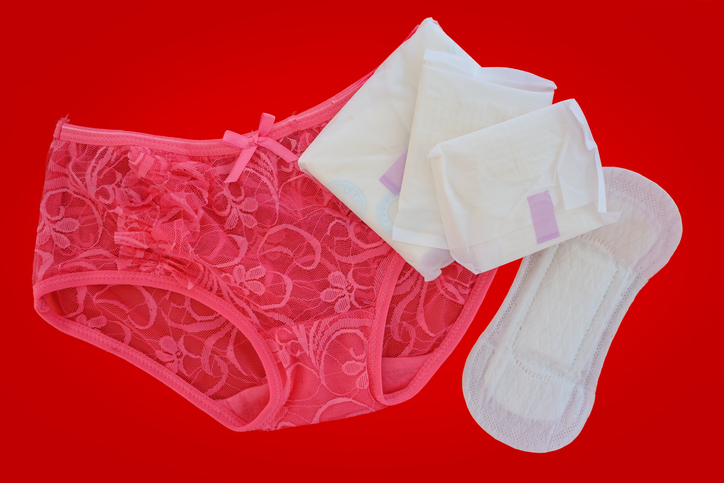
While you are practicing social distancing and being vigilant about handwashing and sanitizing around the house (along with everything else) due to COVID-19, we should practice the same type of hygiene care with your period products. Boil anything made of

silicon after use. Wash reusable pads and underwear with soap in hot water. Wash your hands vigorously for at least 20 seconds before and after you change your blood collection product.

When using disposable period products like pads or tampons, wrap the used product in the wrapper of the new product so that any menstrual blood is not exposed.

If you’re experiencing irregular bleeding on the pill, you should stop bleeding on day one or two after your placebo pill week. If bleeding doesn’t stop, then let your doctor know. The same goes for if you’re experiencing really heavy bleeding for more than one to two days—like soaking through a super pad or tampon in less than an hour. Feeling lightheaded or dizzy, chest pain, feeling like your heart is beating very quickly, or getting out of breath much easier than normal could be signs of anemia. These are all things you need to tell your doctor right away so they can rule out anything more serious or dangerous.

By Dr. Maya Johnston-Stone | Published July 29, 2020

The Latest In COVID-19

immunosuppressants

Summer COVID-19 Cases Are on the Rise – What You Should Know

COVID-19 cases are rising this summer across much of the United States, with 27 states reporting growing or likely growing trends, according to the Centers for Disease Control and Prevention. As of mid-July, states like Texas, Illinois, Kentucky, Virginia and read more about Summer COVID-19 Cases Are on the Rise – What You Should Know
COVID vaccines

CDC Ends COVID Vaccine Recommendation for Healthy Children, Pregnant Women

In a recent announcement, the Centers for Disease Control and Prevention has removed COVID-19 vaccines from the recommended immunization schedule for healthy pregnant women and children. Flanked by federal health officials, Health and Human Services Secretary Robert F. Kennedy Jr. read more about CDC Ends COVID Vaccine Recommendation for Healthy Children, Pregnant Women
2 Groundbreaking Clinical Trials That Have Helped Black Health

2 Groundbreaking Clinical Trials That Have Helped Black Health

Clinical trials have long been the cornerstone of medical advancement, but their impact is especially meaningful when they represent the full diversity of the populations they aim to serve. During a recent panel discussion on Clinical Trials Day, industry leaders read more about 2 Groundbreaking Clinical Trials That Have Helped Black Health
COVID-19 pandemic

Racial and Ethnic Differences Persist in COVID-19, According to Survey

Sponsored by Gilead Sciences Racial and ethnic disparities in health care have long been a problem in the U.S.1 For many Black communities and other minority groups, a lack of health insurance, less access to quality medical care, and socioeconomic read more about Racial and Ethnic Differences Persist in COVID-19, According to Survey
pandemic

5 Years Later: How the Pandemic Changed Us

March marks five years since the world shut down and announced a global pandemic. Does it feel like it’s been five years? We have seen several historic events, elections, economic shifts, and so much more. How has this changed us read more about 5 Years Later: How the Pandemic Changed Us
COVID

5 Years Later: Did COVID Change Anything for Black America?

Five years ago, on March 11, 2020, the World Health Organization declared COVID-19 a pandemic, a moment that irrevocably altered the course of global history. Tuesday, March 11th, 2025, marked the fifth anniversary. Since then, millions of Americans have been read more about 5 Years Later: Did COVID Change Anything for Black America?

Primary Sidebar

Subscribe to our newsletter

Icon

Caring for You, Too - Caregiver Workbook

1 file(s) 297 KB
Download

Trending Articles

Stage 4 Lung Cancer: Why I Said Yes to a Clinical Trial

Stage 4 Lung Cancer: Why I Said Yes to a Clinical Trial

This Clinical Trial Is Making HIV Treatment Easier for Black People

This Clinical Trial Is Making HIV Treatment Easier for Black People

A Clinical Trial Extended the Life of Women With Hard-to-Treat Breast Cancer

A Clinical Trial Extended the Life of Women With Hard-to-Treat Breast Cancer

This Reverend Wants to Change How You View Clinical Trials: “We’re Not Going to Have Another Tuskegee”

This Reverend Wants to Change How You View Clinical Trials: "We're Not Going to Have Another Tuskegee"

These Two Women Are Amplifying the Voices of Black Triple-Negative Breast Cancer Survivors

breast cancer
Find a Culturally Sensitive Doctor

Footer

Where Wellness & Culture Connect

BDO is the world’s largest and most comprehensive online health resource specifically targeted to African Americans. BDO understands that the uniqueness of Black culture - our heritage and our traditions - plays a role in our health. BDO gives you access to innovative new approaches to the health information you need in everyday language so you can break through the disparities, gain control and live your life to its fullest.

Connect With Us

Resource Centers

  • Top Blacks in Healthcare
  • Clinical Trials
  • Wellness on the Yard
  • Cancer
  • Immunocompromised Care
  • About Us
  • Privacy Policy
  • Cookie Policy
  • Terms of Service
  • Careers
  • Advertise With Us
  • Advertising & Sponsorship Policy
  • Daily Vitamina
  • TBH

Copyright © 2025, Black Doctor, Inc. All rights reserved.