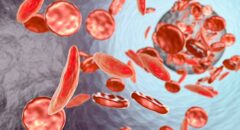

Today, Kwincy Lassiter is a 25-year-old Arizona State University student enjoying a second chance at life. However, the first 16 years of his journey looked much different. He battled sickle cell disease with over 70 blood transfusions, enduring a reality that forced him to miss school and sports while facing silent strokes, acute chest syndrome, and repeated hospitalizations.
RELATED: Living with Sickle Cell: The Stroke That Became My Biggest Blessing
The Weight of the Battle
“Watching your child suffer… It’s very hard not to be able to fix it,” Kwincy’s mother, Ericka, tells BlackDoctor.
Kwincy vividly recalls the physical toll the disease took on his body. “…Your body just feels weak and it’s very painful and you can’t really do much about it at the time,” he shares, recalling how his family would give him massages to try to reduce the pain.
You May Also Like

As a young kid, the toll was just as heavy mentally. “…Not being able to do the same stuff as your brothers or missing classes and just being [in and] out of the hospital, takes a toll on any kid,” he adds.
Although it was challenging to see her child suffer, Ericka remained grounded for her son. She found resilience through a deep faith that God would see him to pain-free days, supported by their medical team at Phoenix Children’s Hospital and a close-knit family network.

The Turning Point
The pivot for Kwincy came at 16 when he received a bone marrow transplant. Once again, Ericka leaned on her faith to navigate the high-stakes procedure. “I prayed. I just prayed that he would number one have a successful transplant and two, that we knew it would be hard, but that he would live pain-free,” she shares.
You May Also Like

The year-long recovery required intensive medical care and countless blood transfusions. It was a grueling process for Kwincy, who recounts undergoing chemo, losing his hair, and managing reactions to various medications.
“Initially, when they mentioned chemotherapy and other requirements, I wasn’t looking forward to it or even considering a bone marrow transplant; it hadn’t even been presented to us as a viable option for Kwincy,” Ericka explains. “But when he went through another acute chest syndrome crisis and they told us this was an opportunity for him, I prayed. I prayed that he would have a successful transplant and that he would finally be able to live pain-free, even though we knew it would be hard.”
Seeing other families navigate the same path provided the final confirmation Ericka needed. “I sat on the board with Tamiko McKenzie from the Detroit area. Her husband and my husband were in the NFL together. I watched her journey with her five-year-old son—who has sickle cell and is also a twin—and seeing him go through that successfully, along with a set of twins here in Phoenix, made me want the same for Kwincy,” she shares.

Bone marrow transplant recipient Kwincy Lassiter and his mother Ericka share how he was born with sickle cell disease and experienced his first pain crisis at 7 months old. Growing up, I spent a lot of time in the hospital with sickle cell and watching other kids being active and doing things I couldn’t do, said Kwincy. [During pain episodes], my mom never left me alone at the hospital, and always made sacrifices to be there with me from sunrise to sunset.
Photo by Scott Dalton/American Red Cross
A Life Transformed
That faith paid off. Today, Kwincy is cured and living pain-free.
“Right now, I’m still in school and keeping up with my work. I’m able to be active, doing sports and different activities I couldn’t do before,” Kwincy shares. “My brothers used to go golfing and play basketball a lot—physical activities I just couldn’t participate in during those summers. We go swimming now, too. It’s just all the things I couldn’t do while going through the crises or dealing with sickle cell. But having gone through the transplant process, and now being nine years post-transplant, I can do a whole lot more.”
For Ericka, witnessing her son enjoy life as an independent adult is an emotional blessing. “His first time in the pool. I literally cried only because he had never been able to really experience being in the pool without knowing that he could potentially end up in the hospital,” she says. “He did have back surgery after his bone marrow transplant. So sometimes he will complain about the pain from that. But you know, not complaining about sickle cell pain is a blessing. So I’m thrilled. I’m happy prayers have been answered and to actually see the manifestation of prayers. Living, walking and breathing is indescribable. I can’t really describe what it feels like other than just a true joy to be able to live to see it.”
Carrying the Legacy
Kwincy now serves as a spokesperson for the Kwame Lassiter Foundation, founded by his late father, former NFL player Kwame Lassiter, to support sickle cell families.
“Continuing the legacy my father started and that my mom carries on is so meaningful to me,” Kwincy notes. “We do different activities like turkey donations during the holidays and backpack drives for kids going back to school. We’re continuing to build through events like our upcoming golf tournament, which helps us stay active in the community while spreading knowledge and advocating for those with sickle cell.”
It is a full-circle moment for Ericka, who launched the foundation alongside her husband before Kwincy was born. Originally focused on education, the foundation’s mission expanded to the sickle cell community following Kwincy’s diagnosis.
“Everything we attended back then was on a very small, underserved scale. We wanted to use our platform—with my husband being an NFL player—to donate out of our own pockets, bless these families, and provide for schools,” she says. “That’s what we did then, and that’s what we continue to do now. Sadly, we still get calls like the one we received last week, asking to assist a family whose loved one didn’t survive the transplant. Providing funeral funds for those families really hurts my heart, especially because I know we have the power to change that narrative.”

The Lifeline of Blood Donation
One primary way to change that narrative is through blood donations. “In my case, it was just super helpful. It would strengthen the body as I was going through these crises, and I need to get like a new burst of energy,” Kwincy says.
Ericka adds an urgent plea: “Reach out to your churches—especially African American churches. Many of them are non-denominational or have diverse congregations, but the goal is simply to get the word out and host a drive. Pick a month to do it every year… Taking just one step or changing one thing you do this year can create a legacy of service that blesses families and strangers alike. We had a stranger bless us with a donation, and by doing this, you’ll be able to save the life of a stranger in return.”
Ericka leads by example as a blood donor herself. She has worked with her sorority, Delta Sigma Theta, on blood drives and recently spoke at the Red Cross Sickle Cell brunch last April.
Her advocacy comes at a vital time. Shortfalls in blood and platelet donations caused by recent winter storms are putting further strain on the national blood supply, forcing some hospitals to cancel elective procedures due to blood product shortages. This makes community action during Black History Month more critical than ever.
A Message of Hope
Kwincy’s message for others battling the disease is simple: keep going. “…It might be tough right now, but there’s light at the end of the tunnel. Once you get through this, you’ll be able to just feel stronger by the end of it and live a complete life, pain free, and you know, it’ll be worth it in the end,” he says.
Ericka concludes with a vision of hope: “I want to be a reason why our voices are heard and why people are stepping in to help. By donating blood, bone marrow, and resources, they are helping other families reach the point where we are—living a life where Kwincy is finally sickle cell-free. Now, I can be a mom who doesn’t have to worry about the disease, but just worries about everything else, because that’s what moms do. I’m just so grateful to be on this side of his life, outside of sickle cell.”
You can donate by using the Red Cross Blood Donor App, visiting RedCrossBlood.org/OurBlood, or calling 1-800-RED CROSS (1-800-733-2767) to schedule an appointment. Those who come to give through February 28, 2026 will receive a $20 e-gift card.