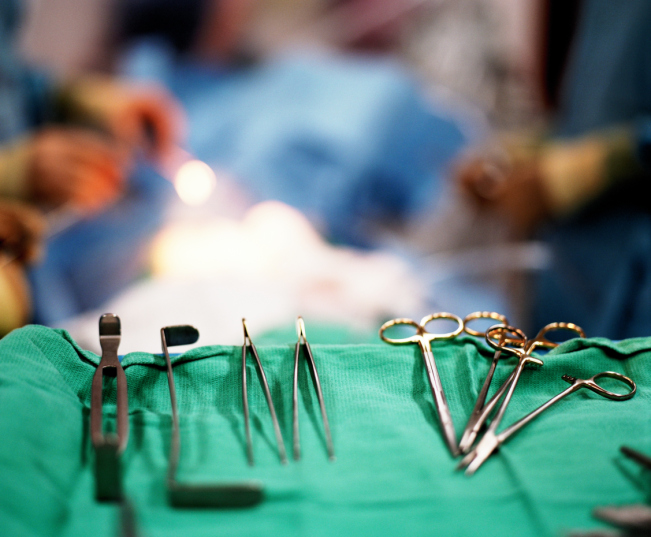
Since 2005, more than 1,000 doctors have made payments to settle or close malpractice claims in surgical cases that involved allegations of unnecessary or inappropriate procedures, according to a USA TODAY analysis of the U.S. government’s National Practitioner Data Bank public use file, which tracks the suits. About half the doctors’ payments involved allegations of serious permanent injury or death, and many of the cases involved multiple plaintiffs, suggesting many hundreds, if not thousands, of victims.
A 2011 study in the Journal of the American Medical Association reviewed records for 112,000 patients who had an implantable cardioverter-defibrillator (ICD), a pacemaker-like device that corrects heartbeat irregularities. In 22.5% of the cases, researchers found no medical evidence to support installing the devices.
Compared to white patients, black patients were more likely to undergo surgery in low-quality hospitals for all three procedures: coronary artery bypass (22.9 percent), abdominal aortic aneurysm repair (27.2 percent), and lung cancer resection (24.6 percent). After adjusting for patient characteristics, blacks were still much more likely to undergo surgery at low-quality hospitals for all three procedures.
At least 12,000 Americans die each year from unnecessary surgery, according to a Journal of the American Medical Association report. And tens of thousands more suffer complications. Here are some of the surgeries that you may need to forgo, or at least get a second and third opinion:
There’s long been a concern, at least among many women, about the high rates of hysterectomy (a procedure to remove the uterus) in the United States. American women undergo twice as many hysterectomies per capita as British women and four times as many as Swedish women.
The surgery is commonly used to treat persistent vaginal bleeding or to remove benign fibroids and painful endometriosis tissue. If both the uterus and ovaries are removed, it takes away sources of estrogen and testosterone. Without these hormones, the risk of heart disease and osteoporosis rises markedly. There are also potential side effects: pelvic problems, lower sexual desire and reduced pleasure. Hysterectomies got more negative press after a landmark 2005 University of California, Los Angeles study revealed that, unless a woman is at very high risk of ovarian cancer, removing her ovaries during hysterectomy actually raised her health risks.
Do This Instead: Go knife-free. Endometrial ablation, a nonsurgical procedure that targets the uterine lining, is another fix for persistent vaginal bleeding. Health.com: Your guide to fibroid fixes
Focus on fibroids. Fibroids are a problem for 20 to 25 percent of women, but there are several specific routes to relief that aren’t nearly as drastic as hysterectomy. For instance, myomectomy, which removes just the fibroids and not the uterus, is becoming increasingly popular. And there are other less-invasive treatments out there, too.
Interventional radiologists in the United States have expanded their use of UFE (typically a one- to three-hour procedure), using injectable pellets that shrink and “starve” fibroids into submission. Another new fibroid treatment is high-intensity focused ultrasound, or HIFU. This even less invasive, more forgiving new procedure treats and shrinks fibroids. It’s what’s called a no-scalpel surgery that combines MRI (an imaging machine) mapping followed by powerful sound-wave “shaving” of tumor tissue.
It can sound so simple and efficient when an OB-GYN lays out all the reasons why she performs episiotomy before delivery. After all, it’s logical that cutting or extending the vaginal opening along the perineum (between the vagina and anus) would reduce the risk of pelvic-tissue tears and ease childbirth. But studies show that severing muscles in and around the lower vaginal wall (it’s more than just skin) causes as many or more problems than it prevents. Pain, irritation, muscle tears, and incontinence are all common aftereffects of episiotomy.
In 2013 the American College of Obstetricians and Gynecologists released new guidelines that said that episiotomy should no longer be performed routinely — and the numbers have dropped. Many doctors now reserve episiotomy for cases when the baby is in distress. But the rates (about 25 percent in the United States) are still much too high, experts say, and some worry that it’s because women aren’t aware that they can decline the surgery.
“We asked women who’d delivered vaginally with episiotomy in 2005 whether they had a choice,” says Eugene Declercq, Ph.D., main author of the leading national survey of childbirth in America, “Listening to Mothers II,” and professor of maternal and child health at the Boston University School of Public Health. “We found that only 18 percent said they had a choice, while 73 percent said they didn’t.” In other words, about three of four women in childbirth were not asked about the surgery they would soon face in an urgent situation. “Women often were told, ‘I can get the baby out quicker,'” Declercq says, as opposed to doctors actually asking them, ‘Would you like an episiotomy?'”
Do This Instead: Communicate. The time to prevent an unnecessary episiotomy is well before labor, experts agree. When choosing an OB-GYN practice, ask for its rate of episiotomy. And when you get pregnant, have your preference to avoid the surgery written on your chart.
Get ready with Kegel exercises. Working with a nurse or midwife may reduce the chance of such surgery, experts say; she can teach Kegel exercises for stronger vaginal muscles, or perform perineal and pelvic-floor massage before and during labor.
Every year in the United States, surgeons perform 1.2 million angioplasties, during which a cardiologist uses tiny balloons and implanted wire cages known as stents to unclog arteries. This “Roto-Rooter-type” approach is…
less invasive and has a shorter recovery period than bypass, which is open-heart surgery.
The problem: A groundbreaking study of more than 2,000 heart patients indicated that a completely nonsurgical method — heart medication — was just as beneficial as angioplasty and stents in keeping arteries open in many patients.
The bottom line: Angioplasty did not appear to prevent heart attacks or save lives among nonemergency heart subjects in the study.
Do This Instead: Listen to your doctor. “If you have chest pain and are stable, you can take medicines that do the job of angioplasty,” says William Boden, M.D., of the University of Buffalo School of Medicine, Buffalo, New York, and an author of the study. Medicines used in the study included aspirin, and blood pressure and cholesterol drugs — and they were taken along with exercise and diet changes.
“If those don’t work, then you can have angioplasty,” Boden says. “Now we can unequivocally say that.”
Of course, what’s right for you depends on the severity of your risks (blood pressure, cholesterol, triglycerides) along with any heart-related pain. The responsibility is also on the patient to treat a doc’s lifestyle recommendations — diet and exercise guidelines — just as seriously as if they were prescription medicines.
Nearly 60 million Americans experience heartburn at least once a month; 16 million deal with it daily. So it’s no wonder that after suffering nasty symptoms (intense stomach-acid backup or near-instant burning in the throat and chest after just a few bites), patients badly want to believe surgery can provide a quick fix. And, for some, it does.
A procedure called Nissen fundoplication can help control acid reflux and its painful symptoms by restoring the open-and-close valve function of the esophagus. But Jose Remes-Troche, M.D., of the Institute of Science, Medicine, and Nutrition in Mexico, reported in The American Journal of Surgery that symptoms don’t always go away after the popular procedure, which involves wrapping a part of the stomach around the weak part of the esophagus.
“That may be because surgery doesn’t directly affect healing capacity or dietary or lifestyle choices, which in turn can lead to recurrence in a hurry,” he says.
The surgery can come undone, and side effects may include bloating and trouble swallowing. Remes-Troche believes it’s best for very serious cases of long-standing gastroesophageal reflux disease, or GERD, or for those at risk of Barrett’s esophagus, a disease of the upper gastrointestinal tract that follows years of heartburn affliction and can be a precursor to esophageal cancer.
Do This Instead: Make lifestyle changes. A combination of diet, exercise, and acid-reducing medication may help sufferers beat the burn without going under the knife. But it’s a treatment that requires perseverance.
“It took me four years of appointments, diets, drugs, sleeping on slant beds — and even yoga — to keep my heartburn manageable,” says Debbie Bunten, 44, a Silicon Valley business-development manager for a software firm, who was eager to avoid surgery. “But I did it, and am glad I did.”
Since the 1980s, operations for lower-back pain and sciatica have increased roughly 50 percent, from approximately 200,000 to more than 300,000 surgeries annually in the United States. That rise is largely due to minimally invasive advances that include endoscopic keyhole tools used in tandem with magnified video output.
To its credit, surgery (endoscopic or the traditional lumbar-disc repair) does relieve lower-back pain in 85 to 90 percent of cases, docs say. “Yet the relief is sometimes temporary,” says Christopher Centeno, M.D., director of the brand new Centeno-Schultz Pain Clinic near Denver, Colorado. And that adds up to tens of thousands of frustrated patients who find the promise of surgery was overwrought or short-lived.
Do This Instead: Try painkillers and exercise. Despite the relentless nature of lower-back pain, the most common cause is a relatively minor problem — muscle strain — not disc irritation, disc rupture, or even a bone problem, experts say. Despite its severity, this type of spine pain most often subsides within a month or two. That’s why surgery, or any other invasive test or treatment beyond light exercise or painkillers, is rarely justified within the first month of a complaint. Even pain caused by a bulging or herniated disc “resolves on its own within a year in some 60 percent of cases,” orthopedists claim.
“Seventy to eighty percent of the time we can get to a concrete diagnosis, find a way to manage pain, and get patients off the drugs without surgery,” Centeno says. “Or, more appropriately, never start the drugs.”


By subscribing, you consent to receive emails from BlackDoctor.com. You may unsubscribe at any time. Privacy Policy & Terms of Service.