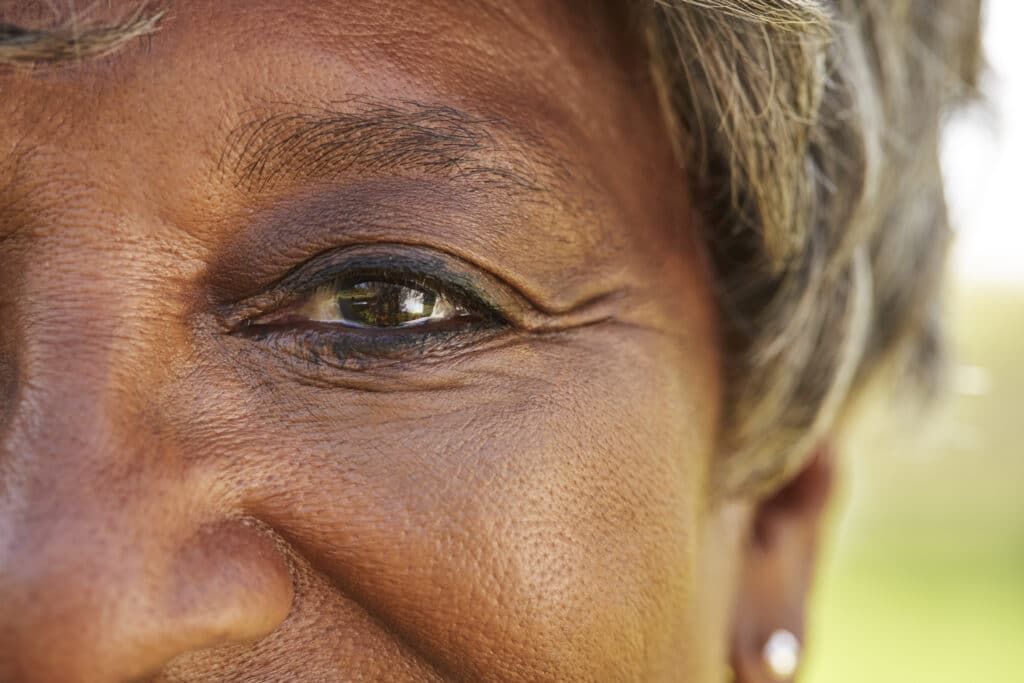
As people age, some can develop age-related macular degeneration, or AMD, meaning they struggle with or lose their central vision. While there is no cure, AMD can be treated and does not typically cause blindness—peripheral or side vision remains intact.
Though treatment options for dry and wet AMD exist, including eye drops, clinical trials are at the forefront of potentially curing AMD, and not enough Black patients are participating.
According to a study published in the American Academy of Ophthalmology, out of the 19.8 million people with AMD, white people are the most affected, making up 5.4% of the total people with AMD. Chinese, Hispanic, and Black individuals make up 4.6%, 4.2%, and 2.4%, respectively. Women show higher rates of AMD than males.
More women experience AMD, but there was a lower proportion of women from minority groups in clinical trials. While there has been an increase in Asian and Black participants in trials over the past twenty years, the majority of participants are white. There are several potential reasons for this underrepresentation.
There are two types of macular degeneration: dry (atrophic) and wet (exudative). Between 80 and 90 percent of those with AMD have dry macular degeneration, which is when protein clumps called drusen grow in the eye’s macula in the retina’s center. Since the macula is responsible for central vision, the drusen, in addition to a thinning macula, causes loss of vision, making reading, driving, and other activities more difficult.
Wet AMD is less common and is considered late stage. With this type of medical condition, people experience abnormal blood vessels growing under their retinas, which can leak and scar the macula, causing more rapid vision loss. Some might experience blank spots in the center of their field of vision.
Most individuals with AMD don’t experience early symptoms. Later symptoms that affect quality of life include blurry or fuzzy vision, straight lines appearing wavy, or a blind spot in the center of their vision.
While some people can experience non-age-related macular degeneration due to factors like smoking, diabetes, and poor nutrition, most develop it after the age of 50. If you or a loved one is struggling with vision problems or if you have a family history of AMD, consult your eye doctor and make sure to have regular eye exams. High blood pressure and smoking are also factors that contribute to AMD.
Clinical trials are essential for developing new and improved treatments for diseases like AMD. However, the lack of diversity in clinical trials is a significant concern. When clinical trials do not include a representative sample of the population, the results may not apply to everyone. This can lead to disparities in healthcare, as certain groups may not have access to the best treatments for their needs.
In the case of AMD, the underrepresentation of Black patients in clinical trials is particularly concerning. It is essential to ensure that Black patients are included in clinical trials so that researchers can develop treatments that are effective for this population.
To ensure that all populations are represented in clinical trials, there needs to be additional advocacy for those who might not otherwise know or hear about the trials. This could mean initiating outreach in communities through well-known local organizations to recruit participants and ensure their comfort. Another option is addressing language barriers with multilingual staff and translated consent forms. Lastly, people would most likely be more willing to participate in clinical trials if transportation, follow-up treatment, and compensation were provided.
To fully represent and treat those suffering from AMD, researchers must expand their outreach efforts to recruit participants from various populations.
For more information on clinical trials, discover our Black Clinical Trials Resource Center.


By subscribing, you consent to receive emails from BlackDoctor.com. You may unsubscribe at any time. Privacy Policy & Terms of Service.