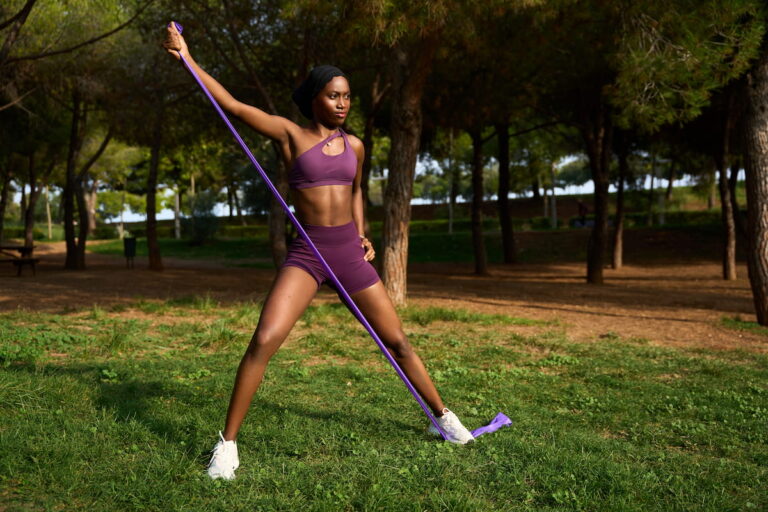
Who doesn’t want a flat stomach? Who doesn’t want to show off their abs this summer or any summer? And what’s the best way to tone every angle of your stomach, including your obliques?
If you’re looking for the best exercise to lose belly fat, then look no further! In order to give you the best exercises to flatten your belly, we’ve got to give you the other exercises that come close. Here are the top three, best-of-the-best, exercises you can do to get rid of your belly.
RELATED: 5 Everyday Changes That Burn Belly Fat Faster
This is one of the most underrated exercises for shrinking the belly — especially for people over 35 or anyone dealing with stress-related weight gain.
Incline walking primarily uses fat as fuel and is easier to maintain consistently than sprinting workouts.
High-intensity interval training
HIIT consistently ranks as one of the best fat-burning workouts because it keeps your metabolism elevated long after the workout ends.
You can do this with a combination of:
And the number 1 belly fat exercise is….
Quite simply, a plank is an isometric exercise for the abs, meaning you hold a single position for a while rather than performing repeated movements. This static hold engages multiple muscle groups at once, making it one of the most efficient exercises to strengthen and sculpt your core.
You may be learning the plank exercise for the first time, or you may already incorporate it into your workouts. Either way, planking is an essential movement that most trainers consider one of the most effective exercises for your abs.
Not only does it strengthen and firm your abdominal muscles, but it also engages all the core muscles—including your back, hips, and shoulders—helping improve overall stability and posture. Unlike crunches, which primarily work the rectus abdominis (the front-facing six-pack muscles), planks target the entire core, including deep stabilizing muscles that help support your spine.

Body Parts Targeted: Core, shoulders, back, and glutes
Equipment Needed: A mat (optional)
Reps: Hold for 30 seconds to 1 minute per set
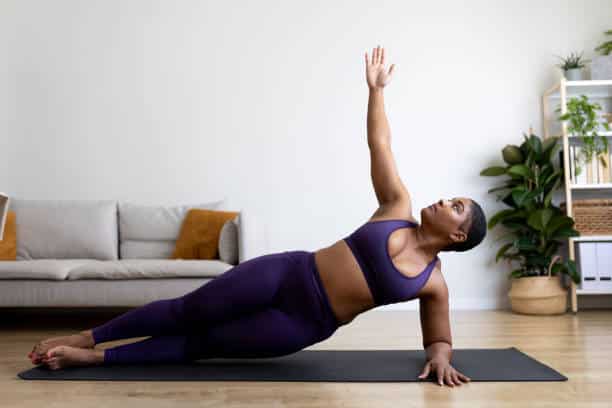
If you want to target your obliques—the muscles along the sides of your waist—try the side plank:
If you’re a beginner, you can modify the plank by lowering your knees to the floor while keeping your upper body engaged. This reduces the intensity but still strengthens your core.
For more advanced variations, try:
RELATED: 4 Secrets to Burn Belly Fat While You Sleep
For best results, incorporate planks into your workout routine at least three to four times per week. Start with 30-second holds and gradually increase your time as your core strength improves.
If you’re looking to lose belly fat and sculpt strong, defined abs, planking should be a staple in your fitness routine. It requires no equipment, engages multiple muscle groups, and can be done anywhere. Whether you’re a beginner or an advanced fitness enthusiast, the plank is a simple yet highly effective exercise to help you achieve your goals.
Give it a try, stay consistent, and watch your core strength and definition improve over time!


By subscribing, you consent to receive emails from BlackDoctor.com. You may unsubscribe at any time. Privacy Policy & Terms of Service.