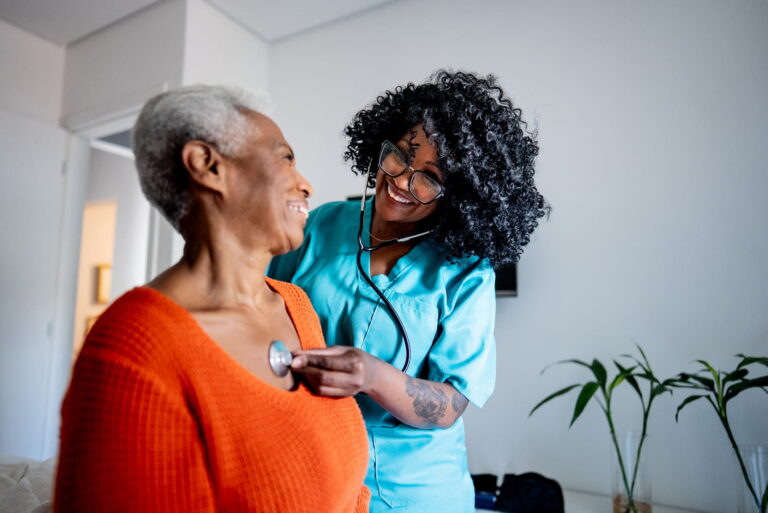
According to the the National Alliance for Caregiving and AARP (2012), 65.7 million caregivers make up 29 percent of the US adult population and provide care to someone who is ill, disabled, or aged. Eighty percent of the care provided to the elderly in the United States is still provided exclusively by family members (2011 study conducted by the John Hancock insurance company). While there are many positives regarding caregiving, caring for an aging parent or loved one also brings a host of pressures that bear on your time, finances, emotions and overall health. Most people do not understand and are not prepared for the unique requirements involved in caring for an aging loved one.
One of the biggest challenges is the time commitment. Caregiving can be a time-intensive task. In general, the older the care recipient, the more time per week will be dedicated to caregiving tasks. On average, a person 55 to 64 years old will require 25.3 hours per week. This increases to 34.5 hours per week for someone over 75.
The financial cost can also be substantial. Data from 2013 (most recent available numbers) show the national average cost of a private nursing home room was $252 a day/$91,980 annually and has risen an average of 3.5 percent annually over the last several years;
The average cost for a month in an assisted living facility was $3,496 a month/$41,952 annually and has risen an average 3.4 percent per year;
The average cost for a home health aide was $22 hourly/$41,184 annually and has risen an average 1.3 percent per year.
In addition to the cash outlay there is also the consideration of how much is lost by virtue of money not generated because you are caring for a loved one. According to a recent study conducted by Metlife’s Mature Market group, 10 million caregivers over age 50 who care for their parents lose an estimated $3 trillion in lost wages, pensions, retirement funds and benefits. The total costs are higher for women who lose an estimated $324,044 because of caregiving, compared to men at $283,716.
Lost wages for women who leave the workforce early because of caregiving responsibilities equals $142,693; for Social Security benefits an estimated $131,351 is lost; and for pensions, an estimated $50,000. Because many women have prioritized caregiving over work they suffer long-term consequences, resulting in lower wages, fewer benefits, and reduced retirement savings. In some ways this is similar to women who leave the workforce in order to start or raise a family. Years later, these women are at a 4.6 times higher risk of living in poverty.
What is more important that the financial cost is the cost associated with the caregiver’s health and well-being. Often when focusing on caring for parents, we forget that we must also care for ourselves. Like many things in life this is easier said than done, but if not done the consequences can be severe.
The close relationship between the caregiver and care recipient is a shared relationship that involves emotions and experiences. As a result, it can place a caregiver at higher risk for psychological and physical illnesses. For example, a 2009 study reported that caring for people with dementia impacts a person’s immune system for up to three years after their caregiving experience ends, thus increasing their chances of developing a chronic illness themselves.
Eleven percent of family caregivers report that caregiving has caused their physical health to deteriorate. In general, 17 percent of caregivers report that their health has gotten worse as a result of their caregiving responsibilities. Those who are more likely to rate the physical strain of caregiving as high are female (17 percent versus 10 percent males). Again, females are disproportionately impacted.
A separate but closely related illness frequently associated with caregiving is depression. For some caregivers, emotional fallout from caring for an ailing parent goes beyond stress and into the realm of depression. According to a 2006 research study from the Family Caregiver Alliance, 40 to 70 percent of family caregivers have clinically significant symptoms of depression with about a quarter to half of these caregivers meeting the diagnostic criteria for major depression. This is particularly true for women, who are more prone to the illness, and for those who are caring for someone with dementia.
No matter how much you love the person you look after, it is not surprising for a caregiver to get depressed periodically. It becomes a concern when the symptoms are frequent or long lasting. Depression is a treatable illness. The first step is recognizing that there is an issue and deciding to do something about it. A proper diagnosis of depression and of the kind of depression you may be experiencing, is crucial in determining the best treatment program.
Living with a care recipient can also negatively impact the health of the caregiver. Twenty-nine percent of caregivers who live with the care recipient rate the physical strain of caregiving as high versus 11 percent who don’t live with the person to whom they provide care. Again, caregiving can be a stressful job, and like other stressful activities, you need to periodically remove yourself from the situation and decompress.
When you live with the person you are probably on call 24 hours a day, seven days a week. It is advisable for these caregivers to have someone else step in periodically to give them a break. Even if it is a very short break (two hours for a movie or a night out), it is important to get away from the situation and recharge your batteries. Friends and family are normally good resources for this. If you don’t know anyone you would feel comfortable asking to help, most home health care agencies will provide someone for respite care. This is short-term, temporary care, which could last for anywhere from a couple of hours to a month. It depends on your needs.

After years of consulting, providing professional advice and caring for the elderly, Derrick Y. McDaniel, a recognized expert in the eldercare industry, an attorney and former NYU professor, has composed a resource tool to help everyone who cares for their aging loved ones. Eldercare, The Essential Guide to Caring for Your Loved One and Yourself is a book that answers all the tough care giving questions that most people do not know to ask. Visit MrEldercare101.com for more information.


By subscribing, you consent to receive emails from BlackDoctor.com. You may unsubscribe at any time. Privacy Policy & Terms of Service.