
Getting told you have small-cell lung cancer (SCLC) can feel like the ground has been pulled out from under you. Because it’s a fast-moving cancer, it’s completely normal to feel overwhelmed, fearful, or even paralyzed.
But here is the most important thing to remember: treatment has advanced significantly, and you will not face this journey alone. You have a dedicated medical team and support network ready to fight alongside you.
Once SCLC is confirmed, your doctors will move quickly to create a personalized plan. The goal of this initial phase is to gather all the necessary information to determine the best course of action.
Your care team will focus on three key areas:
RELATED: Recognizing the Signs: Early Symptoms of SCLC You Shouldn’t Ignore
Think of your care team as your personal “squad.” This multidisciplinary group is structured to support every aspect of your health and life.
Your team will likely include:
Your job on this journey is to be an active participant. Don’t be afraid to ask: “What does this treatment do? What side effects should I expect? What is the goal here?” Clear answers will help you feel more informed and in control.
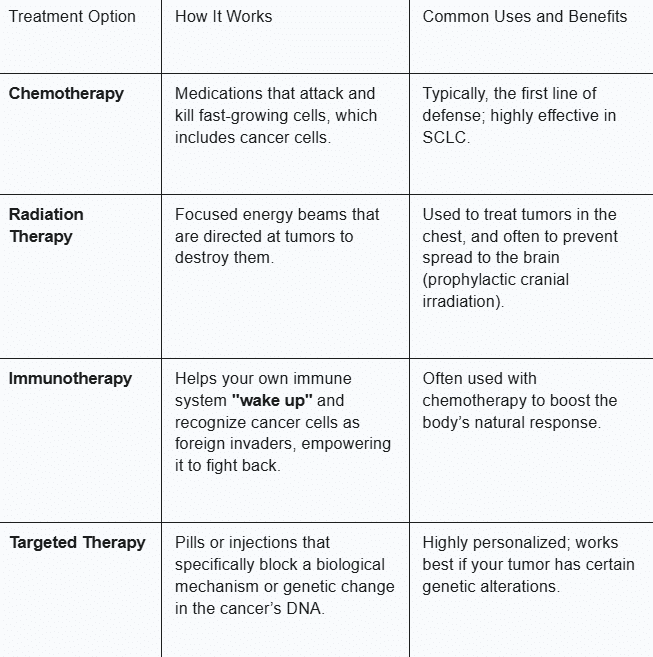
The approach to SCLC is always personalized. Treatments are often used in combination and are overseen by your oncology team.
“Treatment may include chemotherapy, radiation, immunotherapy, or targeted therapies, depending on the stage and the patient’s needs. Recent advancements in SCLC treatment include the addition of immunotherapy with chemotherapy for limited-stage SCLC, as well as the FDA approval of a new type of immunotherapy for patients with advanced disease. Side effects can happen, but supportive care is available to help manage them. Partnering closely with your oncology team ensures the best possible care,” Lee Hong, M.D., Ph.D., Medical Oncologist at City of Hope Orange County, says.
“Patients are closely monitored throughout treatment by their doctors and usually assessed every three weeks to see how the treatment is tolerated. The response to treatment is also constantly assessed through labs, physical exams, and imaging,” Khalil Choucair, M.D., MSc, Medical Oncologist, Leader, Thoracic Oncology Multidisciplinary Team, Barbara Ann Karmanos Cancer Institute, adds.
Side effects are a sign that your body is working hard, not that you are failing treatment. While some side effects, like hair loss and nausea, are common with chemotherapy, others, such as inflammation in organs, are more common with immunotherapy.
Your care team anticipates these challenges and has medicines and strategies ready to help manage them, ensuring you stay as comfortable as possible.
RELATED: Myth vs. Fact: What You Really Need to Know About SCLC

Every life-saving cancer treatment in use today began in a clinical trial. Trials aren’t just a “last chance” option; they can be an important part of treatment at many different stages.
“Clinical trials can provide access to cutting-edge treatments and help advance research for future patients. Participation from underrepresented groups, including Black patients, is especially important to make sure research benefits everyone. Patients should talk with their care team about trial opportunities,” Dr. Hong notes.
As Dr. Choucair notes, trials offer a systematic, closely monitored way to test therapies that scientists believe may be better than the current standard of care.
Finding the right trial can feel daunting, but you don’t have to do it alone.
Living with SCLC means adjusting to new daily challenges. Being proactive about managing them is a powerful step toward maintaining your quality of life.
If you are caring for a loved one with SCLC, your role is absolutely vital, but it is also exhausting. It is not selfish to ask for help from friends, family, or support services. Caregivers need breaks, too. Taking care of your own health and emotional well-being is essential for you to care better for your loved one.
Life after an SCLC diagnosis is challenging, but it is a path forward. You don’t have to know every detail right away. Focus on taking the next manageable step, use your support systems, and lean on your comprehensive care team and loved ones.
You are not walking this road alone.


By subscribing, you consent to receive emails from BlackDoctor.com. You may unsubscribe at any time. Privacy Policy & Terms of Service.