• Skip to main content
  • Skip to secondary menu
  • Skip to primary sidebar
  • Skip to footer
BlackDoctor.org
Where Wellness & Culture Connect

Where Wellness & Culture Connect

  • Conditions
  • Wellness
  • Lifestyle
  • Longevity
  • Clinical Trials
  • Resources
    • Generational Health
    • Top Blacks in Healthcare 2025
    • Hall Of Fame
    • Clinical Trials Resource Center
    • Obesity Resource Center
    • Cancer Resource Center
    • Wellness on the Yard
    • Immunocompromised Care
    • BDO Resource Library
  • Find A Doctor
  • BDO TV
Home / Health Conditions / Clinical Trials / Would You Take a Pill for Sleep Apnea? This Clinical Trial Showed Promise

Would You Take a Pill for Sleep Apnea? This Clinical Trial Showed Promise

Would You Take a Pill for Sleep Apnea? This Clinical Trial Showed Promise

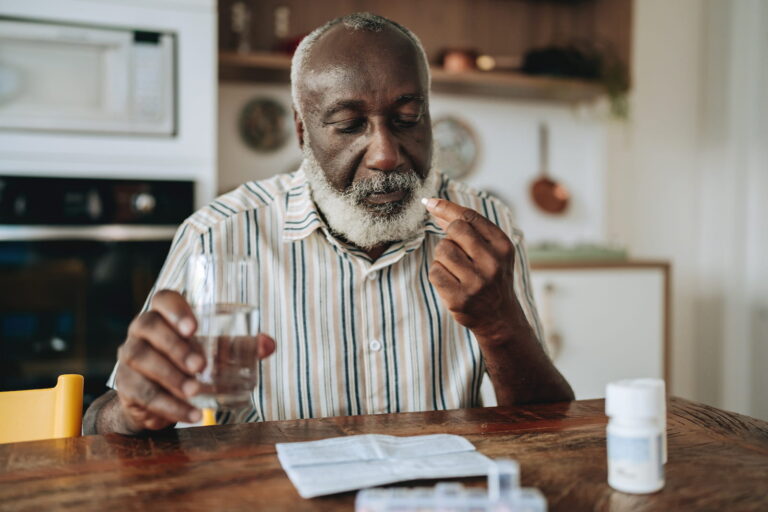
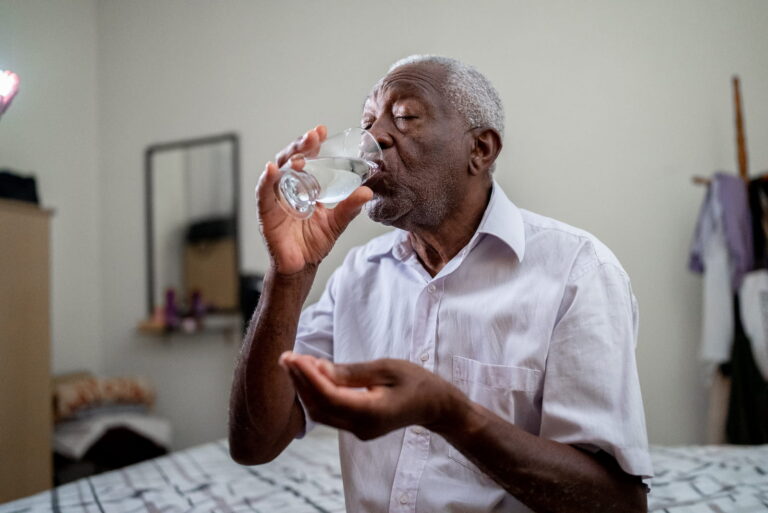
(HealthDay News) — A European epilepsy drug could be an effective treatment for sleep apnea, a new study suggests.

Patients who took the sulthiame pill had few pauses in their breathing while asleep, as well as higher levels of blood oxygen, according to clinical trial results presented Tuesday at the European Respiratory Society annual meeting in Vienna.

“This suggests that sulthiame could be an effective treatment for obstructive sleep apnea, especially for those who find they cannot use the existing mechanical treatments” like a CPAP machine, said researcher Jan Hedner from Sahlgrenska University Hospital and the University of Gothenburg in Sweden.

You May Also Like
Psoriatic Arthritis Can Feel Beyond Your Control. Consider a Different Direction. Learn More Here. Psoriatic Arthritis Can Feel Beyond Your Control. Consider a Different Direction. Learn More Here.

Sulthiame has never been approved for use in the United States, but it is used in Europe to treat epilepsy. It appears to quell seizures by increasing blood levels of an established anticonvulsant called phenytoin.

The drug also targets the respiratory system by inhibiting an enzyme called carbonic anhydrase, which stimulates upper airway muscles, researchers explained.

How did the clinical trial work?

For the study, researchers recruited nearly 300 people being treated for sleep apnea at hospitals in Spain, France, Belgium, Germany and the Czech Republic. None of the patients were using CPAP machines or mouthpieces to keep their airways open during sleep.

You May Also Like
Get GLP-1s Delivered to You As Low As $99/Month! Get GLP-1s Delivered to You As Low As $99/Month!

Three-fourths of the participants were prescribed sulthiame at different dosage levels, and the remaining quarter took a placebo pill.

Researchers said those taking the highest dose of sulthiame had 40% to 50% better breathing at night than those on placebo, based on different sleep apnea measures.

Researchers also said that sulthaime patients felt less sleepy during the daytime.

The drug produced mild to moderate side effects like pins and needles, headache, fatigue and nausea.

What were the results of the trial?

“People taking sulthiame in the trial had a reduction in obstructive sleep apnea symptoms such as stopping breathing during the night and feeling sleepy during the day,” Hedner said in a meeting news release. “Their average levels of oxygen in the blood were also improved with the treatment.”

However, Hedner said further clinical trials are needed to confirm these benefits before sulthaime can be widely adopted as a treatment for sleep apnea.

Head of the ERS meeting, Sophia Schiza, noted this is one of the first studies to suggest that a drug could help with sleep apnea. Schiza was not involved in the research.

“The results are promising,” Schiza, a professor of respiratory and sleep medicine at the University of Crete in Greece, said in a news release. “We need to continue testing sulthiame and other treatments to understand their long-term effects, including any side effects.”

Because these findings were presented at a medical meeting, they should be considered preliminary until published in a peer-reviewed journal.

Black Americans and sleep apnea

Sleep apnea disproportionately affects Black Americans. Studies have shown that Black individuals, particularly men, are at a higher risk of developing obstructive sleep apnea (OSA) than their white counterparts. Untreated sleep apnea can have serious consequences, including high blood pressure, heart disease, stroke, and diabetes. It’s essential for Black Americans to be aware of the risks and to seek medical attention if they experience symptoms such as excessive daytime sleepiness, loud snoring, and frequent waking during the night.

More information

The National Institutes of Health has more on sleep apnea.

SOURCE: European Respiratory Society, news release, Sept. 10, 2024

By Team BlackDoctor.org | Published September 10, 2024

September 10, 2024 by Team BlackDoctor.org

The Latest In Clinical Trials

lung cancer clinical trials

What Black Americans Need to Know Clinical Trials for Lung Cancer

Lung cancer, or bronchogenic carcinoma, is the collective name for cancers that start in the lungs— usually in the airways (bronchi or bronchioles) or small air sacs (alveoli). Lung cancer is known for its aggressive nature and high mortality rate.  read more about What Black Americans Need to Know Clinical Trials for Lung Cancer
clinical trial recruitment

How Social Media and AI Are Transforming Clinical Trial Recruitment

Lupus continues to affect racial and ethnic minority groups at disproportionately high rates, yet these same communities remain significantly underrepresented in clinical trials. Recognizing this critical gap, Lupus Therapeutics, through its Lupus Clinical Investigators Network (LuCIN), is leading research on read more about How Social Media and AI Are Transforming Clinical Trial Recruitment
This Clinical Trial Reversed a Rare Cause of Vision Loss

This Clinical Trial Reversed a Rare Cause of Vision Loss

Gene therapy may restore vision to children and adults robbed of their sight by a rare inherited condition called Leber congenital amaurosis, researchers report. The illness is caused by mutations in the GUCY2D gene, which is critical to producing proteins read more about This Clinical Trial Reversed a Rare Cause of Vision Loss
This AI Tool Detects Diabetic Eye Disease Faster in Black Americans

This AI Tool Detects Diabetic Eye Disease Faster in Black Americans

Despite the challenges of living with diabetes, a new AI-driven detection tool can help ease the burden of the disease. Researchers from Johns Hopkins Medicine and the University of Wisconsin-Madison have published a study on the use of autonomous artificial read more about This AI Tool Detects Diabetic Eye Disease Faster in Black Americans
Why I Did a Trial for TNBC: "It Very Likely Saved And Extended My Life"

Why I Did Clinical Trials for TNBC: “It Very Likely Saved And Extended My Life”

My cancer journey began in 2015 during a routine mammogram that revealed a mass in my breast, which turned out to be Triple-Negative Breast Cancer (TNBC), a rare and aggressive form of the disease. In my 50s and coming from read more about Why I Did Clinical Trials for TNBC: “It Very Likely Saved And Extended My Life”
lupus research

How Patients Are Driving Breakthroughs in Lupus Research

The Lupus Research Alliance (LRA), which formed and administers the Lupus Accelerating Breakthroughs Consortium (Lupus ABC)—a public-private partnership with the U.S. Food and Drug Administration (FDA)—is leading efforts to ensure that the voices of people living with lupus are central read more about How Patients Are Driving Breakthroughs in Lupus Research

Primary Sidebar

Subscribe to our newsletter

Icon

Caring for You, Too - Caregiver Workbook

1 file(s) 297 KB
Download

Trending Articles

12 Reasons Why It Feels Like Your Heart Rate Won’t Slow Down

heart rate

How to Treat Hidradenitis Suppurativa in Black People

How to Treat Hidradenitis Suppurativa in Black People

5 Early Signs of Bed Bugs You Need To Know

early signs of bed bugs

This Clinical Trial Reversed a Rare Cause of Vision Loss

This Clinical Trial Reversed a Rare Cause of Vision Loss

What Black Americans Need to Know Clinical Trials for Lung Cancer

lung cancer clinical trials
Find a Culturally Sensitive Doctor

Footer

Where Wellness & Culture Connect

BDO is the world’s largest and most comprehensive online health resource specifically targeted to African Americans. BDO understands that the uniqueness of Black culture - our heritage and our traditions - plays a role in our health. BDO gives you access to innovative new approaches to the health information you need in everyday language so you can break through the disparities, gain control and live your life to its fullest.

Connect With Us

Resource Centers

  • Top Blacks in Healthcare
  • Clinical Trials
  • Wellness on the Yard
  • Cancer
  • Immunocompromised Care
  • About Us
  • Privacy Policy
  • Cookie Policy
  • Terms of Service
  • Careers
  • Advertise With Us
  • Advertising & Sponsorship Policy
  • Daily Vitamina
  • TBH

Copyright © 2025, Black Doctor, Inc. All rights reserved.