Menu

Why Hypertension and Heart Disease Hits Black Americans Harder

Table of Contents
heart disease

In recognition of National High Blood Pressure Education Month, which is sponsored by the Centers for Disease Control and Prevention (CDC), this article features evidence-based education and practical tips on how to address high blood pressure with heart-healthy nutrition.  Before delving into the education and tips, below is a brief overview of the condition and health statistics.

What is High Blood Pressure?

Written as two figures, blood pressure is measured as the pressure when the heart has pumped (systolic) and when the heart is in between beats (diastolic). When the heart pumps blood, blood pressure is higher than when it is in between beats. The systolic measurement will be higher than the diastolic measurement.  

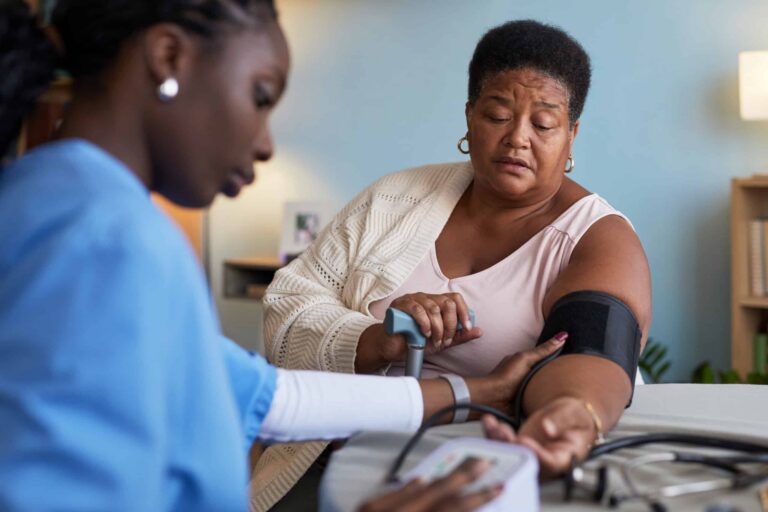
High blood pressure, also known as hypertension, is a condition in which the force of the blood against the artery walls is too high. High blood pressure often has no symptoms. If untreated over extended periods, it can cause health conditions such as heart disease and stroke.

Featured on BlackDoctor

The ranges for blood pressure are:

  • Normal Blood Pressure Levels: Systolic < 120mmHg Diastolic > 80mmHg
  • At Risk Blood Pressure Levels: Systolic 120-139mmHg Diastolic 80-89mmHg
  • High Blood Pressure Levels: Systolic 140mmHg or higher Diastolic 90mmHg or higher

How Hypertension and Heart Disease Disproportionately Affect African Americans

In the US, approximately 1 in 3 adults have high blood pressure, however, most people are not aware they have this condition due to a lack of signs or symptoms. Hypertension is more common among African Americans than Caucasians and is less likely to occur in Mexican Americans (Heart Disease and African Americans | Office of Minority Health, 2023).  To reiterate, uncontrolled high blood pressure can lead to heart disease and stroke.

According to the CDC, heart disease is the leading cause of death in the US. The most common type of heart disease is coronary artery disease (CAD), which can lead to heart attack. You can reduce your risk for heart disease through lifestyle changes such as eating a heart-healthy diet.

How Does Heart Disease Disproportionately Affect African American Populations?

  • In 2019, African Americans were 30 percent more likely to die from heart disease than non-Hispanic whites.
  • Although African American adults are 30 percent more likely to have high blood pressure, they are less likely than non-Hispanic whites to have their blood pressure under control.
  • African American women are nearly 50 percent more likely to have high blood pressure, as compared to non-Hispanic white women.

Addressing Hypertension with Healthy Eating

It is known that high levels of sodium (salt) consumption are linked to high blood pressure. In the US, most people consume more than twice the level of recommended sodium intake. Guidelines recommend up to 2,300mg of sodium per day for an adult. Those at higher risk should consume even less (up to 1,500mg of sodium a day). Higher risk groups include those who have diabetes, kidney disease, existing high blood pressure, and African American people. It is also recommended that people eat potassium rich foods which help lower blood pressure. Potassium rich foods include fish, green leafy vegetables, bananas, citrus fruits, and potatoes.

In addition to reducing their sodium intake, people should reduce their consumption of unhealthy fats.  Eating the right types of fat (unsaturated) and avoiding the unhealthy ones (saturated and trans-fat) helps reduce the buildup of plaque in your blood vessels.  Reducing your sodium and unhealthy fat intake lowers your risk of heart attacks and strokes.

Tips to Reduce Sodium in Your Diet

  • In general, foods with more than 300mg of sodium per serving may not work well for people with hypertension.
  • Look for the sodium, saturated fat, and cholesterol on your food label and make sure these nutrients are under 20 percent of the Daily Value.
  • Try alternative ways to season your food such as using citrus juice, herbs, and spices and always taste your food before adding salt.
  • Incorporate recipes from the Dietary Approaches to Stop Hypertension plan, which was created by the National Heart, Lung, and Blood Institute.

Foods that Lower Your Blood Pressure Include:

  • Berries contain antioxidants that have a lowering effect on blood pressure.
  • Bananas contain potassium, which can help manage hypertension.
  • Drinking beet juice may reduce blood pressure because it contains dietary nitrate.
  • Leafy green vegetables are rich in nitrates, which help manage blood pressure.
  • Watermelon contains the amino acid citrulline, which is converted to arginine producing nitric oxide, a gas that relaxes blood vessels and encourages flexibility in arteries.
  • Garlic, fermented foods, lentils, yogurt, pomegranates, nuts, citrus fruits, oily fish, and tomatoes are a few other heart-healthy foods. 

Featured Recipe

Jumpin’ Jambalya – Source National Heart, Lung, and Blood Institute.

References

Heart Disease and African Americans | Office of Minority Health. (2023). Minorityhealth.hhs.gov. https://minorityhealth.hhs.gov/heart-disease-and-african-americans


Article contributor: Eric Meredith, MEd, MS. RDN, CDE, CHES

To find out how you can get culturally inclusive, evidence-based nutrition counseling through your health insurance, please visit www.healthheroes.net.  Save the date to speak to Eric live this month during his “Ask the Dietitian” live webinar on May 31st at 5p MST.  If you have a question that you would like addressed during the webinar, send them in advance to [email protected]

Related Stories
Answer the question below
What areas do you try to improve in spring?

Get our Weekly Newsletter

Stay informed on the latest breakthroughs in family health and wellness. Sign up today!

By subscribing, you consent to receive emails from BlackDoctor.com. You may unsubscribe at any time. Privacy Policy & Terms of Service.

More from BlackDoctor

Where Culture Meets Care

BlackDoctor is the world’s largest and most comprehensive online health resource specifically for the Black community. BlackDoctor understands that the uniqueness of Black culture - our heritage and our traditions - plays a role in our health. BlackDoctor gives you access to innovative new approaches to the health information you need in everyday language so you can break through the disparities, gain control and live your life to its fullest.
✦ AI Search Disclaimer
This AI-powered search tool helps you find relevant health articles from the BlackDoctor.org archive. Please keep the following in mind:
✦ For Informational Purposes Only
The information provided through this AI search is for general educational and informational purposes only. It is not intended as a substitute for professional medical advice, diagnosis, or treatment.
✦ Always Consult a Healthcare Provider
Never disregard professional medical advice or delay seeking it because of something you have read through this search tool. If you have a medical emergency, call your doctor or 911 immediately.
✦ AI Limitations
This search tool uses artificial intelligence to help match your queries with articles in our archive. While we strive for accuracy, AI-generated results may occasionally be incomplete, outdated, or not fully relevant to your specific situation.
✦ No Doctor-Patient Relationship
Using this search tool does not create a doctor-patient relationship between you and BlackDoctor.org or any healthcare provider.
Explore over 35,000 articles and videos across black health, wellness, lifestyle and culture
Full AI Search Experience >
×

Download PDF

Enter your name and email to receive the download link.