

• Skip to main content
  • Skip to secondary menu
  • Skip to primary sidebar
  • Skip to footer
BlackDoctor.org
Where Wellness & Culture Connect

Where Wellness & Culture Connect

  • Conditions
  • Wellness
  • Lifestyle
  • Longevity
  • Clinical Trials
  • Resources
    • Generational Health
    • Top Blacks in Healthcare 2025
    • Hall Of Fame
    • Clinical Trials Resource Center
    • Obesity Resource Center
    • Cancer Resource Center
    • Wellness on the Yard
    • Immunocompromised Care
    • BDO Resource Library
  • Find A Doctor
  • BDO TV
Home / Health Conditions / Dry Eye Disease / 6 Ways to Protect Your Eyes From Your Desk Job

6 Ways to Protect Your Eyes From Your Desk Job

protect your eyes

Whether you’re remote or in the office, desk jobs have become the norm. Unfortunately, staring at a computer all day can have damaging effects on your eye. If most of your days are spent staring at a screen – TV, computer, phone or tablet – your eyes may start hurting. Digital screens can cause headaches, dry eyes, itching and in some cases, grainy sight called vision snow. These eye problems may indicate a condition called computer vision syndrome.

Signs of Computer Vision Syndrome

  • Blurred vision 
  • Dry eyes
  • Red eyes
  • Sore or irritated eyes
  • Blurred or double vision
  • Light sensitivity 
  • Headaches

If you have eye strain, headaches, soreness or dry eyes, it might be related to your all-day exposure to computer screens. Realistically, there might not be a whole lot you can do to reduce your screen time. But there are multiple steps you can take to reduce the effects of digital eye strain. 

RELATED: 15 Foods Proven to Improve Your Vision

You May Also Like
Psoriatic Arthritis Can Feel Beyond Your Control. Consider a Different Direction. Learn More Here. Psoriatic Arthritis Can Feel Beyond Your Control. Consider a Different Direction. Learn More Here.

Blue Light Filter

Blue lights filter glasses are a relatively inexpensive way to reduce eye strain. The high-energy blue lights that emit from the computer are straining to the retina. Filter glasses lower the amount of blue light that reaches your retina, reducing the likelihood of digital eye strain and long-term retina damage.

Similarly, you can place a blue light blocking screen panel or filer on your computer or phone. If you wear prescription glasses, consider upgrading to photochromic lenses, blue light filter lenses and anti-glare coating lenses. 

Adjust your computer settings

Having your screen brightness set too high or too low can cause eye strain. Avoid websites and texts that use small hard to read fonts on colored backgrounds. Update your setting to use large black font on white backgrounds. Also, adjust your computer’s color temperature to a warmer tone.

You May Also Like
Get GLP-1s Delivered to You As Low As $99/Month! Get GLP-1s Delivered to You As Low As $99/Month!

If you’re not one to manually change your computer setting, consider downloading an app that automatically adjusts your computer’s setting. Another alternative is to use an anti-glare and blue light screen filter. These filters have the bonus of acting as a screen protector and privacy filter. 

READ: Your Eyes Need Love Too

Blinks and Breaks

Concentrating on a screen for long periods decreases how often you blink. It also causes your teardrops to evaporate, which leads to dry eyes. The 20-20-20 rules advise that every 20 minutes, you should look away from your screen to an object 20 feet away for at least 20 seconds.

A simpler solution is to practice mindfulness and remember to blink your eyes throughout the workday. Generally, you should take 15-minute screen breaks after every two hours of work.

Increase the distance

Changing the position of your computer can help protect your eyes from straining. The American Optometry Association suggests that your computer screen be at least 20-28 inches away from your eyes.

Another option is to use a larger monitor so you can place the screen farther and reduce hunching and leaning.
protect your eyes

RELATED: Natural Ways To Take Care Of Dry Eyes

Lubricate your eyes

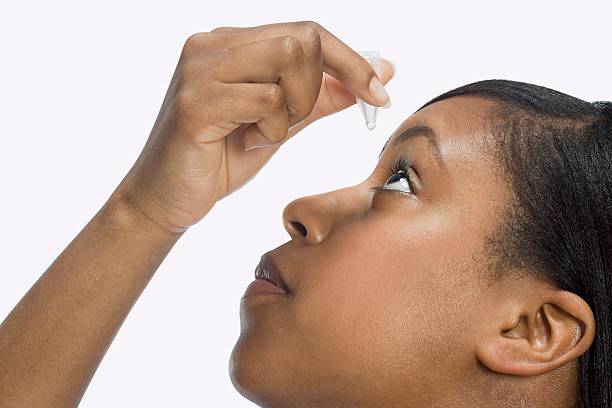
Regularly using lubricating eye drops can help moisturize your eyes and combat eye dryness. You can buy artificial tear drops over-the-counter without a prescription. The eyedrops are easy to apply and often provide immediate relief.

If you have severe dry eyes that do not improve with OTC eyedrops, your eye doctor might be able to offer prescription strength drops and gels.

Drink Water

Regularly drinking water and maintaining hydration can help reduce dry eyes. Drinking water supports tear production. Dehydration can cause dry eyes, which might exacerbate the dry eyes caused by digital screen time.

Staying hydrated is especially important if you’re a regular coffee or soda drinker. Caffeinated drinks are mild diuretics, which can dehydrate you. So, try to form the habit of always having a water bottle on your desk. Take steps to ensure you’re drinking enough water throughout the day.


By Afy Okoye | Published November 22, 2024

November 22, 2024 by Afy Okoye

The Latest In Dry Eye Disease

tryptyr, tryptyr approval, tryptyr dry eye disease, dry eye, dry eye disease, how to stop dry eye, dry eye treatment

These Clinical Trials Produced a Better Eye Drop for Dry Eye Disease

The U.S. Food and Drug Administration (FDA) has given its approval for a new eye drop called Tryptyr (pronounced Trip-tir). This medicine is the first of its kind to treat eye dryness and help with the signs and symptoms of read more about These Clinical Trials Produced a Better Eye Drop for Dry Eye Disease
dry eye

Dry Eye Making it Harder to Read? Here’s What to do

People with chronic dry eye may find the condition slows them down when they have to read beyond a couple of paragraphs, a new study suggests. Researchers found that compared with people without dry eye, those with the condition read read more about Dry Eye Making it Harder to Read? Here’s What to do
dry eyes

How to Fight Dry, Itchy Eyes This Winter

Add dry eyes to the health woes of winter. Do all the ads for dry eye relief have you thinking you could have this condition? If you've ever felt like you had a grain of sand in your eye when read more about How to Fight Dry, Itchy Eyes This Winter
optometrist vs ophthalmologist

Do You Need an Optometrist or Ophthalmologist? Here’s the Difference

When it comes to vision problems, you may hear the words optometrist and ophthalmologist thrown around. However, these are two very different professions and deciding which one to see depends on your symptoms. Here is what you need to know read more about Do You Need an Optometrist or Ophthalmologist? Here’s the Difference
contraceptive

Which Contraceptive Is Right for You? 4 Things to Consider

With so much information online and an overwhelming number of contraceptive options available, choosing the right method can feel daunting. Should you take the pill, get an IUD, try an injection, or opt for an estrogen-free option? These are just read more about Which Contraceptive Is Right for You? 4 Things to Consider
dry eyes

Dry Eyes? Stop Using These Medications

Dry eye season is upon us. Also known as keratoconjunctivitis sicca (KCS), dry eye is defined as itchy eyes -- heavy eyelids – or the feeling something is stuck in your eye and affects more than 3.2 million women over read more about Dry Eyes? Stop Using These Medications

Primary Sidebar

Subscribe to our newsletter

Icon

Caring for You, Too - Caregiver Workbook

1 file(s) 297 KB
Download

Trending Articles

How to Treat Hidradenitis Suppurativa in Black People

How to Treat Hidradenitis Suppurativa in Black People

5 Early Signs of Bed Bugs You Need To Know

early signs of bed bugs

Why I Did Clinical Trials for TNBC: “It Very Likely Saved And Extended My Life”

Why I Did a Trial for TNBC: "It Very Likely Saved And Extended My Life"

This Clinical Trial Reversed a Rare Cause of Vision Loss

This Clinical Trial Reversed a Rare Cause of Vision Loss

What Black Americans Need to Know Clinical Trials for Lung Cancer

lung cancer clinical trials
Find a Culturally Sensitive Doctor

Footer

Where Wellness & Culture Connect

BDO is the world’s largest and most comprehensive online health resource specifically targeted to African Americans. BDO understands that the uniqueness of Black culture - our heritage and our traditions - plays a role in our health. BDO gives you access to innovative new approaches to the health information you need in everyday language so you can break through the disparities, gain control and live your life to its fullest.

Connect With Us

Resource Centers

  • Top Blacks in Healthcare
  • Clinical Trials
  • Wellness on the Yard
  • Cancer
  • Immunocompromised Care
  • About Us
  • Privacy Policy
  • Cookie Policy
  • Terms of Service
  • Careers
  • Advertise With Us
  • Advertising & Sponsorship Policy
  • Daily Vitamina
  • TBH

Copyright © 2025, Black Doctor, Inc. All rights reserved.