
Heidi Stewart is living proof of that finding.
Stewart was an 18-year-old competitive swimmer and high school senior when she collapsed from a cardiac arrest on Feb. 12, 2013. Feeling unusually lethargic, she walked into her school’s administrative office to seek help – and immediately passed out.
An office worker dialed 911 and called for the school nurse, who administered CPR and then used the school’s automated external defibrillator, or AED. Stewart’s heart was shocked three times over 10 minutes before emergency responders reached the school grounds.
You May Also Like


“Without the AED, I would not behere today,” said Stewart, who was later diagnosed with a congenital heart defect. Now 23, she advocates for widespread distribution of the portable devices. “CPR alone would not have kept [me] alive.”
In a new study published Monday in Circulation, researchers examined data involving people who had cardiac arrests in nine major North American cities – six in the United States and three in Canada.
The study found that bystanders who used AEDs on cardiac arrest patients can significantly boost survival rates, particularly in regions where patients might have long waits before being reached by paramedics.
“In cities like New York, where the traffic is horrendous, and in some particularly rural areas, bystander defibrillation is going to make a major difference,” said cardiologist Dr. Myron Weisfeldt, the study’s senior author, and a Johns Hopkins University professor.

“The longer the delay by EMS, the survival rate falls – and the greater the difference between a bystander shocking the patient and an EMS shocking the patient.”
A cardiac arrest usually occurs when anelectrical disturbance disrupts the heart so much that it stops. An AED can shock the heart back into a normal rhythm.
In the new study, whose lead author was Johns Hopkins University medical student Ross Pollack, researchers looked at 49,555 people treated for cardiac arrest by an emergency medical services team between 2011 and 2015. The study analyzed a portion of those patients – the ones whose cardiac arrests happened in public outside of a hospital, were witnessed by bystanders, and were “shockable,” meaning the heart still had enough activity to respond to a defibrillator shock.
Researchers found that 66.5 percent survived with the help of a bystander-administered AED, versus 43 percent who survived after waiting for an emergency medical crew to deliver a shock to their hearts. Similarly, cardiac arrest patients were more likely to return to their normal neurologic levels when assisted by bystanders who used AEDs instead of waiting for emergency technicians.
Dr. Raina Merchant, an emergency medicine doctor and associate professor at the University of Pennsylvania, was pleased to find the study reflected similar benefits and results of AED use, regardless of what part of the country or continent the devices were administered. The report also backs up previous studies showing “the devices can be used by anyone,” she said.
Yet, she said the study also demonstrated that not enough people are using defibrillators. Only about one in five cardiac arrest patients in the study received an AED shock from a bystander. It’s uncertain whether an AED was available in every case included in the study, and researchers did not consider the impact of calling 911 and starting immediate CPR.
“We know that they save lives, we know when they’re used they can make a big difference for people who are in a shockable rhythm, so now our charge is really – how do we make sure that people know where the devices are, and that they feel comfortable taking them off the wall or out of drawers and start using them?” said Merchant, who was not involved in the study. “The call to action here is that we have good science to show they work. Let’s get more people using them.”
An estimated 3,459 additional lives would be saved each year in the United States if every person who had a bystander-witnessed cardiac arrest in public received AED shocks from bystanders, according to the study.
The report noted an increase in availability of AEDs in public spaces over the years. Looking at the most recent data available, researchers cited an analysis by the Food and Drug Administration that found AED sales in the United States had increased tenfold from 1996-2006 “and this trend may have continued since.”
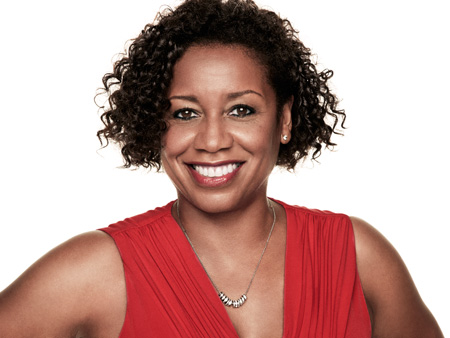
Heidi Stewart was 18 when she had a cardiac arrest at her high school. The school’s public access AED helped save her life. (Photo by American Heart Association)
Heidi Stewart was 18 when she had a cardiac arrest at her high school. The school’s public access AED helped save her life. (Photo by American Heart Association)
Stewart advocates for getting AEDs in more public spaces as well as making people comfortable with the idea of using them. She said the only reason her high school had a defibrillator five years ago when she suffered her cardiac arrest was because it had been donated by a local family struck by tragedy and aware of the device’s benefits.
“I know a lot of people view an AED as something scary or just feel it’s taboo to make an attempt to save a life if you’re not a medical expert,” Stewart said. “But it’s so easy to operate an AED. The thing talks to you. It has pictures showing you where to put the pads. It’s really so simple.
“It begins with one person, one bystander. You need to just try. I’m alive because someone decided to try.”
If you have questions or comments about this story, please email editor@heart.org.
American Heart Association News covers heart disease, stroke, and related health issues. Not all views expressed in American Heart Association News stories reflect the official position of the American Heart Association.
Copyright is owned or held by the American Heart Association, Inc., and all rights are reserved. Permission is granted, at no cost and without need for further request, to link to, quote, excerpt or reprint from these stories in any medium as long as no text is altered and proper attribution is made to the American Heart Association News. See full terms of use.
HEALTH CARE DISCLAIMER: This site and its services do not constitute the practice of medical advice, diagnosis or treatment. Always talk to your healthcare provider for diagnosis and treatment, including your specific medical needs. If you have or suspect that you have a medical problem or condition, please contact a qualified health care professional immediately. If you are in the United States and experiencing a medical emergency, call 911 or call for emergency medical help immediately.