
• Skip to main content
  • Skip to secondary menu
  • Skip to primary sidebar
  • Skip to footer
BlackDoctor.org
Where Wellness & Culture Connect

Where Wellness & Culture Connect

  • Conditions
  • Wellness
  • Lifestyle
  • Longevity
  • Clinical Trials
  • Resources
    • Generational Health
    • Top Blacks in Healthcare 2025
    • Hall Of Fame
    • Clinical Trials Resource Center
    • Obesity Resource Center
    • Cancer Resource Center
    • Wellness on the Yard
    • Immunocompromised Care
    • BDO Resource Library
  • Find A Doctor
  • BDO TV
Home / Health Conditions / Heart Health / Gratitude is Good Medicine! How Being Grateful Can Heal

Gratitude is Good Medicine! How Being Grateful Can Heal

gratitude

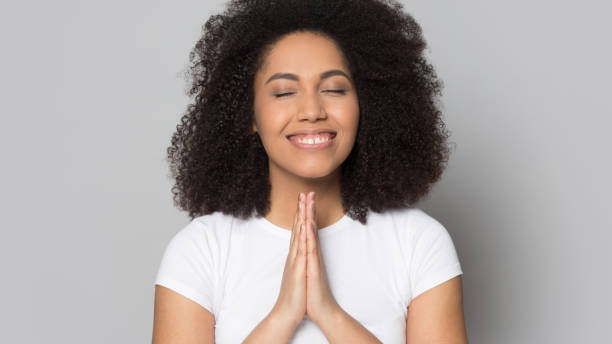
When most people think about Thanksgiving, they focus on food, family, football-watching and just that one day. But putting the “thanks” back into Thanksgiving is a good start in improving your heart health every day, researchers say.

“Somebody once said a grateful heart is a healthier heart, and that’s what we saw in this study,” Paul Mills, Ph.D., a professor and researcher at the University of California-San Diego whose study was published last year by the American Psychology Association says.

Mills and his team studied 186 men and women with asymptomatic (Stage B) heart failure to see how their sense of thankfulness and gratitude affected their overall health.  First, they focused on psychological health and found that patients who expressed higher levels of gratitude had less depression, less anxiety and slept better.

You May Also Like
Psoriatic Arthritis Can Feel Beyond Your Control. Consider a Different Direction. Learn More Here. Psoriatic Arthritis Can Feel Beyond Your Control. Consider a Different Direction. Learn More Here.

RELATED: 3 Benefits Of Adding Mindful Practices To Your Daily Routine

Next, they turned to the heart. Using blood tests, they discovered that the patients with more gratitude had lower levels of inflammation and better heart health.

“That was a lovely surprise,” Mills says. Based on past literature, we thought people that had more gratitude would have a better sense of well-being, but we didn’t expect to see changes in the biology as well.”

You May Also Like
Get GLP-1s Delivered to You As Low As $99/Month! Get GLP-1s Delivered to You As Low As $99/Month!

The study didn’t surprise Robert A. Emmons, Ph.D., a professor of psychology at University of California-Davis, author of "The Little Book of Gratitude" (Gaia, 2016), and a researcher who has spent decades studying the effects of gratitude.

RELATED: Gratitude Journaling Made Easy!

“Gratitude is good medicine,” Emmons says. “Clinical trials indicate that the practice of gratitude can have dramatic and lasting effects in a person’s life. It can lower blood pressure and improve immune function … grateful people engage in more exercise, have better dietary behaviors, are less likely to smoke and abuse alcohol, and have higher rates of medication adherence.”

Defining gratitude can be tricky. Webster’s New World Dictionary describes it as “a feeling of thankful appreciation for favors or benefits received; thankfulness.” But Mills says he and other researchers consider thankfulness to be just one component of gratitude.

“Thankfulness is when we feel thankful for specific things – thankful that I have a roof over my head or that I just ate a good meal. With gratitude, it isn’t that we’re grateful for any one thing. It’s more a state of our soul, of just being grateful for our existence,” Mills shares. “As people cultivate thoughts and feelings of thankfulness, it moves their consciousness away from just thankfulness into

actual gratitude regardless of what they do or don’t have.”

Emmons defines gratitude as “a trait, a state, an attitude, a way of coping, and a virtue all rolled into one. Gratitude is an affirmation of the goodness in one’s life and the recognition that the sources of this goodness lie at least partially outside the self,” he adds.

Perhaps the only thing harder than defining gratitude is actually practicing it.

RELATED: How Thankfulness Gets Us To Our Goals + 4 Ways To Practice It

“Busyness, forgetfulness and a sense of entitlement all diminish possibilities for gratitude,” says Emmons, who suggested the people “take life ‘as granted’ rather than ‘for granted.’ Instead of saying ‘I have to do this’ try saying ‘I get to do this.’ Sense that you are lucky or graced rather than deserving of good fortune. Repeat the phrase to yourself ‘I am gifted.’ ”

Mills suggests a more concrete approach: Write it down.

As part of his study, Mills asked participants to keep a journal of things they were grateful for. After two months of journaling, their heart health improved, including reductions in circulating levels of inflammatory biomarkers and improved heart rate variability.

The Reinvention Reset: A 10 Step Blueprint for Changing Your Life

“Journaling about gratitude is a reliable exercise. The more things you can identify, the more your perception of well-being begins to change,” Mills says.

After a while, people become so grateful they no longer need to write down their feelings, he says.

“Gratitude journaling can lead to a more permanent transformation in a person’s mind and psyche,” Mills adds. “They sense gratitude more continuously and then they stop journaling because they’ve made the transition — they’ve changed how they view their moment-to-moment life and the world around them.”


By Derrick Lane | Published October 16, 2021

The Latest In Heart Health

congestive heart failure symptoms

12 Reasons Why It Feels Like Your Heart Rate Won’t Slow Down

Anxiety? Caffeine? More serious? Running the last few minutes of a race, preparing for a major presentation, or watching "Stranger Things" in the dark may make your heart race. Daily living shouldn't raise your heart rate. Your heart's rhythm is read more about 12 Reasons Why It Feels Like Your Heart Rate Won’t Slow Down
amyloidosis

Amyloidosis: 3 Warning Signs Doctors Don’t Warn Patients About

Heart failure is a serious condition — but sometimes, what looks like ordinary heart failure is actually something else entirely. One condition that often flies under the radar is amyloidosis. Amyloidosis happens when an abnormal protein called amyloid builds up read more about Amyloidosis: 3 Warning Signs Doctors Don’t Warn Patients About
heart

Most People’s Hearts Are Older Than They Realize—Is Yours?

When Dr. Mark T. Loafman, MD, MPH talks about heart health, he doesn’t start with numbers—he starts with names. As a physician and public health leader at Cook County Health, one of the nation’s largest public health systems, Dr. Loafman read more about Most People’s Hearts Are Older Than They Realize—Is Yours?
heart disease

Black Men & Heart Disease: What You NEED to Know

Heart disease. The words themselves can send a chill, and for good reason. It remains the number one killer, a stark reality brought into sharp focus during a Facebook Live discussion, "Matters of the Heart: A Man's Guide to Cardiac read more about Black Men & Heart Disease: What You NEED to Know
lp(a)

Why This Nurse and This Mom Are Sounding the Alarm on Lp(a)

Cardiovascular disease remains the leading cause of death worldwide, yet many risk factors remain largely unknown to the public. One of these is lipoprotein(a), or Lp(a)—a genetic lipid particle that, according to new data from the Family Heart Foundation, significantly read more about Why This Nurse and This Mom Are Sounding the Alarm on Lp(a)
creatine

Should Black Women Use Creatine? What You Need to Know First

Creatine is experiencing a resurgence—not just in gyms but in mainstream wellness conversations. Yet among Black women, who already face unique physiological and cultural contexts, it raises critical questions: Is creatine beneficial? Is it safe? How does it fit into read more about Should Black Women Use Creatine? What You Need to Know First

Primary Sidebar

Subscribe to our newsletter

Icon

Caring for You, Too - Caregiver Workbook

1 file(s) 297 KB
Download

Trending Articles

Weight Loss Challenge: Lose 10 Pounds In 2 Weeks!

lose 10 pounds in 2 weeks

Stage 4 Lung Cancer: Why I Said Yes to a Clinical Trial

Stage 4 Lung Cancer: Why I Said Yes to a Clinical Trial

Top 10 Ways to Improve Your Digestion Naturally

digestion

This Clinical Trial Is Making HIV Treatment Easier for Black People

This Clinical Trial Is Making HIV Treatment Easier for Black People

A Clinical Trial Extended the Life of Women With Hard-to-Treat Breast Cancer

A Clinical Trial Extended the Life of Women With Hard-to-Treat Breast Cancer
Find a Culturally Sensitive Doctor

Footer

Where Wellness & Culture Connect

BDO is the world’s largest and most comprehensive online health resource specifically targeted to African Americans. BDO understands that the uniqueness of Black culture - our heritage and our traditions - plays a role in our health. BDO gives you access to innovative new approaches to the health information you need in everyday language so you can break through the disparities, gain control and live your life to its fullest.

Connect With Us

Resource Centers

  • Top Blacks in Healthcare
  • Clinical Trials
  • Wellness on the Yard
  • Cancer
  • Immunocompromised Care
  • About Us
  • Privacy Policy
  • Cookie Policy
  • Terms of Service
  • Careers
  • Advertise With Us
  • Advertising & Sponsorship Policy
  • Daily Vitamina
  • TBH

Copyright © 2025, Black Doctor, Inc. All rights reserved.