
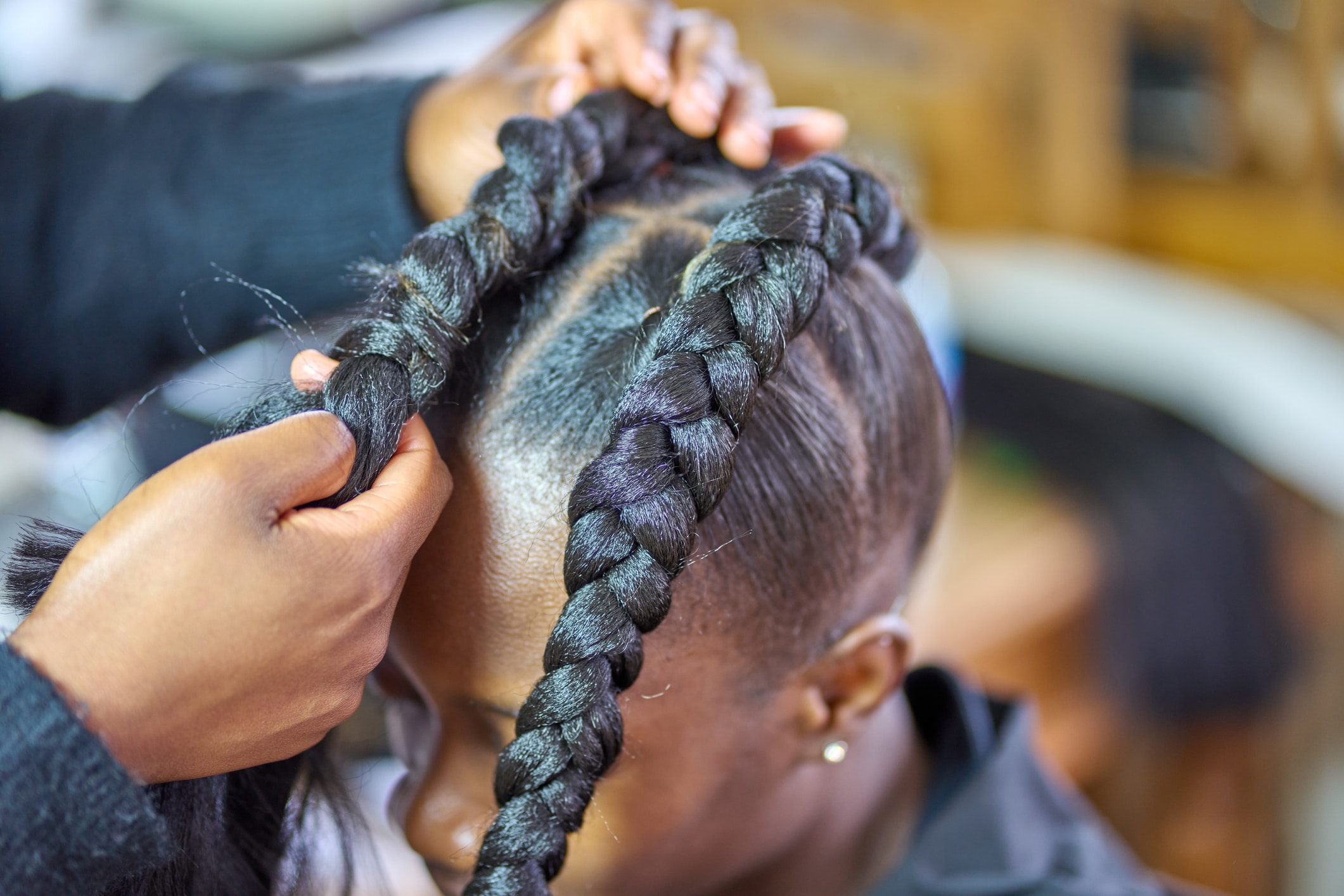
Hair extensions—especially braiding hair and other add-in styles—are a staple of protective styling and a multibillion-dollar global industry. But new research is raising alarms that many extension products may come with an under-discussed cost: exposure to toxic chemicals, including some associated with cancer, hormone disruption, and reproductive harm.
A Feb. 11, 2026 study published in the American Chemical Society journal Environment & Health analyzed a wide range of hair extension products and found a much larger and more complex chemical “signature” than prior work had documented. In reporting on the paper, Scientific American noted that researchers detected 169 chemicals across products, and that at least 12 of those chemicals have been associated with serious health harms (including cancer and reproductive effects) and appear on California’s Proposition 65 list.
What the Study Found (and why it matters)
According to the Silent Spring Institute—whose scientists led the work—this was the most comprehensive analysis to date of chemicals in hair extensions, including both synthetic and human-hair products. The institute reported finding multiple classes of concerning chemicals, including phthalates, flame retardants, organotins, and other substances linked with cancer and harmful health effects.
You May Also Like
It’s important to be precise about what “linked to cancer” means here. The study does not claim hair extensions “cause cancer” in the way cigarettes cause lung cancer. Instead, it identifies chemicals in products that are hazardous (based on toxicology and regulatory listings) and highlights plausible routes for exposure—then argues that this category of products is underregulated relative to its widespread, long-term use.
How people may be exposed
Extensions are unusual compared with many cosmetics because they can involve:
-
Long wear times (often weeks at a time)
You May Also Like
-
Close and repeated contact with the scalp/skin
-
Heat (hot water setting, blow-drying, flat ironing ends, heat tools)
-
Inhalation of fumes during installation or heat styling
-
Hand-to-mouth transfer, especially when fibers shed
This matters because exposure is not just “what’s in the product,” but how it’s used—duration, heat, skin contact, and indoor air all change potential dose.
Consumer Reports made a similar point in earlier testing of popular synthetic braiding hair, emphasizing that people often wear braids for 4–6 weeks, creating sustained exposure conditions. In that testing, CR reported detecting carcinogens (VOCs) in 100% of samples, lead in 9 of 10 products, and VOCs across all products tested.
(Different study, different methods—but pointing in the same direction: repeated and prolonged exposure pathways are real.)
Why Black Women are at the Center of the Risk Conversation
This is not an abstract consumer-safety issue; it’s an environmental justice issue.
Hair extensions are disproportionately used by Black women, in large part because of cultural norms, workplace bias, protective styling needs, and the economics of hair care. Silent Spring Institute explicitly frames the new findings as a concern that disproportionately affects Black women because this is the population most likely to use extensions frequently and over many years.
This fits a broader pattern documented by the National Institute of Environmental Health Sciences: researchers have been studying how hair product use patterns and exposure to ingredients like phthalates and formaldehyde can contribute to environmental health disparities among Black women.
Extensions have become even more prominent for many people precisely because they’re viewed as a safer alternative to harsh chemical services. That context matters: in 2022, NIH researchers reported that women who used chemical hair straighteners were at higher risk for uterine cancer compared with non-users—an issue especially relevant because these products have historically been marketed heavily to Black women and used more frequently.
So for many consumers, the “switch” to braids, weaves, and wigs has been part of a harm-reduction strategy—only for new evidence to suggest that some add-in hair products may also bring chemical exposures.
“Human hair” doesn’t automatically mean “clean”
One of the most unsettling takeaways from the 2026 research is that human-hair extensions are not exempt from chemical concerns. Human hair products may be treated during processing—washed, dyed, coated, softened, or preserved—often across complex global supply chains. The Silent Spring Institute’s summary emphasizes that hazardous chemicals were identified across product types, not just synthetics.
Regulation and transparency: why this category can slip through
A recurring theme in the reporting is that consumers often can’t make informed choices because ingredient disclosure is limited—especially for products that are not marketed as “cosmetics” in the conventional sense.
In the U.S., cosmetic regulation has historically been lighter than many consumers assume, though the FDA’s authority expanded significantly under the Modernization of Cosmetics Regulation Act of 2022 (MoCRA). The FDA describes MoCRA as the biggest expansion of its cosmetics authority since 1938.
Whether and how extension products are covered in practice—and how quickly oversight translates into safer products and clearer labeling—remains a key policy question raised by researchers and advocates.
Meanwhile, California’s Proposition 65 list functions as a widely used hazard reference point; it includes chemicals listed for cancer or reproductive harm (or both).
When a study says certain detected chemicals appear on Prop 65, it’s signaling: “These substances have been formally identified by California as hazardous enough to require warnings under certain exposure conditions.”
What People Can Do Right Now (without panic-buying or blame)
Research like this can feel personal—especially when hair is tied to identity, safety, and belonging. The goal isn’t to shame protective styles; it’s to push for safer products and better information. Practical steps, based on how exposure happens:
-
Reduce heat on extensions when possible (heat can increase volatilization of some chemicals).
-
Ventilate during installation and heat styling (open windows, use a fan).
-
Wash/rinse new hair before installation if feasible (some consumers report reduced irritation; science on how much this reduces chemical load is still emerging).
-
If you experience itching, rash, headaches, respiratory irritation, treat it as a real exposure signal and consider changing products or styles.
-
Look for manufacturers that provide material/chemical transparency—and support salons/brands that pressure suppliers for documentation.
But the burden shouldn’t fall solely on individuals. These findings underline the need for industry-wide standards, clearer labeling, and independent testing—especially for products disproportionately used by Black women.
The Bigger Point: Beauty Shouldn’t be a Trade-Off
For years, public health discussions have focused on chemical relaxers and dyes; now the lens is widening to include extension hair—products many people chose as a “safer” path. The throughline is structural: when a community is heavily targeted by certain products and styles, and oversight is weak, risk becomes unequal.
The new 2026 evidence doesn’t “close the case,” but it significantly strengthens it: hair extensions can contain complex mixtures of chemicals, including known hazardous substances, and the people most likely to be exposed are often those who already face disproportionate health burdens.