
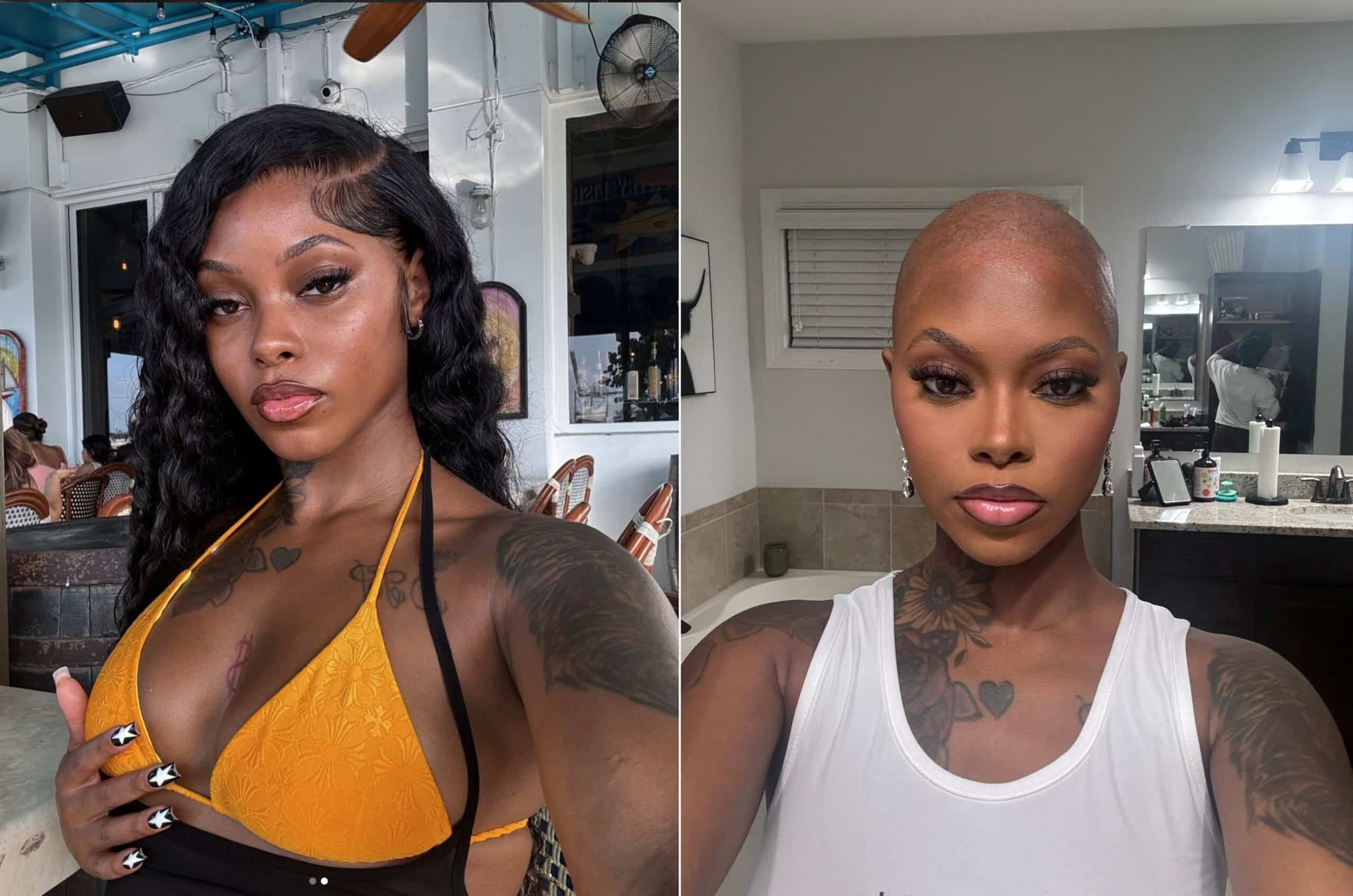
 St. Louis-born rapper Big Boss Vette, born Diamond Alexxis Smith, had all the girls strutting their stuff with her viral hit, “Pretty Girls Walk.” But, recently, instead of inspiring women with her music, she recently shared one of the most intimate and inspiring chapters of her life: her victory over cancer. Known for her bold presence in hip-hop, Vette’s triumph over illness adds a new, astonishing chapter to her story of courage and resilience.
A Diagnosis Few Knew About
Throughout much of 2025, Big Boss Vette quietly battled breast cancer, receiving treatment that included chemotherapy and, according to reports, other rigorous therapies. She chose to keep her health struggle largely private, continuing to release music and maintain her creative momentum without publicly disclosing what she was facing. Many fans had no idea she was fighting such a serious illness behind the scenes.
Her decision to stay silent about her diagnosis was intentional. Vette later explained that fighting “in private” allowed her to focus on healing without the added stress of public scrutiny and speculation. Only after completing treatment did she feel ready to share the news, hoping her experience could one day help others.
“I had to fight in private to make it to the other side but I can’t wait to share and hopefully help anyone who may be going through something similar,” explained Vette in an earlier Instagram post. “I love yall”
You May Also Like
The Victory Bell Moment
The moment that made headlines—and touched hearts worldwide—came in early January 2026. Big Boss Vette posted a video on social media showing herself walking through a hospital hallway, cheered on by medical staff, nurses, and supporters. Clad in a pink headscarf and shirt, she confidently approached and rang the ceremonial bell that marks the completion of cancer treatment.
The clip played her own song “Pretty Girls Walk” as a triumphant soundtrack, turning what is typically a solemn milestone into a powerful, celebratory moment. In her caption, she wrote:
“If you would’ve told me I’d be beating cancer azzzzzz in 2026 I wouldn’t have believed you!!!! WE DID IT YALLLLLLLLL.” Click the image below to see the full video.
You May Also Like


The bell-ringing is a long-held tradition in cancer care, symbolizing not just the end of a grueling treatment regimen but also survival, hope, and community support. Her celebration was met with an outpouring of love, shock, and admiration from fans and fellow artists alike.
Balancing Fame and Personal Struggles
For an artist whose work champions confidence, empowerment, and self-expression, this news shed new light on her music and message. Songs like “Pretty Girls Walk” took on deeper meaning in retrospect, reflecting a person who kept moving forward despite facing one of life’s most difficult challenges.
Her choice to keep her struggle private also sparked conversations about how public figures navigate personal health battles. By revealing the journey after her recovery, Vette demonstrated that there is no single “right” way to handle such a deeply personal experience—and that privacy can be an important part of healing.
Why are Black Women Getting Breast Cancer Younger?
Black women are diagnosed with breast cancer at younger ages than white women for a combination of biological, social, environmental, and healthcare-related reasons. Researchers agree there isn’t a single cause—it’s the result of overlapping factors and long-standing inequities.
Here are some key reasons:
Genetic and biological factors
Certain inherited genetic variations linked to breast cancer risk appear more frequently in women of African ancestry, though this area is still under-researched.
Through continued research, it’s clear that biology also plays a role. Black women are disproportionately affected by more aggressive subtypes of breast cancer, such as triple-negative breast cancer (TNBC) and inflammatory breast cancer, and they are more likely to be diagnosed at younger ages and at more advanced stages of the disease.
Results from two large clinical trials—TAILORx and RxPONDER, supported in part by the Breast Cancer Research Foundation (BCRF)—have revealed distinct differences in recurrence and outcomes in Black women compared to white women. BCRF investigator and study lead Dr. Joseph Sparano reported on the TAILORx trial, which showed that while the number of late recurrences exceeded early recurrence rates in all participants, there were disparities between Black women and white women in early recurrences, but not in late recurrences. Looking at the connection between race and clinical outcomes, RxPONDER investigators found that despite having similar recurrence scores, Black women with hormone receptor–positive/HER2-negative, lymph node–positive breast cancer had worse outcomes compared to Asian, Hispanic, and non-Hispanic white women. Other studies have examined this disparity and indicate that breast tumors in Black women respond differently to endocrine therapy and may develop resistance more frequently.
A 2017 study looking at women between the ages of 18 to 64 who were diagnosed with early-stage breast cancer found that four key factors accounted for 76.3 percent of the total excess mortality risk in Black patients: 37 percent of Black women’s excess mortality risk could be explained by a lack of private health insurance; tumor characteristics explained 23.2 percent; comorbidities 11.3 percent; and treatment differences (when it started or stopped, what was given) 4.8 percent.
Importantly:
-
Black women are underrepresented in genetic studies, so risk factors may be missed or misunderstood
-
Some protective mutations identified in white populations may not apply the same way across groups
2. Chronic stress and “weathering”
Researchers describe a phenomenon called “weathering”—the cumulative biological impact of long-term stress caused by:
-
Racism and discrimination
-
Economic inequality
-
Caregiving burdens
-
Workplace and community stress
Chronic stress affects:
-
Hormone regulation
-
Immune response
-
Inflammation
—all of which are linked to cancer development at earlier ages.
3. Environmental exposures
Black women are more likely to live in areas with:
-
Higher pollution
-
Endocrine-disrupting chemicals (found in some hair products, cosmetics, plastics, and industrial waste)
-
Limited access to healthy food and green space
Some of these exposures are associated with earlier onset breast cancer, though research is ongoing.
4. Barriers to preventive healthcare
Even when income and education are similar, Black women face:
-
Less consistent access to high-quality screening
-
Delayed follow-ups after abnormal findings
-
Medical bias that can lead symptoms to be minimized
Standard screening guidelines often start at age 40 or 50, which may be too late for many Black women.
5. Later-stage diagnosis, despite earlier onset
It’s funny how Black women are diagnosed younger, but also diagnosed later in disease stage.
This combination increases mortality risk, even though overall incidence is slightly lower than in white women.
Looking Ahead: What’s Next for the Big Boss?
Now officially cancer-free, Big Boss Vette steps into 2026 with renewed health and purpose. While the physical battle may be behind her, survivorship often brings its own emotional and psychological adjustments. Her journey, shared now with her fans, adds a powerful narrative of resilience to her life and career.
For many who watched the viral video and read her heartfelt posts, her story is more than celebrity news—it’s a testament to strength, perseverance, and hope. Her victory is a powerful reminder that battles fought in silence can end in triumph, and that courage isn’t always loud—it’s persistent, private, and deeply human.