
• Skip to main content
  • Skip to secondary menu
  • Skip to primary sidebar
  • Skip to footer
BlackDoctor.org
Where Wellness & Culture Connect

Where Wellness & Culture Connect

  • Conditions
  • Wellness
  • Lifestyle
  • Longevity
  • Clinical Trials
  • Resources
    • Generational Health
    • Top Blacks in Healthcare 2025
    • Hall Of Fame
    • Clinical Trials Resource Center
    • Obesity Resource Center
    • Cancer Resource Center
    • Wellness on the Yard
    • Immunocompromised Care
    • BDO Resource Library
  • Find A Doctor
  • BDO TV
Home / Health Conditions / COVID-19 / Coronaviruses Can Survive on Frozen Meat for a Month

Coronaviruses Can Survive on Frozen Meat for a Month

coronavirus

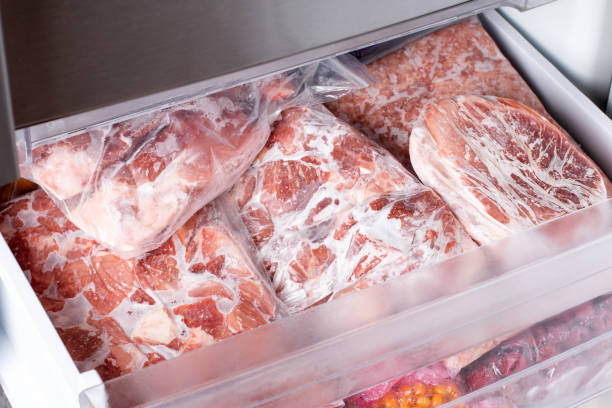
Had COVID? You might want to clean your freezer out. A new study suggests that coronavirus can survive on frozen meat and fish for up to 30 days.

The research -- prompted by COVID outbreaks in Asia in which packaged meat was suspected as the virus' source -- was conducted on frozen chicken, beef, pork and salmon. The findings were published June 11 in Applied and Environmental Microbiology, a journal of the American Society for Microbiology.

"Although you might not store meat in the fridge for 30 days, you might store it in the freezer for that long," says first author Emily Bailey, assistant professor of public health at Campbell University in Buies Creek, N.C.

You May Also Like

Psoriatic Arthritis Can Feel Beyond Your Control. Consider a Different Direction. Learn More Here. Psoriatic Arthritis Can Feel Beyond Your Control. Consider a Different Direction. Learn More Here.

Her team conducted its research without the use of the actual coronavirus that causes COVID-19. Instead, researchers relied on surrogate viruses with similar protein spikes.

RELATED: Rethink What You Thought You Knew About COVID-19 Reinfection coronavirus

These similar viruses were placed on frozen meat and fish, which were then stored at both refrigerator temperatures (39.2 degrees Fahrenheit) and freezer temperatures (-4 F.)

You May Also Like
Get GLP-1s Delivered to You As Low As $99/Month! Get GLP-1s Delivered to You As Low As $99/Month!

"We even found that the viruses could be cultured after [being frozen for] that length of time," Bailey said in a journal news release.

Researchers said their findings are significant because SARS-CoV-2 can reproduce in the gut, not just in the respiratory tract where most people feel its effects.

Three virus strains were used as surrogates in the study, including two animal coronaviruses. All three have been used as stand-ins in previous studies of SARS-CoV-2.

The researchers found that the viruses didn't fare as well in refrigerated temperatures as in freezer temperatures. The numbers also differed by food item.

They said this study underlines the importance of rigorous sanitation in the harvest, transport, packaging and distribution of food products.

"Continued efforts are needed to prevent contamination of foods and food processing surfaces, worker hands, and food processing utensils such as knives," the authors wrote, adding that the disinfection of foods prior to packaging also needs to be addressed.

RELATED: As Cases Rise, Here’s How to Protect Yourself From COVID BA.5 coronavirus

How to properly sanitize your food

In the meantime, you can practice appropriate food hygiene at home to ensure that your raw meat and cooked products remain safe.

The CDC and U.S. Food Safety and Inspection Service (FSIS) offer simple guidelines:

  • Wash hands and surfaces. Wash your hands often with warm, soapy water for at least 20 seconds. Scrub food surfaces, such as cutting boards, countertops, and sinks, before and after use.
  • Separate foods. Keep raw and ready-to-eat foods separate to avoid cross-contamination and the spreading of germs.
  • Thoroughly cook foods. Cook meat to the appropriate internal temperatures to kill harmful pathogens and make it safe to eat.
  • Chill. Promptly refrigerate meat and safely thaw meats in cold water, the refrigerator, or the microwave. Learn more about refrigeration storage here.

Thinking about washing your meat? It is important to note that washing raw meat with plain water is ineffective at removing bacteria. In fact, it may cause more harm than good by spreading foodborne pathogens to other foods and across cooking surfaces.

Acidic solutions like white vinegar and lemon juice, on the other hand, may lower the number of bacteria on raw meat, however, this practice is influenced by cultural practices and purchasing habits.

These are the common acidic solutions used in meat preparation:

  • White vinegar. This common cooking and cleaning ingredient is also one of the most common acids for washing meat. It contains acetic acid, which has been shown to reduce bacterial volume and growth on the surface of beef, chicken, and duck.
  • Lemon or lime juice. These citrus juices are not only useful in daily cooking but have also been found to reduce bacteria on meat and retain the flavor of cooked meat.
  • Food-grade sodium hydroxide (NaOH). This food additive prevents mold and bacterial growth and is used to remove the skins of fruits and veggies like tomatoes or potatoes. NaOH reduces bacterial growth on the surfaces of meat.

It should be noted that it is unclear whether these acidic solutions kill harmful foodborne viruses, so practicing appropriate food hygiene is the best way to ensure that raw meats are safe to cook or freeze.

 

By Cara Jones, BDO Staff Writer | Published August 2, 2022

The Latest In COVID-19

immunosuppressants

Summer COVID-19 Cases Are on the Rise – What You Should Know

COVID-19 cases are rising this summer across much of the United States, with 27 states reporting growing or likely growing trends, according to the Centers for Disease Control and Prevention. As of mid-July, states like Texas, Illinois, Kentucky, Virginia and read more about Summer COVID-19 Cases Are on the Rise – What You Should Know
COVID vaccines

CDC Ends COVID Vaccine Recommendation for Healthy Children, Pregnant Women

In a recent announcement, the Centers for Disease Control and Prevention has removed COVID-19 vaccines from the recommended immunization schedule for healthy pregnant women and children. Flanked by federal health officials, Health and Human Services Secretary Robert F. Kennedy Jr. read more about CDC Ends COVID Vaccine Recommendation for Healthy Children, Pregnant Women
2 Groundbreaking Clinical Trials That Have Helped Black Health

2 Groundbreaking Clinical Trials That Have Helped Black Health

Clinical trials have long been the cornerstone of medical advancement, but their impact is especially meaningful when they represent the full diversity of the populations they aim to serve. During a recent panel discussion on Clinical Trials Day, industry leaders read more about 2 Groundbreaking Clinical Trials That Have Helped Black Health
COVID-19 pandemic

Racial and Ethnic Differences Persist in COVID-19, According to Survey

Sponsored by Gilead Sciences Racial and ethnic disparities in health care have long been a problem in the U.S.1 For many Black communities and other minority groups, a lack of health insurance, less access to quality medical care, and socioeconomic read more about Racial and Ethnic Differences Persist in COVID-19, According to Survey
pandemic

5 Years Later: How the Pandemic Changed Us

March marks five years since the world shut down and announced a global pandemic. Does it feel like it’s been five years? We have seen several historic events, elections, economic shifts, and so much more. How has this changed us read more about 5 Years Later: How the Pandemic Changed Us
COVID

5 Years Later: Did COVID Change Anything for Black America?

Five years ago, on March 11, 2020, the World Health Organization declared COVID-19 a pandemic, a moment that irrevocably altered the course of global history. Tuesday, March 11th, 2025, marked the fifth anniversary. Since then, millions of Americans have been read more about 5 Years Later: Did COVID Change Anything for Black America?

Primary Sidebar

Subscribe to our newsletter

Icon

Caring for You, Too - Caregiver Workbook

1 file(s) 297 KB
Download

Trending Articles

10 Foods Your Liver Wishes You Would Would Stop Eating

healthy liver

The 7 Most Dangerous Leftovers to Reheat Are…

leftovers

Weight Loss Challenge: Lose 10 Pounds In 2 Weeks!

lose 10 pounds in 2 weeks

Secrets For A Non-Damaging Silk Press

silk press

Stage 4 Lung Cancer: Why I Said Yes to a Clinical Trial

Stage 4 Lung Cancer: Why I Said Yes to a Clinical Trial
Find a Culturally Sensitive Doctor

Footer

Where Wellness & Culture Connect

BDO is the world’s largest and most comprehensive online health resource specifically targeted to African Americans. BDO understands that the uniqueness of Black culture - our heritage and our traditions - plays a role in our health. BDO gives you access to innovative new approaches to the health information you need in everyday language so you can break through the disparities, gain control and live your life to its fullest.

Connect With Us

Resource Centers

  • Top Blacks in Healthcare
  • Clinical Trials
  • Wellness on the Yard
  • Cancer
  • Immunocompromised Care
  • About Us
  • Privacy Policy
  • Cookie Policy
  • Terms of Service
  • Careers
  • Advertise With Us
  • Advertising & Sponsorship Policy
  • Daily Vitamina
  • TBH

Copyright © 2025, Black Doctor, Inc. All rights reserved.