
• Skip to main content
  • Skip to secondary menu
  • Skip to primary sidebar
  • Skip to footer
BlackDoctor.org
Where Wellness & Culture Connect

Where Wellness & Culture Connect

  • Conditions
  • Wellness
  • Lifestyle
  • Longevity
  • Clinical Trials
  • Resources
    • Generational Health
    • Top Blacks in Healthcare 2025
    • Hall Of Fame
    • Clinical Trials Resource Center
    • Obesity Resource Center
    • Cancer Resource Center
    • Wellness on the Yard
    • Immunocompromised Care
    • BDO Resource Library
  • Find A Doctor
  • BDO TV
Home / Health Conditions / COVID-19 / ‘Mix and Match’? Study Supports Following J&J Vaccine With Pfizer, Moderna

‘Mix and Match’? Study Supports Following J&J Vaccine With Pfizer, Moderna

booster shot

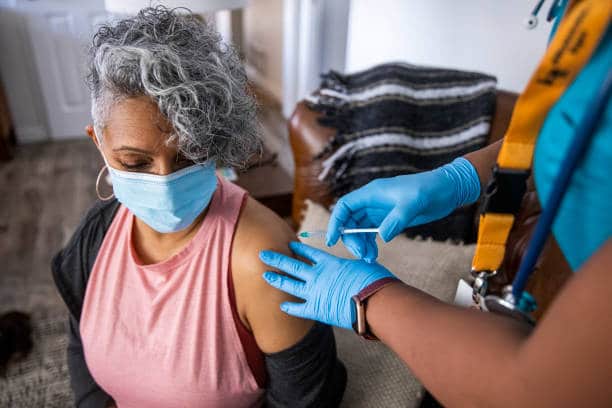
Americans who got Johnson & Johnson's single-dose coronavirus vaccine may be better protected if they get a booster shot from Pfizer or Moderna, preliminary findings from a new government study suggest.

Published on the preprint server medRxiv and yet to be peer-reviewed, the National Institutes of Health study found mixing different coronavirus vaccines was safe and effective, but booster shots made by Moderna and Pfizer produced more robust immune responses than Johnson & Johnson's booster shots did.

The findings will be presented to a U.S. Food and Drug Administration advisory panel on Friday, the second of two days of meetings where the emergency use authorization of booster shots from Moderna and Johnson & Johnson will be weighed by vaccine experts.

You May Also Like
Psoriatic Arthritis Can Feel Beyond Your Control. Consider a Different Direction. Learn More Here. Psoriatic Arthritis Can Feel Beyond Your Control. Consider a Different Direction. Learn More Here.

Whether the FDA might authorize the mix-and-match approach is unclear, The New York Times reports. The strategy will be discussed during the Friday meeting, but no vote will be taken. If regulators come to the conclusion that there is enough science to support the approach, they would likely need to update the authorization language of the Moderna and Pfizer-BioNTech vaccines to allow for their use in people who first received Johnson & Johnson's shot.

RELATED: FDA Expert Panel to Weigh Approval of Moderna, Johnson & Johnson Booster Shots

What the study shows

In the NIH study, researchers looked at nine groups of roughly 50 people each. Each group received one of the three authorized vaccines, followed by a booster. In three groups, volunteers received the same vaccine for a boost. In the other six, they got a different vaccine.

You May Also Like
Get GLP-1s Delivered to You As Low As $99/Month! Get GLP-1s Delivered to You As Low As $99/Month!

The differences were startling: Those who got a J&J shot followed by a Moderna booster saw their antibody levels rise 76-fold within 15 days, while those who got a second dose of the J&J vaccine saw only a fourfold rise during the same period. A Pfizer booster shot raised antibody levels in Johnson & Johnson recipients 35-fold. The Moderna and Pfizer vaccines are both mRNA vaccines, while the J&J vaccine uses an adenovirus to deliver the vaccine to the immune system.

"These data suggest that if a vaccine is approved or authorized as a booster, an immune response will be generated regardless of the primary COVID-19 vaccination regimen," the researchers wrote in the study.

What are the side effects?

Still, the NIH researchers noted the study's small size and added that volunteers haven't been followed long enough to identify rare side effects. However, there were no immediate serious side effects tied to the booster shots, the researchers add. Two participants vomited after

their boosters; one had received Moderna and the other J&J. Two other people who got a J&J booster reported fatigue or insomnia.

Scott Hensley, an immunologist at the University of Pennsylvania, tells the Times that the results are compelling. He notes, however, that the trial only looked at antibody levels, which aren't the sole measure of an immune system response.

RELATED: U.S. to Reopen Borders to Vaccinated Travelers from Canada, Mexico

Should you mix and match?

"At the end of the day, folks having the Johnson & Johnson should probably get an mRNA booster," he says. "It's just a matter of how much data does the FDA need before making that recommendation? I wouldn't want to be in their shoes."

E. John Wherry, director of the Institute for Immunization at the University of Pennsylvania, says the findings suggest that boosters of the Pfizer or Moderna vaccines would be best for people who received the J&J vaccine. But the lower antibody levels measured after the J&J booster shot do not necessarily equal worse protection, he adds.

"I don't think this is the end of the story," he tells NBC News. "I think this is the beginning of the discussion."

Wherry adds that the most important finding was that it is safe to mix different vaccines and boosters. Further studies will be able to provide more details about the performances of different combinations, he shares.

RELATED: Merck Says COVID Pill Reduces Risk of Death and Hospitalization

How efficient are the booster shots?

The FDA has already authorized an additional shot of the Pfizer vaccine for Americans over 65, or those 18 to 65 with underlying health conditions or jobs that put them at higher risk. Moderna's booster shot application, which will be discussed on Thursday, may also win authorization even though only limited evidence suggests the power of the two-shot vaccine is waning.

Unlike Pfizer's and Moderna's two-shot vaccines, J&J had hoped to offer a one-shot solution to the pandemic. But its protection, at 72% in the United States, is not as robust as Moderna's and Pfizer's vaccines, which have both touted efficacy rates well above 90%, CNBC reports.

However, a second dose of J&J's shot does boost protection from symptomatic infection to 94% when administered two months after the first dose in the United States, according to company data released in September.

In a separate document published on Wednesday, the FDA said data provided by J&J suggests recipients may benefit from an additional dose given two months after the initial shot.

By Jessica Daniels, BDO Staff Writer | Published October 14, 2021

The Latest In COVID-19

immunosuppressants

Summer COVID-19 Cases Are on the Rise – What You Should Know

COVID-19 cases are rising this summer across much of the United States, with 27 states reporting growing or likely growing trends, according to the Centers for Disease Control and Prevention. As of mid-July, states like Texas, Illinois, Kentucky, Virginia and read more about Summer COVID-19 Cases Are on the Rise – What You Should Know
COVID vaccines

CDC Ends COVID Vaccine Recommendation for Healthy Children, Pregnant Women

In a recent announcement, the Centers for Disease Control and Prevention has removed COVID-19 vaccines from the recommended immunization schedule for healthy pregnant women and children. Flanked by federal health officials, Health and Human Services Secretary Robert F. Kennedy Jr. read more about CDC Ends COVID Vaccine Recommendation for Healthy Children, Pregnant Women
2 Groundbreaking Clinical Trials That Have Helped Black Health

2 Groundbreaking Clinical Trials That Have Helped Black Health

Clinical trials have long been the cornerstone of medical advancement, but their impact is especially meaningful when they represent the full diversity of the populations they aim to serve. During a recent panel discussion on Clinical Trials Day, industry leaders read more about 2 Groundbreaking Clinical Trials That Have Helped Black Health
COVID-19 pandemic

Racial and Ethnic Differences Persist in COVID-19, According to Survey

Sponsored by Gilead Sciences Racial and ethnic disparities in health care have long been a problem in the U.S.1 For many Black communities and other minority groups, a lack of health insurance, less access to quality medical care, and socioeconomic read more about Racial and Ethnic Differences Persist in COVID-19, According to Survey
pandemic

5 Years Later: How the Pandemic Changed Us

March marks five years since the world shut down and announced a global pandemic. Does it feel like it’s been five years? We have seen several historic events, elections, economic shifts, and so much more. How has this changed us read more about 5 Years Later: How the Pandemic Changed Us
COVID

5 Years Later: Did COVID Change Anything for Black America?

Five years ago, on March 11, 2020, the World Health Organization declared COVID-19 a pandemic, a moment that irrevocably altered the course of global history. Tuesday, March 11th, 2025, marked the fifth anniversary. Since then, millions of Americans have been read more about 5 Years Later: Did COVID Change Anything for Black America?

Primary Sidebar

Subscribe to our newsletter

Icon

Caring for You, Too - Caregiver Workbook

1 file(s) 297 KB
Download

Trending Articles

7 Things You Should Never Do To Lose Weight!

lose weight

12 Reasons Why It Feels Like Your Heart Rate Won’t Slow Down

congestive heart failure symptoms

What Is Congestive Heart Failure?

congestive heart failure

5 Reasons Your Hair Texture Changes

hair texture

Top 10 Dirtiest Places in Your Home

dirtiest places in your home
Find a Culturally Sensitive Doctor

Footer

Where Wellness & Culture Connect

BDO is the world’s largest and most comprehensive online health resource specifically targeted to African Americans. BDO understands that the uniqueness of Black culture - our heritage and our traditions - plays a role in our health. BDO gives you access to innovative new approaches to the health information you need in everyday language so you can break through the disparities, gain control and live your life to its fullest.

Connect With Us

Resource Centers

  • Top Blacks in Healthcare
  • Clinical Trials
  • Wellness on the Yard
  • Cancer
  • Immunocompromised Care
  • About Us
  • Privacy Policy
  • Cookie Policy
  • Terms of Service
  • Careers
  • Advertise With Us
  • Advertising & Sponsorship Policy
  • Daily Vitamina
  • TBH

Copyright © 2025, Black Doctor, Inc. All rights reserved.