• Skip to main content
  • Skip to secondary menu
  • Skip to primary sidebar
  • Skip to footer
BlackDoctor.org
Where Wellness & Culture Connect

Where Wellness & Culture Connect

  • Conditions
  • Wellness
  • Lifestyle
  • Longevity
  • Clinical Trials
  • Resources
    • Generational Health
    • Top Blacks in Healthcare 2025
    • Hall Of Fame
    • Clinical Trials Resource Center
    • Obesity Resource Center
    • Cancer Resource Center
    • Wellness on the Yard
    • Immunocompromised Care
    • BDO Resource Library
  • Find A Doctor
  • BDO TV
Home / Health Conditions / HIV Learning Center / People Living Longer With HIV

People Living Longer With HIV

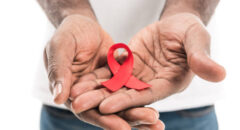
A series of HIV/AIDS Awareness ribbons(BlackDoctor.org) — The number of people living with HIV continues to rise. That’s mainly because of highly effective drugs that allow people infected with HIV to live longer, healthier lives, the CDC says.

But another reason is that prevention efforts and educational programs have helped reduce infections, CDC Director Thomas R. Frieden, MD, MPH, says in a news release. That news release, dated June 2, 2011, marks 30 years since the first report of the illness that came to be known as AIDS was published in the CDC’s Morbidity and Mortality Weekly Report (MMWR).

The CDC says in its MMWR dated June 3 that highly active antiretroviral therapy is effective and that the death rate of people infected with HIV has declined dramatically over the past two decades.

But the AIDS crisis is not over, and Frieden says more resolve is needed to end this epidemic.

You May Also Like

Psoriatic Arthritis Can Feel Beyond Your Control. Consider a Different Direction. Learn More Here. Psoriatic Arthritis Can Feel Beyond Your Control. Consider a Different Direction. Learn More Here.

HIV/AIDS Still Infecting and Killing People

The new report says that every year about 50,000 U.S. residents are infected with HIV. Half of the newly infected are men who have sex with men. And nearly half are African-American.

In the latest MMWR, CDC researchers say 1.17 million people in the United States are living with the virus and about 20% do not know they are infected.

Among key findings:

You May Also Like
Get GLP-1s Delivered to You As Low As $99/Month! Get GLP-1s Delivered to You As Low As $99/Month!

  • In the first 14 years after the first cases of AIDS were reported in the U.S. in 1981, sharp increases were reported in the number of new AIDS diagnoses and deaths among people 13 and over.
  • In 1992, the CDC says there were 75,457 new AIDS diagnoses, compared to 318 in 1981, and that deaths caused by the disease reached 50,628 in 1995, compared to 451 in 1981.
  • CDC researchers say AIDS diagnoses dropped 45% between 1993 and 1998, from 75,263 to 41,462. AIDS deaths dropped 63% from 1995 to 1998, from 50,628 to 18,851.
  • Between 1999 and 2008, AIDS diagnoses remained stable at an average of 38,279 per year. Deaths caused by AIDS averaged 17,489 per year during that time period.
  • The CDC estimates that 594,496 people have died from AIDS since 1981.

According to the CDC, at the end of 2008, 75% of people living with HIV were men, and 65.7% of them were men who have sex with men.

HIV prevalence rates among African-Americans were about eight times that of whites. HIV prevalence rates for Hispanics or Latinos were about 2.5 times that of whites.

Among other key findings:

  • People between ages 13 and 24 have the highest percentage of undiagnosed HIV, at 58.9%, compared to 31.5% for people aged 25-34, 18% among people 34-44, 13.8% for people 45-54, 11.9% for people 55-64, and 10.7% among people 65 and older.
  • Greater percentages of undiagnosed HIV also were found among men with high-risk heterosexual contact, 25%, and men who have sex with men, 22.1%, than in other categories.
  • Greater percentages of undiagnosed HIV also were observed among Asians or Pacific Islanders at 26% and American Indians or Alaska Natives at 25% than among African-Americans at 21.4%, whites at 18.5%, and Hispanics or Latinos at 18.9%.

HIV Infection

Testing can now detect HIV as early as nine days after infection.

Highly active antiretroviral therapy has been effective in allowing people to live longer with HIV.

However, late diagnosis is all too common. In 2008, the CDC says 33% of newly diagnosed HIV cases developed AIDS within a year. These people were likely infected with HIV 10 years prior to the diagnosis, on average. During this time period, they missed opportunities for medical care.

Frieden says in the news release that far too many Americans still underestimate their risk of infection or think HIV is no longer a serious health threat. But he says it is imperative that Americans understand that HIV is incurable and that most infections today are occurring among people under 30, a generation “that has never known a time without effective HIV treatments and who may not fully understand the significant health threat HIV poses.”

He says that advances in HIV prevention hold promise for reducing new infection.
By karissa lang | Published July 12, 2011

July 12, 2011 by By Felicia Vance, BDO Staff Writer

The Latest In HIV Learning Center

Ending HIV Stigma: PrEP screening for all

We asked minoritized patients how they would feel if their doctor offered them an HIV test during their regularly scheduled visit. The overwhelming sentiment was that they would be offended. Why? They know not all patients are being offered an read more about Ending HIV Stigma: PrEP screening for all
This Clinical Trial Is Making HIV Treatment Easier for Black People

This Clinical Trial Is Making HIV Treatment Easier for Black People

Black Americans are disproportionately affected by HIV/AIDS in the United States, facing a staggering 42 percent of new HIV infections despite only making up 13 percent of the population. This disparity translates to poorer health outcomes, with Black Americans experiencing read more about This Clinical Trial Is Making HIV Treatment Easier for Black People
HIV is On the Rise Among Black Americans. Clinical Trials Can Change That

HIV is On the Rise Among Black Americans. Clinical Trials Can Change That

The global HIV/AIDS  pandemic began in 1981 and remains an ongoing public health issue worldwide. The CDC reported that African/Black American and Hispanic/Latino individuals are disproportionately impacted by HIV, accounting for over 70% of the estimated new HIV infections in read more about HIV is On the Rise Among Black Americans. Clinical Trials Can Change That

ALERT: The ‘Kissing Bug Disease’ Is Spreading

A little-known life-threatening illness, Chagas Disease--or the "Kissing Bug" disease--caused by blood sucking insects should now be considered endemic in the United States, experts say – and without recognition that it’s a constant presence in some parts of the country, read more about ALERT: The ‘Kissing Bug Disease’ Is Spreading
biometrics

4 Critical Biometrics EVERY Black HIV Patient Should Know

Your body is amazing, isn’t it?  Of course, that doesn’t mean things can’t go wrong fast, and in some cases, they do. Heck, in some cases, we don’t know what hit us! This is where knowing your body is so read more about 4 Critical Biometrics EVERY Black HIV Patient Should Know
living with HIV

Living with HIV: 6 Unexpected Challenges Black Patients Face

The facts are the facts. Black people living with HIV and AIDs face a higher risk of all kinds of health-related issues. Not only do Black Americans account for nearly 40 percent of the U.S. population with HIV (despite being read more about Living with HIV: 6 Unexpected Challenges Black Patients Face

Primary Sidebar

Subscribe to our newsletter

Icon

Caring for You, Too - Caregiver Workbook

1 file(s) 297 KB
Download

Trending Articles

10 Foods Your Liver Wishes You Would Would Stop Eating

healthy liver

The 7 Most Dangerous Leftovers to Reheat Are…

leftovers

Weight Loss Challenge: Lose 10 Pounds In 2 Weeks!

lose 10 pounds in 2 weeks

Secrets For A Non-Damaging Silk Press

silk press

Stage 4 Lung Cancer: Why I Said Yes to a Clinical Trial

Stage 4 Lung Cancer: Why I Said Yes to a Clinical Trial
Find a Culturally Sensitive Doctor

Footer

Where Wellness & Culture Connect

BDO is the world’s largest and most comprehensive online health resource specifically targeted to African Americans. BDO understands that the uniqueness of Black culture - our heritage and our traditions - plays a role in our health. BDO gives you access to innovative new approaches to the health information you need in everyday language so you can break through the disparities, gain control and live your life to its fullest.

Connect With Us

Resource Centers

  • Top Blacks in Healthcare
  • Clinical Trials
  • Wellness on the Yard
  • Cancer
  • Immunocompromised Care
  • About Us
  • Privacy Policy
  • Cookie Policy
  • Terms of Service
  • Careers
  • Advertise With Us
  • Advertising & Sponsorship Policy
  • Daily Vitamina
  • TBH

Copyright © 2025, Black Doctor, Inc. All rights reserved.