
• Skip to main content
  • Skip to secondary menu
  • Skip to primary sidebar
  • Skip to footer
BlackDoctor.org
Where Wellness & Culture Connect

Where Wellness & Culture Connect

  • Conditions
  • Wellness
  • Lifestyle
  • Longevity
  • Clinical Trials
  • Resources
    • Generational Health
    • Top Blacks in Healthcare 2025
    • Hall Of Fame
    • Clinical Trials Resource Center
    • Obesity Resource Center
    • Cancer Resource Center
    • Wellness on the Yard
    • Immunocompromised Care
    • BDO Resource Library
  • Find A Doctor
  • BDO TV
Home / Wellness / Womens Health / The 6 Types Of Ovarian Cysts (And What You Can Do About Them)

The 6 Types Of Ovarian Cysts (And What You Can Do About Them)

Types Of Ovarian Cysts

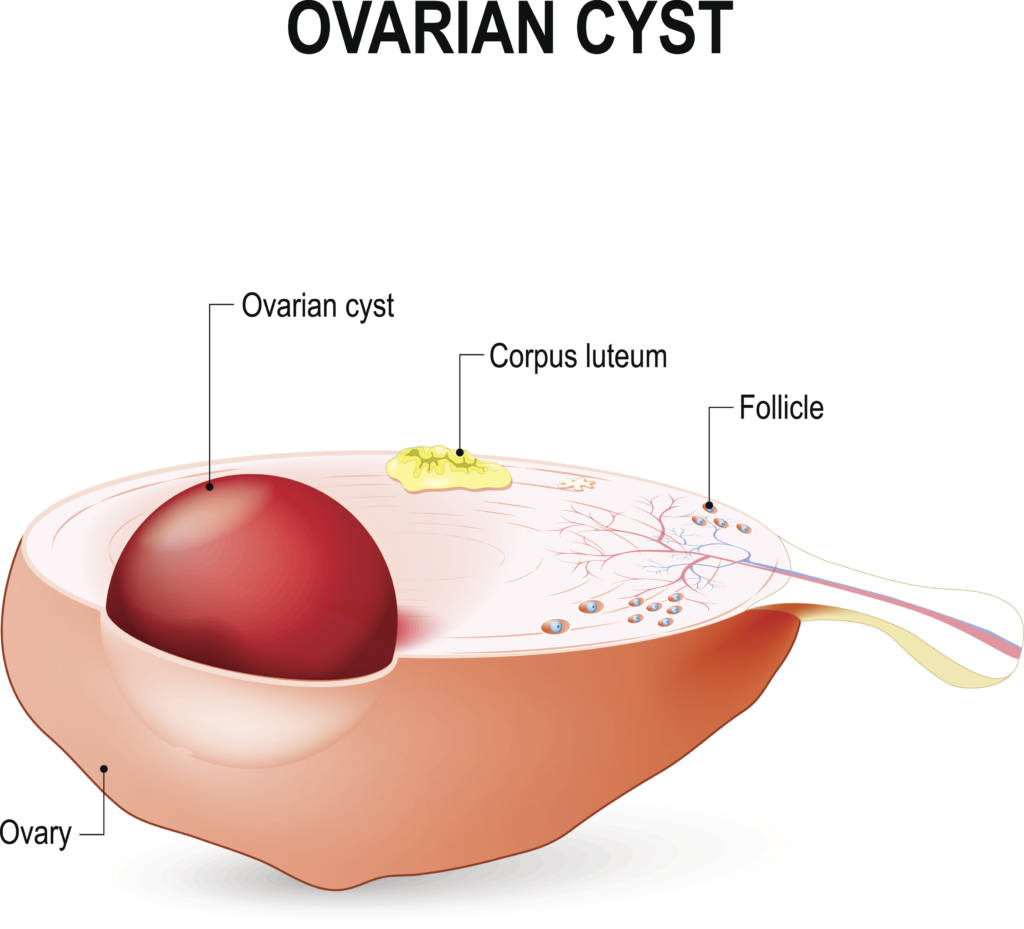
Ovarian cysts are small, fluid-filled sacs that can develop with a woman’s ovaries. Although most ovarian cysts are benign and will disappear on their own, their spontaneous rupture can be painful and sometimes necessitate medical treatment. Continue reading to learn about different types of ovarian cysts, their treatment and prevention ways.

When do they occur?

Ovarian cysts are most likely to occur during the childbearing years, and the majority of these types of cysts are benign (non-cancerous). Women with ovarian cysts who are past the age of menopause are known to be at a higher risk for developing ovarian cancer.

What are the common types of ovarian cysts?

The most common types of ovarian cysts are known as functional cysts.

You May Also Like
Psoriatic Arthritis Can Feel Beyond Your Control. Consider a Different Direction. Learn More Here. Psoriatic Arthritis Can Feel Beyond Your Control. Consider a Different Direction. Learn More Here.

One type of functional cyst is known as a follicle cyst, and these occur when the sac containing an unfertilized egg does not break open to release the egg. The cyst continues to grow and eventually disintegrates on its own within several months.

YOU MAY LIKE: Many Black Women Are Getting PCOS (What Is It & How Do You Treat It)

The second type of functional cyst is known as a corpus luteum cyst. In this situation, the sac releases the egg but the sac seals itself following the release of the egg and begins to fill with fluid. Corpus luteum cysts have been known to grow to 3 or 4 inches in diameter and can be quite painful. Certain medications used to encourage ovulation may predispose some women to developing corpus luteum cysts.

You May Also Like
Get GLP-1s Delivered to You As Low As $99/Month! Get GLP-1s Delivered to You As Low As $99/Month!

There are four other types of ovarian cysts .

Endometriomas: These ovarian cysts form in women who have underlying endometriosis. They are most often painful during menstruation and intercourse.

Cystadenomas: These care cysts that form on the outer surface of the ovary, and may be painful.

Polycystic ovaries: This condition occurs when eggs mature within their sacs but are never released from the ovaries. More and more cysts form and grow, and the ovaries then contain many of these fluid-filled cysts. Polycystic ovary syndrome has many symptoms and necessitates further investigation and potential treatment.

Dermoid cysts: These cysts can become quite large, and may contain many types of cells, including hair and teeth. They are not humanoid in any way, but the notion of a cyst with hair, teeth and other tissues growing within a woman’s body can be disconcerting.

What are the symptoms?

Some ovarian cysts cause no symptoms whatsoever and will resolve spontaneously. Others will cause various symptoms and necessitate treatment and symptom management. Potential symptoms include, but are not limited to:

    • Pressure or pain in the abdomen
    • Nausea and vomiting...
  • Abdominal bloating
  • Fever
  • Abnormal uterine bleeding
  • Low back pain
  • Weight gain
  • Tenderness of the breasts
  • Difficulty emptying the bladder

Severe and sudden pain in the abdomen and pelvis require immediate medical attention, especially if accompanied by nausea and vomiting, faintness, weakness, dizziness or fever

How are they diagnosed?

Ovarian cysts are usually found during an ultrasound of the pelvis, or may be manually felt during a gynecological exam. Blood tests can be done to determine the presence of cancer, and an ultrasound helps physicians to understand the size and shape of the cyst(s). Hormone blood tests may also be ordered.

What is the treatment?

Many cysts are simply watched closely without invasive action to remove them, especially in women of childbearing age who have fluid-filled cysts and no symptoms. Cysts can be removed surgically when very painful, very large, or determined to be cancerous or likely to be cancerous. For women who produce multiple and frequent functional cysts, birth control pills are sometimes prescribed to halt ovulation and the formation of new cysts.

Can they be prevented?

Ovarian cysts cannot be prevented but many resolve on their own without treatment or intervention. However, if you have persistent pelvic pain or any of the symptoms mentioned above, it is wise to see your physician or women’s health specialist for an exam.

READ: 5 Natural Remedies For Ovarian Cysts

By Derrick Lane | Published January 18, 2017

The Latest In Womens Health

preterm birth

What Moms Can Do and Should Know About Preventing Preterm Birth

The journey to motherhood is often envisioned as a smooth, predictable path, yet for many, the reality of pregnancy can bring unexpected challenges. A common pressure point for expectant mothers is the fear of preterm birth (delivery before 37 weeks) read more about What Moms Can Do and Should Know About Preventing Preterm Birth
triple-negative breast cancer

Your Risk For Triple-Negative Breast Cancer Depends On Where You’re From

For years, the common understanding around triple-negative breast cancer has been straightforward. Black American women face this aggressive cancer at higher rates than women in other racial groups. Research from the American Cancer Society (ACS) reveals a more complex story. read more about Your Risk For Triple-Negative Breast Cancer Depends On Where You’re From
douching

Is Douching Safe? Why This Common Habit Can Be Dangerous

Sisters, you’ve had a long day, maybe just got home from work or after a night out, and you notice a little odor or discharge. Your first thought? “I need to douche.” You’re not alone. Millions, yes millions, of women read more about Is Douching Safe? Why This Common Habit Can Be Dangerous
nutrients

7 Nutrients Black Women Are Most Likely Missing

Even with a balanced diet, many Black women may fall short of critical vitamins and minerals due to genetic, physiological, lifestyle, and social factors. Below are seven nutrients frequently under-recognized, their signs, challenges to absorption, and how to address them: read more about 7 Nutrients Black Women Are Most Likely Missing

Genetic Testing & Ovarian Cancer: What Black Women Need to Know

In an era where medical advancements are rapidly evolving, genetic testing has emerged as a powerful tool in the fight against cancer, particularly ovarian cancer. Dr. Kevin Holcomb, chair of Obstetrics and Gynecology at Long Island Jewish Medical Center and read more about Genetic Testing & Ovarian Cancer: What Black Women Need to Know
Dr. Jackie Walters

Married to Medicine’s Dr. Jackie Walters On What Women Get Wrong About Birth Control

Dr. Jackie Walters wears many hats. She’s a practicing OB-GYN, a two-time breast cancer survivor, and a reality TV star on Bravo’s Married to Medicine. But ask her what truly drives her, and the answer isn’t fame or cameras—it’s helping read more about Married to Medicine’s Dr. Jackie Walters On What Women Get Wrong About Birth Control

Primary Sidebar

Subscribe to our newsletter

Icon

Caring for You, Too - Caregiver Workbook

1 file(s) 297 KB
Download

Trending Articles

10 Foods Your Liver Wishes You Would Would Stop Eating

healthy liver

The 7 Most Dangerous Leftovers to Reheat Are…

leftovers

Weight Loss Challenge: Lose 10 Pounds In 2 Weeks!

lose 10 pounds in 2 weeks

Secrets For A Non-Damaging Silk Press

silk press

Stage 4 Lung Cancer: Why I Said Yes to a Clinical Trial

Stage 4 Lung Cancer: Why I Said Yes to a Clinical Trial
Find a Culturally Sensitive Doctor

Footer

Where Wellness & Culture Connect

BDO is the world’s largest and most comprehensive online health resource specifically targeted to African Americans. BDO understands that the uniqueness of Black culture - our heritage and our traditions - plays a role in our health. BDO gives you access to innovative new approaches to the health information you need in everyday language so you can break through the disparities, gain control and live your life to its fullest.

Connect With Us

Resource Centers

  • Top Blacks in Healthcare
  • Clinical Trials
  • Wellness on the Yard
  • Cancer
  • Immunocompromised Care
  • About Us
  • Privacy Policy
  • Cookie Policy
  • Terms of Service
  • Careers
  • Advertise With Us
  • Advertising & Sponsorship Policy
  • Daily Vitamina
  • TBH

Copyright © 2025, Black Doctor, Inc. All rights reserved.