
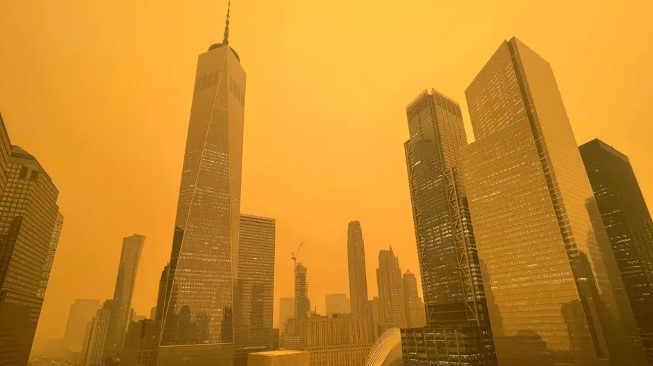
As a huge plume of smoke from over 400 Canadian wildfires swept south and turned New York City into a landscape that resembled Mars more than Earth, heart experts warned that air pollution can damage your heart as much as it damages your lungs.
It's obvious that wildfires can affect breathing and respiratory health, but exposure to this smoke can also cause or worsen heart problems, the American Heart Association said in an alert issued Wednesday.
"Most people think of breathing problems and respiratory health dangers from wildfire smoke, but it's important to recognize the impact on cardiovascular health, as well," says Dr. Comilla Sasson, vice president for science and innovation at the American Heart Association and a practicing emergency medicine physician. "Wildfire smoke contains a lot of pollutants, including fine, microscopic particles linked to cardiovascular risk."
You May Also Like

In fact, experts have said that it would be healthier to smoke a 1/2 pack of cigarettes than it would be to simply breathe in wildfire smoke all day.
The dangers of wildfire smoke
Breathing in smoke can have immediate health effects, including:
- Coughing
- Trouble breathing normally
- Stinging eyes
- A scratchy throat
- Runny nose
- Irritated sinuses
- Wheezing and shortness of breath
- Chest pain
- Headaches
- An asthma attack
- Tiredness
- Fast heartbeat
Older adults, pregnant women, children, and people with preexisting respiratory and heart conditions are more likely to get sick if they breathe in wildfire smoke, according to the Centers for Disease Control and Prevention (CDC).
Previous research has demonstrated that the cost can be heavy.
In one 2020 study, researchers found that exposure to heavy smoke during wildfires raised the risk of out-of-hospital cardiac arrests by up to 70 percent. That risk was elevated in both men and women, among adults aged 35 to 64 and in communities with lower socioeconomic status.
Earlier findings showed that wildfire smoke exposure was associated with increased rates of emergency room visits for heart disease, irregular heart rhythm, heart failure, pulmonary embolism and stroke.
Those ER visits increased 42 percent for heart attacks and 22 percent for ischemic heart disease within a day of exposure to dense wildfire smoke. This was especially concerning for adults 65 and up, according to that study, which was published in the Journal of the American Heart Association.
Tips for Protecting Yourself
Here are the measures you can take to protect yourself from wildfire smoke.
1. Pay attention to local air quality reports.
Sasson recommends that people in areas where the smoke is thick or starting to build check the U.S. Environmental Protection Agency's zip code-level tracking map of current air quality at airnow.gov. You should also stay informed about any special alerts sent by the local health department, she suggests.
2. Pay attention to visibility guides if they are available.
Although not every community measures the number of particles in the air, some communities in the western United States have guidelines to help people estimate air quality based on how far they can see, the CDC notes.
3. Reduce your exposure.
Stay indoors, stay indoors and keep your indoor air as clean as possible. Keep windows and doors closed unless it is very hot outside. Reduce exposure to wildfire smoke by staying indoors and keeping doors and windows closed, Sasson adds, and use high-efficiency air filters in air conditioning systems or portable air cleaners. The CDC advises, seeking shelter elsewhere if you do not have an air conditioner and it is too warm to stay inside with the windows closed.
4. Use an air filter.
A freestanding indoor air filter with particle removal can protect people with heart disease, asthma or other respiratory conditions and the elderly and children from the effects of wildfire smoke, according to the CDC. Remember to follow the manufacturer’s instructions on filter replacement and where to place the device.
"While these types of wildfires and the extent of their smoke reach can't always be predicted, protecting yourself and your family from poor air quality throughout the year is something to consider," Sasson says. "In the American Heart Association's 2020 scientific statement on air pollution exposure, we note that one of the most effective measures is the use of portable air cleaners, which have been shown to reduce indoor particulate matter by as much as 50-60%. Given their modest upfront cost [$50-200] and potential benefits in reducing cardiopulmonary outcomes, this measure has a high benefit for the cost."
5. Do not add to indoor pollution.
Avoid using anything that burns, such as candles and fireplaces. You should also avoid vacuuming because vacuuming stirs up particles already inside your home. Avoid smoking tobacco or other products. This puts even more pollution into the air.
6. Don't exert yourself.
Don't exert yourself during these smoke-filled days and stay well-hydrated. If your home does not have an air conditioner and it's too warm to stay inside, consider staying somewhere else temporarily.
7. Bring your pets indoors.
Pets may also be affected by the smoke, so it's a good idea to bring them indoors as much as possible, Sasson shares.
8. Follow your doctor's advice.
If you have asthma or another lung disease or cardiovascular disease, it is essential that you stick to your medicines and respiratory management plan. If your symptoms worsen, contact your doctor.
9. Do not rely on dust masks for protection.
Paper “comfort” or “dust” masks commonly found at hardware stores trap large particles, such as sawdust. These masks will not protect your lungs from smoke. An “N95” mask, properly worn, will offer some protection. If you decide to keep a mask on hand, see the Respirator Fact Sheet provided by CDC’s National Institute for Occupational Safety and Health.
Recognizing the signs of a heart attack or stroke is important, the AHA advises. If you or someone you're with is experiencing serious symptoms, call 911 immediately. Learn CPR so that you can be prepared.
Most Americans are not directly impacted by the wildfires burning in Canada, but the exposure to this lingering smoke can be extremely harmful and shouldn't be taken for granted, Sasson notes.

"Protect yourself, be alert and prepared," she concludes.