
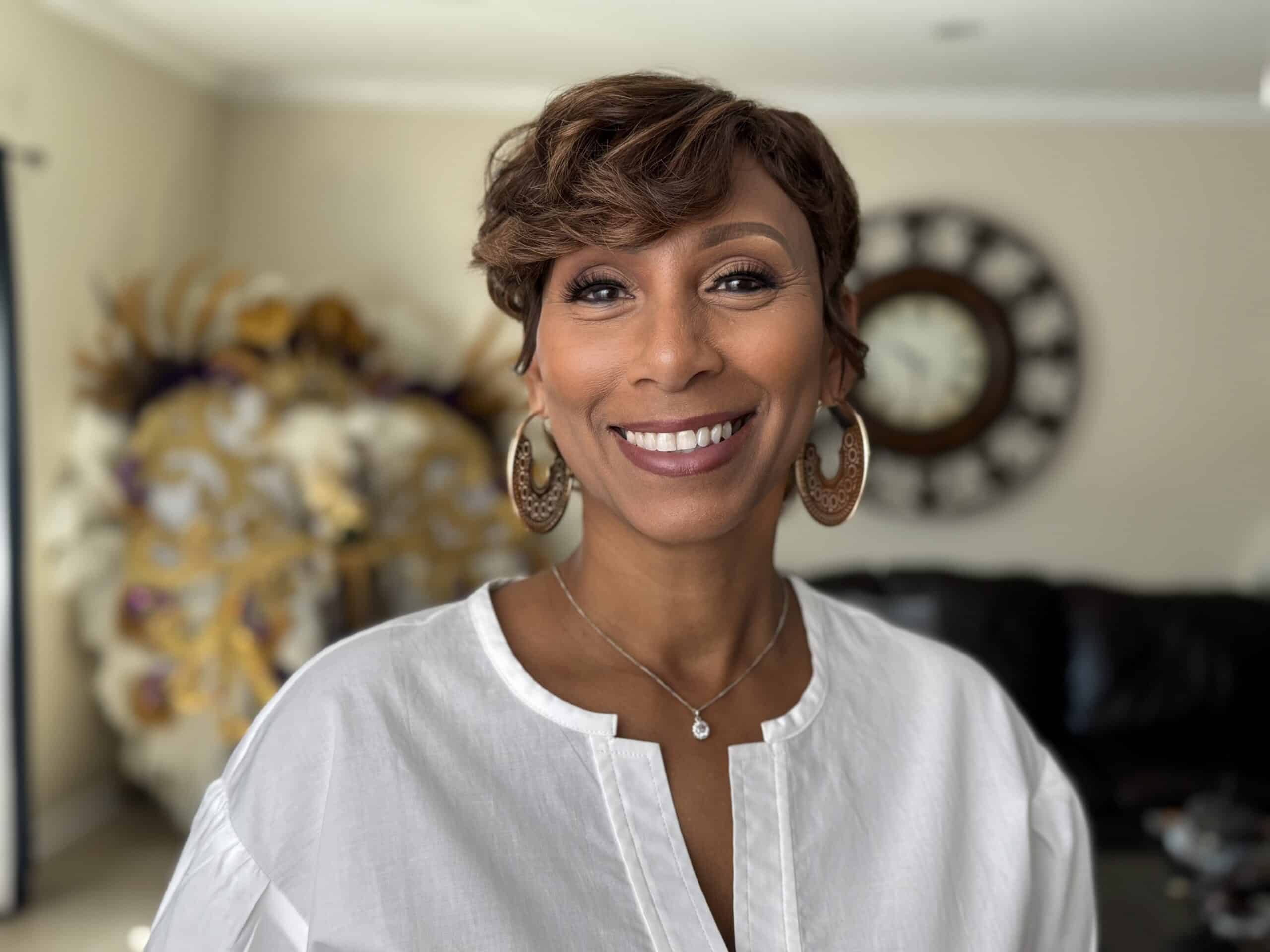
Crystal was used to being the one everyone else leaned on. As a medical professional and a pillar of her New Orleans community, she spent her days caring for others and her evenings keeping up with her family. She ate well, she exercised, and she didn’t “look” like a cardiac patient. But in 2022, a drive to dinner turned into a race to the emergency room that would change her life forever.
“My husband and I were driving, and I had some chest pains. But it was something that was constant. I had it before, and it would subside. So, I never really took it for anything,” Crystal tells BlackDoctor.
However, this time, Crystal’s husband could see the pain on her face. “He was like, ‘You just don’t look well. Are you okay?’ And I’m like, ‘I’m fine. I’m just probably a little stressed. I probably just need to go and lie down,’” she shares.
Sensing something was wrong, her husband bypassed their dinner plans and drove her directly to the emergency room. After running several tests, including an EKG and a body scan, doctors discovered that her blood pressure was dangerously high. They also noticed calcification around her heart, advising her to see her specialist immediately.
You May Also Like
“The next morning, I called my cardiologist and told him what happened, and he said, ‘Well, let’s get you in. We need to see what’s going on,’” she notes, adding that she was promptly sent in for an ultrasound. “In doing the ultrasound, they were able to find a blockage in my carotid artery,” she adds.
The news was devastating. “That was nothing that I wanted to hear. I wasn’t even 50 at the time, so I thought I was too young to have a blockage,” she says. “I eat healthy. I exercise. I try to have a stress-free life, but in everyday living, your body can be stressed, and you don’t even realize it.”
The diagnosis was a wake-up call for Crystal, reminding her that even those in the medical field must slow down and prioritize their own care. It also served as a stark reminder of the role genetics plays in cardiovascular risk—a factor that lifestyle changes alone cannot always overcome.
You May Also Like

“I feel that some of my physicians may not have had the knowledge that they have now from when I was younger, to be able to even educate me on the possibilities of proper health, heart health, outside of a diet and exercise,” Crystal explains. “That’s all that we ever hear. Everyone preaches [a] low-sodium diet, [a] Mediterranean diet or proper exercise three times a week. You hear so many different things, but truly knowing, ‘Hey, when you check with your doctor, there’s certain tests that need to be run for me’ because it was genetic for me.”
The hereditary roots run deep: Crystal’s late father had hypertension and diabetes; her mother has hypertension, and both conditions are prevalent throughout her father’s side of the family. “I can’t tell you how many of them have it. So when I got it [hypertension] at 28, I’m like, well…I was gonna get it,” she says.
Determined to break the cycle, Crystal now has candid conversations with her children about sodium intake, genetic history, and proactive screenings. “Some things you have to learn to acquire the taste of the food that you eat. And when we go out, you don’t always have to add salt because they’re already putting salt in the food before you add additional salt,” she tells them.
She also highlights the medical gaslighting that many younger people, particularly Black women, face when their concerns are dismissed. “When I was younger, a lot of times I would [see] my physician and they would always talk about my cholesterol. They’d say, ‘Oh, don’t worry about it. Your good cholesterol is going to balance out your bad cholesterol.’ And you’re still young, so it’s not a concern,” she recalls. “I’ve been told that I can’t tell you for how long, but now I understand there’s no balancing out…You need to know [what] LDL is. If it’s high, you need to figure out why it’s high. You need to get it checked out.”
In 2023, Crystal started Repatha, a PCSK9 inhibitor, which lowered her LDL-C from 188 mg/dL to 64 mg/dL, dramatically reducing her risk of heart attack and stroke. However, the path to healing was a grueling battle with insurance and medication trials. She cycled through four different medications and several denials before finding the right treatment.
“I had an allergic reaction. Stopped taking that medication. We took another one. It started to work a little bit, but it wasn’t working enough. So, then they added another statin to it. So, I was taking two at the time with another medication to still try to lower,” she says. “We did that for almost a year. And we were going back and forth, back and forth…”
As a medical professional, Crystal acknowledges that her successful outcome was tied to her ability to advocate for herself—a resource she knows is a privilege. “We have people out here who can be in my same situation, and they don’t have the care team that I have. They may not have that communication daily with doctors to be able to check on themselves… Everybody doesn’t have what I actually was able to have. And I was blessed to have that,” she notes.
RELATED: Heart Attack Survivor’s Second Chance at Life: “Listen to Your Body”
Crystal’s Heart Healthy Tips
- The “Check Engine” Warning: Treat your body with the same urgency as a vehicle.
“I went to a convention and someone made a comment about a car. They said, ‘We love our cars… But as soon as that check engine light comes on, what do we do?’ We bring it right to the dealership… So, when your body is telling you something is wrong, you now have to take the time to say, ‘Hey, let me go and see what this is because it’s very important.'” - Trust Your Intuition: Physical symptoms are the body’s only way of communicating a crisis.
“Listen to your body. It’s never wrong…” - The Importance of Specific Testing: Advocacy starts with requesting the right blood work.
“A lot of things happen to us. We will never know because it’s so silent to us. So, it’s best that you make sure that you have your annual checkups. Make sure when you have your blood work, you’re checking all of your numbers.” - Know the Threshold: Recognizing the danger zone for cholesterol levels.
“If your number is over 100, then you need to talk with a cardiologist to see how can you lower that because that is high.” - The Chain Reaction of Advocacy: Sharing information saves lives.
“The more communication we have like this, the more talking that we have in the community, the word gets out.” - Self-Care as a Prerequisite: Caregivers must prioritize their own recovery to stay present for others.
“Everything that I’ve been doing since then is making sure that I take time for myself… I decided to stay home this week… to just make sure I take care of myself, relax, take my medication, and get healthy again.”