• Skip to main content
  • Skip to secondary menu
  • Skip to primary sidebar
  • Skip to footer
BlackDoctor.org
Where Wellness & Culture Connect

Where Wellness & Culture Connect

  • Conditions
  • Wellness
  • Lifestyle
  • Longevity
  • Clinical Trials
  • Resources
    • Generational Health
    • Top Blacks in Healthcare 2025
    • Hall Of Fame
    • Clinical Trials Resource Center
    • Obesity Resource Center
    • Cancer Resource Center
    • Wellness on the Yard
    • Immunocompromised Care
    • BDO Resource Library
  • Find A Doctor
  • BDO TV
Home / Health Conditions / Heart Health / Cut Your Heart Failure Risk In Half As You Age

Cut Your Heart Failure Risk In Half As You Age

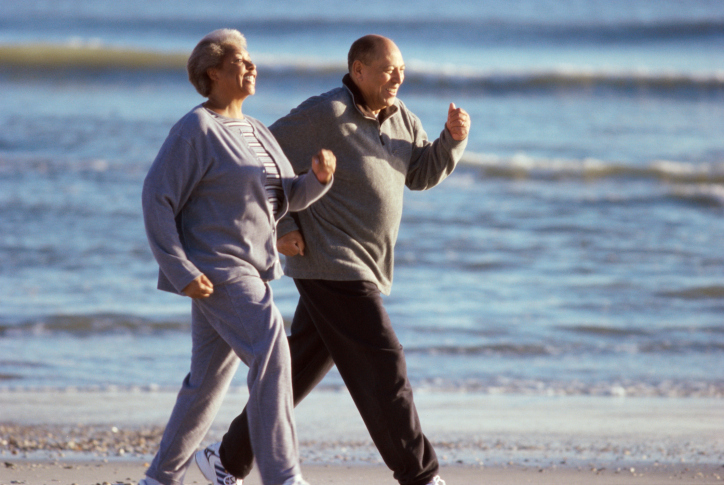
older couple walking on beach

In more good news for those who don't let aging keep them from practicing healthy habits, a new study finds the fittest seniors are half as likely as others to suffer from heart failure.

"Older adults can make simple changes to reduce their heart failure risk, such as not smoking, engaging in moderate physical activity and maintaining a healthy weight," said study author Liana Del Gobbo, a Ph.D. student with the Friedman School of Nutrition Science and Policy at Tufts University in Boston.

Heart failure is very common among older people, the researchers said.

You May Also Like
Psoriatic Arthritis Can Feel Beyond Your Control. Consider a Different Direction. Learn More Here. Psoriatic Arthritis Can Feel Beyond Your Control. Consider a Different Direction. Learn More Here.

"A person aged 55 has a one-in-three chance of developing heart failure in his lifetime," Del Gobbo said, and the condition is the leading cause of hospitalization in people covered by Medicare, the U.S. health insurance program for seniors.Get The LATEST Articles Straight To Your Inbox!


"Heart failure occurs when the heart is unable to pump sufficiently to maintain blood flow to meet the body's needs," Del Gobbo explained. Heart failure can cause fluids to build up in the feet and legs, leading to painful swelling. Patients with the condition can become tired easily, and other health problems can develop.

You May Also Like
Get GLP-1s Delivered to You As Low As $99/Month! Get GLP-1s Delivered to You As Low As $99/Month!

In the worst cases, heart failure can require a heart transplant and lead to death.

The study authors launched their research to gain a better understanding of the risk factors for heart failure, Del Gobbo said. To do so, they followed more than 4,400 people aged 65 and older for up to 22 years. The participants -- 61 percent women, 89 percent white and 11 percent black -- were enrolled in the study in the late 1980s and early 1990s.

Over the time the study participants were followed, there were 1,380 cases of heart failure. After the researchers adjusted their statistics so they wouldn't be thrown off by other factors, they found no link between diet and heart failure rates.

But those who walked faster (over 3 miles per hour versus under 2 miles per hour) were 26 percent less likely to suffer from heart failure. And those who met four or more criteria for good health were 45 percent less likely to suffer from heart failure.

The criteria included several measures of physical fitness plus alcohol intake -- ideal is "more than one drink/week, but not more than one or two drinks a day," according to Del Gobbo.

Why doesn't diet seem to matter? "Diet is a very important factor in the development of coronary heart disease, type 2 diabetes and other chronic diseases," she said. "Heart failure has some different underlying causes for its development than these conditions. We did find increased risk of heart failure in people with higher sodium [salt] intake, which makes sense because a high-sodium diet increases a person's risk for high blood pressure, a key risk factor for developing heart failure."

What should people learn from the findings?

"Physical activity among older adults does not have to be strenuous to achieve health benefits," Del Gobbo said. "We saw benefits for adults who walked at a moderate or brisk pace and burned calories through leisure activity, like house or yard work, walking, engaging in outdoor activities, or other forms of physical activity, equivalent to about 30 minutes per day."It's not clear how active the study participants were before the age of 65, so there's no way to know how healthy habits earlier in life affected them. Researchers also don't know whether healthier habits -- earlier in life, later in life or both -- directly reduced heart failure rates because the study was not designed to find a cause-and-effect link.

Dr. David Maron, Director of Preventive Cardiology at Stanford University School of Medicine in Palo Alto, Calif., co-wrote a commentary accompanying the study.

Maron said he believes the study provides "strong and plausible" indications that healthy habits reduce the risk of heart failure, although he acknowledges that it doesn't prove they do.

"A healthy lifestyle may not only help you reach an old age," he said, "it may help you avoid heart failure when you get there."

The study appears in the July 6 issue of the journal JACC: Heart Failure, published by the American College of Cardiology.


Copyright HealthDay News June 2015


By Derrick Lane | Published July 7, 2015

The Latest In Heart Health

congestive heart failure symptoms

12 Reasons Why It Feels Like Your Heart Rate Won’t Slow Down

Anxiety? Caffeine? More serious? Running the last few minutes of a race, preparing for a major presentation, or watching "Stranger Things" in the dark may make your heart race. Daily living shouldn't raise your heart rate. Your heart's rhythm is read more about 12 Reasons Why It Feels Like Your Heart Rate Won’t Slow Down
amyloidosis

Amyloidosis: 3 Warning Signs Doctors Don’t Warn Patients About

Heart failure is a serious condition — but sometimes, what looks like ordinary heart failure is actually something else entirely. One condition that often flies under the radar is amyloidosis. Amyloidosis happens when an abnormal protein called amyloid builds up read more about Amyloidosis: 3 Warning Signs Doctors Don’t Warn Patients About
heart

Most People’s Hearts Are Older Than They Realize—Is Yours?

When Dr. Mark T. Loafman, MD, MPH talks about heart health, he doesn’t start with numbers—he starts with names. As a physician and public health leader at Cook County Health, one of the nation’s largest public health systems, Dr. Loafman read more about Most People’s Hearts Are Older Than They Realize—Is Yours?
heart disease

Black Men & Heart Disease: What You NEED to Know

Heart disease. The words themselves can send a chill, and for good reason. It remains the number one killer, a stark reality brought into sharp focus during a Facebook Live discussion, "Matters of the Heart: A Man's Guide to Cardiac read more about Black Men & Heart Disease: What You NEED to Know
lp(a)

Why This Nurse and This Mom Are Sounding the Alarm on Lp(a)

Cardiovascular disease remains the leading cause of death worldwide, yet many risk factors remain largely unknown to the public. One of these is lipoprotein(a), or Lp(a)—a genetic lipid particle that, according to new data from the Family Heart Foundation, significantly read more about Why This Nurse and This Mom Are Sounding the Alarm on Lp(a)
creatine

Should Black Women Use Creatine? What You Need to Know First

Creatine is experiencing a resurgence—not just in gyms but in mainstream wellness conversations. Yet among Black women, who already face unique physiological and cultural contexts, it raises critical questions: Is creatine beneficial? Is it safe? How does it fit into read more about Should Black Women Use Creatine? What You Need to Know First

Primary Sidebar

Subscribe to our newsletter

Icon

Caring for You, Too - Caregiver Workbook

1 file(s) 297 KB
Download

Trending Articles

7 Things You Should Never Do To Lose Weight!

lose weight

4 Ways To Boost Your Metabolism & Prevent Weight Gain During The Holidays

how to boost your metabolism

What Is Congestive Heart Failure?

congestive heart failure

5 Reasons Your Hair Texture Changes

hair texture

Top 10 Dirtiest Places in Your Home

dirtiest places in your home
Find a Culturally Sensitive Doctor

Footer

Where Wellness & Culture Connect

BDO is the world’s largest and most comprehensive online health resource specifically targeted to African Americans. BDO understands that the uniqueness of Black culture - our heritage and our traditions - plays a role in our health. BDO gives you access to innovative new approaches to the health information you need in everyday language so you can break through the disparities, gain control and live your life to its fullest.

Connect With Us

Resource Centers

  • Top Blacks in Healthcare
  • Clinical Trials
  • Wellness on the Yard
  • Cancer
  • Immunocompromised Care
  • About Us
  • Privacy Policy
  • Cookie Policy
  • Terms of Service
  • Careers
  • Advertise With Us
  • Advertising & Sponsorship Policy
  • Daily Vitamina
  • TBH

Copyright © 2025, Black Doctor, Inc. All rights reserved.