
It’s something we all face.
And while it affects different people at different rates in different ways, the impacts are often predictable. Loss of physical strength and ability, a slowdown in mental faculties, and a general change in how we are able to complete daily tasks.
But think on the bright side!
You May Also Like

With aging comes plenty of wisdom, experience, stories, and memories you can cherish. If you’re fortunate, you get to see your family grow and flourish, you get to move to new phases of life, and small, daily, joyful events become more important than ever.
Ready to stay steady and strong in your golden years?
According to the National Health Service (NHS), adults aged 65 and over have clear and achievable goals. Guidelines suggest at least 150 minutes of moderate-intensity aerobic activity per week, spread out as you like, as well as activities to improve strength, balance, and flexibility.
You May Also Like
No need to feel overwhelmed. You can do this, feel great, and make progress, without setting lofty gym goals or burning yourself out.
Let’s get right into it…
RELATED: 5 Tiny Habits That Secretly Add Years to Your Life
The Benefits of Moderate Aerobic Activity
We’ve long heard that aerobic activity is good for us – but why?
If you actually break down the science, you find that it’s all about heart rate. Generally speaking, moderate activity raises your heart rate, makes you breathe faster, and leaves you warmer but still able to chat.
Because when we speak of moderation, we’re not talking about gasping for air. We’re talking about activities like brisk walking, water aerobics, cycling, or even pushing a lawnmower.
That said, if you’re feeling ambitious and want to increase the intensity, you can always engage in vigorous efforts like fast cycling or uphill hiking. These can double the count, so that 75 minutes suffices, rather than 150 minutes.
The goal here is to always remain consistent. Break up any sitting time with light movement, like standing to make tea or strolling around the house.
However, the benefits of brisk walking shouldn’t be missed. It’s easy, free, and packed with benefits. Research shows that moderate activity like brisk walking actually helps elderly adults maintain mobility at a rate 18 percent higher than those who are sedentary.
Beyond this, studies find that just one hour weekly of brisk walking can slash mobility disability risk by 85 percent. It is even linked to a decrease in daily task disability by nearly 45 percent. In other words, less tension, creaky joints, and arthritis pain.
Increasing the pace can be a game-changer as well. Increasing your walk pace by just 14 steps per minute can boost functional capacity, strength, balance, and independence.
So, next time you’re at the grocery store or out and about, turn it into an adventure!
Park farther away, stride purposefully through aisles, or walk briskly while chatting with neighbors. These are simple, enjoyable, and functional ways to support your heart and keep your limbs loose and limber.
Best part, it doesn’t feel like some ‘exercise’ regimen! It’s just another natural part of your day.
RELATED: How to Retire Strong: Healthy Habits for Your Best Years
Incorporating Key Workout Sessions
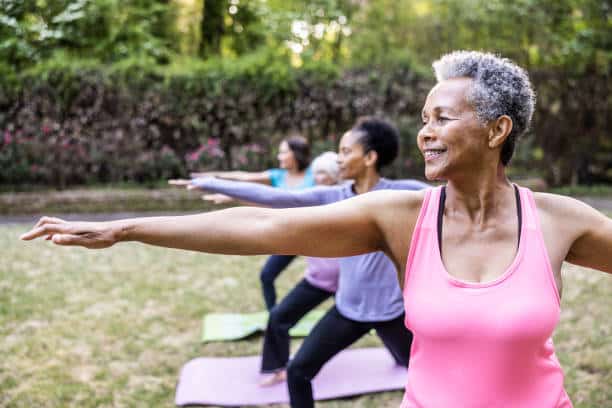
Of course, if you do like to engage in workout ‘sessions,’ then certainly don’t avoid them! Turns out, Tai chi pairs beautifully with these outings. Thanks to its gentle, flowing movements, participants can both enhance their balance while reducing their fall risk substantially – very important as we age.
In some randomized trials, Tai chi significantly improves balance, walking speed, and confidence while lowering the risk of multiple falls by over 50 percent – a remarkable result. Implementing Tai chi is easy, too. You can do it during gardening or errands, using its principles consistently. Things like shifting weight mindfully from one foot to the other, practicing slow heel-to-toe steps while reaching for tools, or standing tall with controlled breathing are all key components of Tai chi.
Classes are also widely available (many free or low-cost), and even short home sessions—focusing on weight shifts and steady poses—can make a major difference.
And finally, don’t overlook strength workouts twice weekly. They’re crucial for preventing heart disease and preserving power. Not sure how hard to push it as you age? The NHS guidelines recommend muscle-strengthening to the point of needing a short rest before repeating. Think of this as similar to carrying heavy bags, resistance bands, or bodyweight moves.
Resistance training in particular, just 30 minutes to 60 minutes weekly, has been linked to significantly lower risks of all-cause mortality and cardiovascular disease (CVD). The reasons for this are simple. It improves blood pressure, glucose control, lipids, and body composition, thereby easing heart strain.
Twice-weekly sessions are basically the best way to reap benefits without overdoing it. You’ll get healthier, fully recover, and feel fresh to go about your day doing what you want.
Consider the following accessible moves you can do at home two to three times per week:
- Chair squats: Stand in front of a sturdy chair, lower as if sitting, but hover, then rise.
- Wall push-ups: Face a wall, hands shoulder-width, bend your elbows to lean in, then push back.
- Seated leg lifts: Sit tall, extend one leg straight, hold briefly, then lower.
- Heel-to-toe rocks/standing marches: Rock your weight heel-to-toe or march in place, lifting knees gently.
If you can do eight to 12 reps per exercise, across one to two sets, you’re well on your way to seeing noticeable benefits. Just make sure you progress comfortably. No need to push too hard too soon. This is a marathon, not a sprint. After all, the whole point of these activities is to promote longevity.
Scientific evidence overwhelmingly supports these gains. Moderate activity preserves the ability to walk 400 meters without assistance. This is a key indicator of physical independence as we age. Meanwhile, strength activities and balance exercises notably reduce the risk of falling. Thanks to practices like Tai chi and brisk walking, you can improve your functional balance, boost your mobility, and cut your chronic disease risks all at once.
We’re talking about everything from heart disease to diabetes, osteoporosis, and beyond. Not to mention the boost to your mood and vitality!
So, what are you waiting for?
Start small and joyful: a brisk 20-minute walk three times weekly to hit your aerobic target. From there, build up to other activities and exercises during things like gardening, neighborhood walks, and just sitting in front of the television.
Lace up those shoes, flow through a tai chi sequence, or rise from that chair with purpose. You’ve got this!