

The standard Medicare Part B premium will rise to $202.90 per month in 2026, an increase of 9.7 percent from the $185 monthly premium in 2025, the Centers for Medicare and Medicaid Services recently announced. The agency released the new figures in a fact sheet that outlines the coming year’s costs.
CMS said the increase is mainly driven by estimated changes in prices and expected use of services. About 92 percent of people receiving Medicare Part B benefits will pay the standard rate unless they have higher incomes or specific penalties, according to a report from CNBC.
Medicare Part B 2025 and 2026 premiums
The standard Medicare Part B premium in 2025 is $185 per month. AARP notes that some people pay more if they have higher incomes or if they delayed signing up and now face a late enrollment penalty.
You May Also Like

Part B covers medically necessary care and preventive services. CMS said the 2026 premium of $202.90 reflects normal price and utilization trends.
The annual deductible will also rise. CMS said beneficiaries will pay a $283 deductible in 2026, up from $257.
What beneficiaries should know
The new premium and deductible amounts take effect on January 1, 2026. CMS will send notices before the end of the year. Social Security beneficiaries will also receive updates showing how the cost-of-living adjustment interacts with Medicare deductions.
You May Also Like

Experts told CNBC that beneficiaries should review their coverage during the annual enrollment period and check whether their income level might trigger a higher charge. They also recommend contacting Social Security if a recent life change may qualify for an adjustment.
RELATED: Medicare Advantage Plans Lack Black Doctors, New Study Finds
Impact on social security checks
Part B premiums are usually deducted directly from Social Security benefits. The Social Security Administration has announced a 2.8 percent cost-of-living adjustment for 2026, which works out to about $56 per month in added benefits for the average retiree.
Mary Johnson, an independent Social Security and Medicare analyst, told CNBC the new premium may feel like “a continuation in relentless cost increases.” She said many retirees may see the higher premium “taking a significant chunk of or even most of their COLA.”
A hold harmless rule prevents Social Security payments from going down because of a Part B premium increase. CNBC noted that other automatic deductions, such as Medicare Advantage or Part D drug plan premiums, can still reduce the final amount a retiree brings home.
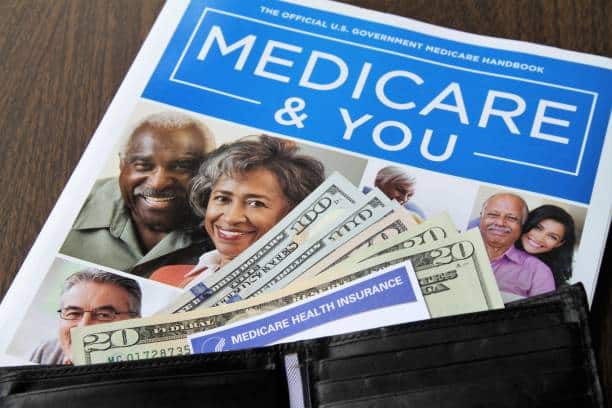
Who is eligible for the Part B premium?
The standard Medicare Part B premium is not only for seniors – other groups are eligible for the benefits.
Although people 65 and older are a primary group, individuals under 65 with certain disabilities or end-stage renal disease (ESRD) are also eligible and pay the standard premium unless their income is high enough to require an Income-Related Monthly Adjustment Amount (IRMAA).
Most U.S. citizens and legal residents who are 65 or older are eligible for Part B and pay the standard premium. People who are under 65 but have a qualifying disability may be eligible and pay the standard premium. And those under 65 who have End-Stage Renal Disease are eligible and pay the standard premium.
Who pays more
CMS said the standard $202.90 premium applies to individuals with modified adjusted gross incomes of $109,000 or less. For married couples filing jointly, the standard rate applies to incomes of $218,000 or less.
About eight percent of beneficiaries will pay more than the standard rate in 2026. CMS said these individuals are charged what is called an Income-Related Monthly Adjustment Amount. These higher premiums are based on tax returns from two years earlier.
CNBC reported that people whose income has gone down, or who have had a qualifying life event, can ask the Social Security Administration to adjust their amount.
CMS said the changes reflect “projected price changes and assumed utilization increases that are consistent with historical experience.” Analysts told CNBC that the 9.7 percent increase is one of the largest dollar increases seen in recent years. Johnson said the 2026 increase is the second-highest on record, behind the $21.60 jump in 2022.