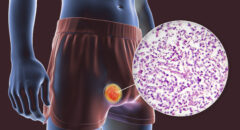
 Chlamydia (“kla-MID-ee-uh”) is a curable sexually transmitted infection
(STI), which is caused by bacteria called Chlamydia trachomatis. You
can get genital chlamydial infection during oral, vaginal, or anal sexual
contact with an infected partner. It can cause serious problems in men and
women, such as penile discharge and infertility respectively, as well as in
newborn babies of infected mothers.
Chlamydia is one of the most widespread bacterial STIs in the United States.
The Centers for Disease Control and Prevention (CDC) estimates that more than 3
million people are infected each year.
WHAT ARE THE SYMPTOMS OF CHLAMYDIA?
Chlamydia bacteria live in vaginal fluid and in semen. Chlamydia is sometimes
called the “silent” disease because you can have it and not know it. Symptoms
usually appear within 1 to 3 weeks after being infected. Those who do have
symptoms may have an abnormal discharge (mucus or pus) from the vagina or penis
or experience pain while urinating. These early symptoms may be very mild.
The infection may move inside your body if it is not treated. Bacteria can
infect the cervix, fallopian tubes, and urine canal in women, where they can
cause pelvic inflammatory disease (PID). In men the bacteria can cause
epidydimitis (inflammation of the reproductive area near the testicles). PID and
epidydimitis are two very serious illnesses.
You May Also Like

C. trachomatis also can cause inflammation of the rectum and lining
of the eye (conjunctivitis or “pink eye”). The bacteria also can infect the
throat from oral sexual contact with an infected partner.
HOW IS CHLAMYDIA DIAGNOSED?
Chlamydia is easily confused with gonorrhea because the symptoms of both
diseases are similar and the diseases can occur together, though rarely.
The most reliable ways to find out whether the infection is chlamydia are
through laboratory tests.
• The usual test is for a health care provider to collect a sample of fluid
from the vagina or penis and send it to a laboratory that will look for the
bacteria.

• The other test looks for bacteria in a urine sample and does not require a
pelvic exam or swabbing of the penis, and results are available within 24
hours.
HOW IS CHLAMYDIA TREATED?
If you are infected with C. trachomatis, your health care provider
will probably give you a prescription for an antibiotic such as azithromycin
(taken for one day only) or doxycycline (taken for 7 days). Or, you might get a
prescription for another antibiotic such as erythromycin or ofloxacin.
Health care providers may treat pregnant women with azithromycin or
erythromycin, or sometimes, with amoxicillin. Penicillin, which health care
providers often use to treat some other STIs, won’t cure chlamydial
infections.
If you have chlamydia, you should
• Take all your medicine, even after symptoms disappear, for the amount of
time prescribed
• Go to your health care provider again if your symptoms do not disappear
within 1 to 2 weeks after finishing the medicine
• Tell your sex partners that you have chlamydia so they can be tested and
treated, if necessary
You also should not have sexual intercourse until your treatment is completed
and successful.
HOW CAN CHLAMYDIA BE PREVENTED?
The surest way to avoid transmission of STIs is to not have sexual contact or
to be in a long-term mutually monogamous relationship with a partner who has
been tested and is not infected.
You can reduce your chances of getting chlamydia or giving it to your partner
by using male latex condoms correctly every time you have sexual
intercourse.
Health experts recommend chlamydia screening annually for all sexually active
women 25 years of age and younger. Health care experts also recommend an annual
screening test for older women with risk factors for chlamydia (a new sex
partner or many sex partners). In addition, all pregnant women should have a
screening test for chlamydia.
If you experience genital symptoms like burning while urinating or have a
discharge, you should see your health care provider immediately.
WHAT ARE THE COMPLICATIONS OF CHLAMYDIA?
Each year up to 1 million women in the United States develop PID, a serious
infection of the reproductive organs. As many as half of all cases of PID may be
due to chlamydial infection, and many of these women don’t have symptoms. PID
can cause scarring of the fallopian tubes, which can block the tubes and prevent
fertilization from taking place. Researchers estimate that 100,000 women each
year become infertile because of PID.
In other cases, scarring may interfere with the passage of the fertilized egg
to the uterus during pregnancy. When this happens, the egg may attach itself to
the fallopian tube. This is called ectopic or tubal pregnancy. This very serious
condition results in a miscarriage and can cause death of the mother.
In men, untreated chlamydial infections may lead to pain or swelling in the
scrotal area. This is a sign of inflammation of the epididymis. Though
complications in men are rare, infection could cause, pain, fever, and
sterility.
CAN CHLAMYDIA AFFECT A NEWBORN BABY?
A baby who is exposed to C. trachomatis in the birth canal during
delivery may develop an eye infection or pneumonia. Symptoms of conjunctivitis,
which include discharge and swollen eyelids, usually develop within the first 10
days of life.
Symptoms of pneumonia, including a cough that gets steadily worse and
congestion, most often develop within 3 to 6 weeks of birth. Health care
providers can treat both conditions successfully with antibiotics. Because of
these risks to the newborn, many providers recommend that all pregnant women get
tested for chlamydia as part of their prenatal care.
RESEARCH
Scientists are looking for better ways to diagnose, treat, and prevent
chlamydia. NIAID-supported scientists recently determined the genetic code or
sequence for C. trachomatis. The sequence represents an encyclopedia of
information about the organism. This accomplishment will give scientists
important information as they try to develop a safe and effective vaccine.
Developing topical microbicides (preparations that can be inserted into the
vagina to prevent infection) that are effective and easy for women to use is
also a major research focus.
MORE INFORMATION
National Library of Medicine
MedlinePlus
8600
Rockville Pike
Bethesda, MD 20894
1-888-FIND-NLM
(1-888-346-3656)
301-594-5983
http://medlineplus.gov
Centers for Disease Control and
Prevention
CDC-INFO
1600 Clifton
Road
Atlanta, GA 30333
1-800-CDC-INFO (1-800-232-4636)
1-888-232-6348
TTY
http://www.cdc.gov