
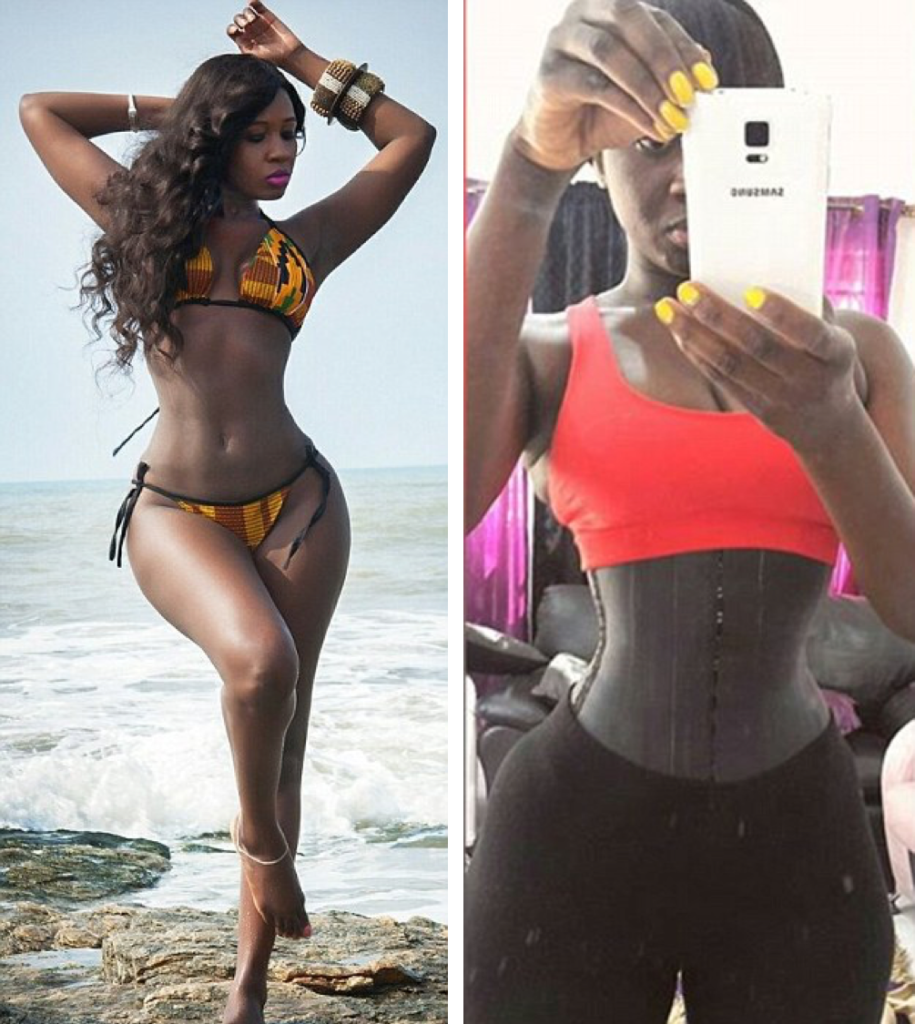
 When you look at those models, specifically fitness models, on your favorite social media platforms with their great abs, small waists and great bodies, many of us would automatically assume that they are healthy, right?
Well, Princess Shyngle is a print and fitness model who has a tiny 22-inch waist and a 44-inch behind. But, in 2016, she took to Instagram to post images of herself in the hospital being treated for a kidney disease which was likely caused by her waist trainer.
READ: Aspiring Actress Passes Out Due To Wearing A Waist Trainer
“Hospital bound… Kidney disease healing mercies oh Lord need your prayers ya’ll,” the 24-year-old captioned a post of herself with her arm hooked up to an IV drip.
You May Also Like

The actress, writer and producer has previously admitted to using the waist trainer, a corset worn by women in order to keep their waists small, in order to maintain her curvy figure. However, experts have warned that the use of the waist trainer can lead to medical issues and damage to internal organs, including kidneys.
Dr, Galyna Selezneva warned that waist trainers can cause problems with organs and bones over time: “If someone gets addicted to wearing a waist trainer day after day the inner organs will shift. There will be a disbalance in the cavity as it is not normal to have such a small waist. There can also be changes to the ribs and bone structures. Obviously if you are wearing them repeatedly, you are not exercising the muscles so they are also wasting.”

You May Also Like

Waist Trainers & Kidneys: What You Need to Know
Kidneys clean your blood, keep the balance of salt and minerals in your blood and help control blood pressure.
When your kidneys are damaged, waste products and fluid can build up in your body, causing swelling in your ankles, vomiting, weakness, poor sleep and shortness of breath. If you don’t treat them, diseased kidneys may eventually stop working completely. Loss of kidney function is a serious — and potentially fatal — condition.
READ: 4 Steps To Clean Your Kidneys
3 Main Causes of Kidney Failure
Doctors call the sudden loss of kidney function “acute kidney injury” or “acute renal failure” (ARF). It has three main causes:
1. Lack of blood flow to the kidneys
2. Direct damage to the kidneys themselves
3. Urine backed up in the kidneys
Contributing Factors of Kidney Failure
- Have a traumatic injury with blood loss
- Are dehydrated
- Go into shock during a severe infection called sepsis
- Have a blocked urine flow, which can happen with an enlarged prostate
- Take specific drugs or are around certain toxins
- Get complications with a pregnancy, such as eclampsia and pre-eclampsia, or related HELLP Syndrome
Chronic Kidney Disease: There’s a Difference
People may use the terms “kidney failure” and “renal failure” to refer to the same condition.
Both phrases describe the lack of kidney function such that the kidneys cannot operate well enough without medical intervention.
Medical professionals may also call this condition end-stage kidney disease (ESKD) or end-stage renal disease. However, they use these names in cases in which kidney failure results from developed chronic kidney disease (CKD). The end stage is stage 5 of CKD.
Kidneys that don’t work well for longer than three months is called chronic kidney disease (CKD). It’s dangerous, because you may not have any symptoms until a lot of damage, which often can’t be repaired, has happened.
Symptoms:
-
- Fatigue
- Swelling in the feet, ankles, or legs
- Reduced urine output
- Nausea
- Loss of appetite
- Anemia
- Bone pain
Diagnosis:
Treatment:
- Controlling blood pressure and blood sugar levels
- Managing diabetes
- Losing weight
- Quitting smoking
- Taking medications to protect the kidneys
- Dialysis or kidney transplant in advanced stages
Complications:
- Heart disease
- Stroke
- Bone disease
- Anemia
- Nerve damage
- Kidney failure
Prevention:
READ: 9 Ways To Take Better Care Of Your Kidneys
Princess explains her hourglass figure is due to a healthy regimen, not just the physique-hugging corsets she wears.
The actress says, “I exercise every single day, I don’t have to go to the gym but I make sure I do my sit-ups at home. I drink my green tea, warm water and lemon every day and I am always on a diet. Naturally, I have always been curvy. The slim waist is the result of waist training but the figure is God given.”
Could other entertainers have kidney issues on the horizon if they keep wearing waist trainers?
Here are the measurements of some current celebrities:
- Kim Kardashian: 38-26-42
- Nicki Minaj: 37-26-45
- Jennifer Lopez: 34-26-38
- Christina Hendricks: 42-30-39
While measurements don’t tell the full story of a person’s health, it’s good to monitor your own hip-to-waist ratio for your health.
A healthy waist-to-hip ratio (WHR) is considered to be 0.85 or less for women and 0.90 or less for men according to the World Health Organization (WHO). A high WHR indicates more abdominal fat, which is linked to an increased risk of chronic diseases like heart disease, type 2 diabetes, and metabolic syndrome.
For more articles, click here.