
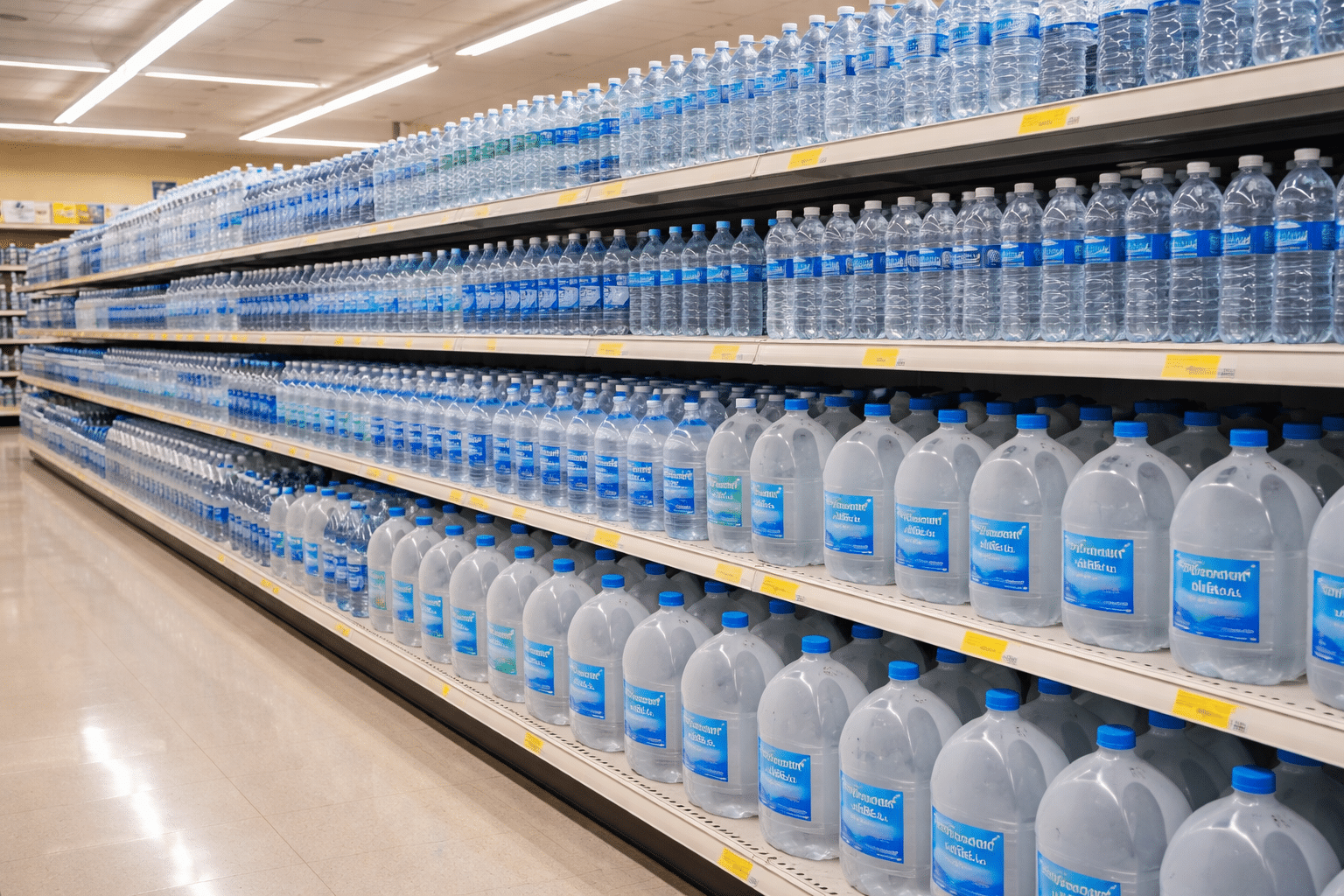
 The U.S. Food and Drug Administration (FDA) has announced a recall of approximately 651,148 water bottles due to unspecified “insanitary conditions.”

How to Keep Your Water Safe
Water itself doesn’t “spoil,” but it can become contaminated or develop an off taste over time if it’s not stored properly. Here’s how to keep stored water safe and fresh:
1. Start with clean water
-
Use treated tap water (municipal water is usually already disinfected).
-
If using well water, make sure it’s tested and safe.
-
If unsure, boil water for 1 minute (3 minutes at high elevation) and let it cool before storing.
2. Use proper containers
-
Store water in food-grade containers (look for “food safe” or PET/HDPE plastics).
-
Avoid containers that previously held chemicals or milk (hard to sanitize fully).
-
Glass bottles with tight-fitting lids are also good.
3. Sanitize containers before filling
-
Wash with hot, soapy water.
-
Rinse thoroughly.
-
Sanitize with a solution of 1 teaspoon unscented household bleach per quart of water.
-
Shake, let sit for 30 seconds, then rinse with clean water.
4. Store correctly
-
Keep in a cool, dark place (away from sunlight and heat).
-
Avoid areas near gasoline, chemicals, or strong odors (plastic can absorb smells).
-
Seal tightly.
5. Long-term storage tips
-
If storing for emergency use:
-
Add 2 drops of unscented liquid bleach per quart (or liter) of water before sealing.
-
Rotate stored water every 6–12 months for best quality.
-
-
Commercially bottled water can be stored unopened for years if kept cool and dark.
6. Signs water may be contaminated
Discard if you notice:
-
Cloudiness
-
Unusual smell
-
Floating particles
-
Algae growth