• Skip to main content
  • Skip to secondary menu
  • Skip to primary sidebar
  • Skip to footer
BlackDoctor.org
Where Wellness & Culture Connect

Where Wellness & Culture Connect

  • Conditions
  • Wellness
  • Lifestyle
  • Longevity
  • Clinical Trials
  • Resources
    • Generational Health
    • Top Blacks in Healthcare 2025
    • Hall Of Fame
    • Clinical Trials Resource Center
    • Obesity Resource Center
    • Cancer Resource Center
    • Wellness on the Yard
    • Immunocompromised Care
    • BDO Resource Library
  • Find A Doctor
  • BDO TV
Home / Health Conditions / Hypertrophic Cardiomyopathy (HCM) / A Heart Problem Almost Ended His Basketball Career Before It Began

A Heart Problem Almost Ended His Basketball Career Before It Began

hypertrophic cardiomyopathy
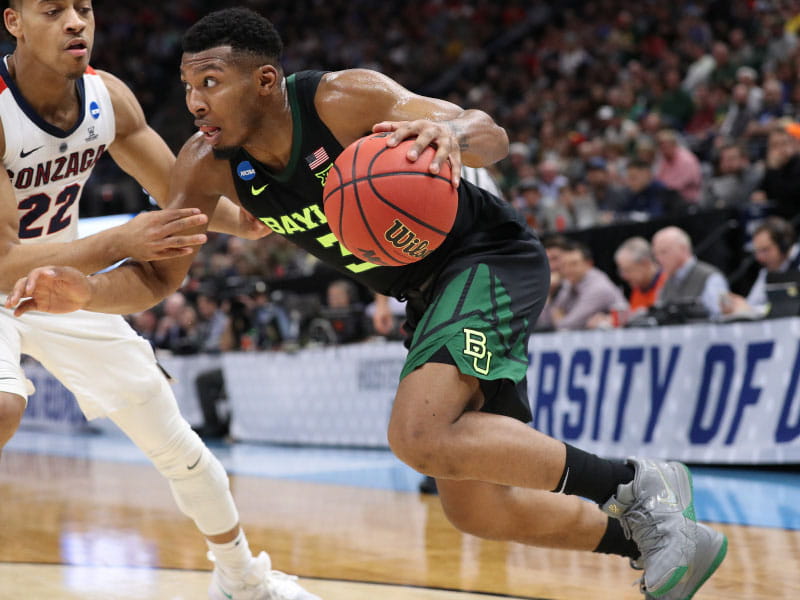
(Patrick Smith/Getty Images Sport via Getty Images)

When shooting guard King McClure showed up at Baylor University in 2015, he was one of the top recruits in the country. An NBA career seemed likely.

But before he even made it to his first college game, a doctor told him that his basketball career was over – forever.

Routine heart screening exams revealed that McClure had hypertrophic cardiomyopathy, or HCM, a condition that causes the walls of the heart chamber to become thicker, which can impede blood flow to and from the heart. HCM can increase the risk of cardiac arrest, especially during physical activity, like basketball. In 1990, college basketball star Hank Gathers collapsed on the court and died because of HCM. In 1993, Boston Celtics star Reggie Lewis died from HCM during an offseason practice.

RELATED: Black History of Health: Hank Gathers

You May Also Like
Psoriatic Arthritis Can Feel Beyond Your Control. Consider a Different Direction. Learn More Here. Psoriatic Arthritis Can Feel Beyond Your Control. Consider a Different Direction. Learn More Here.

Refusing to take no for an answer

In search of more answers – and, hopefully, a different opinion about his playing options – McClure flew from Texas to Seattle to see a specialist.

“He told me if I continued to play basketball, I would die,” McClure recalls. “He would not clear me to return to the game – and he said I had to completely stop doing this thing that I loved.”

McClure broke down in tears. He’d started bouncing a basketball when he was just 3 and had been playing competitively since he was 5.

You May Also Like
Get GLP-1s Delivered to You As Low As $99/Month! Get GLP-1s Delivered to You As Low As $99/Month!

“Basketball was my life,” he says.

His mom refused to take no for an answer. She firmly believed her son would play again. With the help of Baylor men’s basketball coach Scott Drew – and buoyed by the fact McClure had no symptoms and there was no family history of heart disease – they sought more insight.

McClure was also encouraged by Monty Williams, a former Notre Dame standout and NBA player (and now coach of the Phoenix Suns), who was also diagnosed with HCM before his own collegiate career.

The McClures weren’t just shopping for someone to say what they wanted to hear. Given that there had been two decades since the deaths of Gathers and Lewis, they were seeking fresh scientific evidence that McClure could safely continue to play.

They found it at the Mayo Clinic in Rochester, Minnesota.

An HCM specialist said McClure could play again, as long as he had a device implanted into his chest to protect his heart. It’s called an implantable cardioverter defibrillator, or ICD. If the machine detects an abnormal rhythm, it can shock it back into a safe range. While ICDs are commonly used to treat various heart problems, it’s less common among those competing in high-level sports.

McClure got the ICD. On the first day of practice in 2016, he ran onto the court alongside his teammates, accompanied by a wave of gratitude.

(Photo courtesy of King McClure)

Living life to the fullest

“Basketball was taken away from me,” he says. “And after that, I wanted to give it my all every time I stepped onto the court because I knew just how terrible it felt to not have basketball in my life.”

He also felt grateful that his condition had been caught before it announced its presence. In the cases of Gathers and Lewis, their diagnosis came via autopsy. McClure credits Baylor’s screening tests for potentially saving his life.

McClure went on to play 129 games at Baylor, starting nearly half of them. He’s still connected to basketball as an analyst with ESPN.

He began sharing his story upon returning for his sophomore season. Doing so made a difference in the lives of other basketball players diagnosed with heart problems.

Before a game in Iowa, a family showed up at the hotel where the team was staying to meet McClure. Their daughter had a similar condition, and when she was diagnosed, they feared for her life, and her future in sports. McClure’s story gave them hope and helped their daughter to play basketball again.

“He shed light on this condition and brought hope to others,” says Drew, who recruited McClure to Baylor and coached him through his entire collegiate career. “If King hadn’t been able to work through his diagnosis and play again, others might not have been able to keep playing either.”

Perhaps the best example is Jared Butler.

Butler was diagnosed with HCM during a routine physical exam before his freshman season of college. He consulted the same specialist who worked with McClure and got similar assurance that he could keep playing. He transferred to Baylor, where his freshman year overlapped with McClure’s senior season. Butler went on to have a successful collegiate career and is now in the NBA.

“King opened the door for other athletes with similar conditions,” Drew adds.

McClure says he’s received “countless messages from people all over the country, including basketball players, kids and parents, who feel hope after hearing my story.”

“That’s the reason why I feel like I went through what I went through,” he says. “And that’s why I’m sharing my story and sharing my adversities now – for people who need hope.”

Identifying HCM

Knowing the signs and symptoms of HCM is important, according to the American Heart Association. It can help with getting an early diagnosis when treatment may be most effective.

Signs and symptoms of HCM include:

  • Chest pain, especially with physical exertion
  • Shortness of breath, especially with physical exertion
  • Fatigue
  • Arrhythmias (abnormal heart rhythms)
  • Dizziness
  • Lightheadedness
  • Fainting (syncope)
  • Swelling in the ankles, feet, legs, abdomen

If you notice any of these symptoms, seek medical attention. Your doctor can diagnose you based on your medical history, family history, a physical exam and diagnostic test results.


By American Heart Association 

By Jason Henderson, BDO Staff Writer | Published June 6, 2025

June 6, 2025 by Jason Henderson

The Latest In Hypertrophic Cardiomyopathy (HCM)

heart murmur

Is Your Heart Murmur Innocent—or a Warning Sign of HCM?

Heart murmurs are surprisingly common. Around 10 percent of adults and 40–50 percent of children have them, and Yale Medicine estimates that up to 75 percent of kids will experience a murmur at some point in childhood. Many are harmless read more about Is Your Heart Murmur Innocent—or a Warning Sign of HCM?
HCM

HCM: Why Genetic Testing Matters — Especially for Black Patients

Hypertrophic cardiomyopathy (HCM) may sound rare, but it isn’t. This condition affects an estimated one in 250 to 500 people in the United States, according to the Cleveland Clinic. Yet many people may not realize they have it until symptoms read more about HCM: Why Genetic Testing Matters — Especially for Black Patients
HCM

Yes, You Can Exercise With HCM—Here’s How to Do It Safely

If you’re living with hypertrophic cardiomyopathy (HCM), you’ve probably heard mixed messages about exercise. For years, people with HCM were often told to avoid most forms of physical activity because of the risk of sudden cardiac events. Understandably, that left read more about Yes, You Can Exercise With HCM—Here’s How to Do It Safely
what is HCM

What Is HCM? Lifestyle, Diet, and Self-Care Tips From Cardiologists

If you’ve recently been told you have hypertrophic cardiomyopathy (HCM), your first question might be: What is HCM? HCM is a chronic heart condition where the main pumping chamber of your heart becomes thicker than normal. That thickening can make read more about What Is HCM? Lifestyle, Diet, and Self-Care Tips From Cardiologists
HCM

Understanding HCM: What You Need to Know

Hypertrophic cardiomyopathy (HCM) is one of the most common inherited heart conditions, affecting as many as 1 in 500 people. Though it can sound frightening, especially when first diagnosed, the outlook for individuals with HCM has never been better. With read more about Understanding HCM: What You Need to Know
cardiac arrest

This Triathlete Survived The Unthinkable: 40 Minutes Without a Steady Heartbeat

At 47, Mark Allen was in the best shape of his life. He was well on his way to his goal of competing in 50 events before his 50th birthday. That day, he would hit No. 21. The race – read more about This Triathlete Survived The Unthinkable: 40 Minutes Without a Steady Heartbeat

Primary Sidebar

Subscribe to our newsletter

Icon

Caring for You, Too - Caregiver Workbook

1 file(s) 297 KB
Download

Trending Articles

Weight Loss Challenge: Lose 10 Pounds In 2 Weeks!

lose 10 pounds in 2 weeks

Stage 4 Lung Cancer: Why I Said Yes to a Clinical Trial

Stage 4 Lung Cancer: Why I Said Yes to a Clinical Trial

Top 10 Ways to Improve Your Digestion Naturally

digestion

This Clinical Trial Is Making HIV Treatment Easier for Black People

This Clinical Trial Is Making HIV Treatment Easier for Black People

A Clinical Trial Extended the Life of Women With Hard-to-Treat Breast Cancer

A Clinical Trial Extended the Life of Women With Hard-to-Treat Breast Cancer
Find a Culturally Sensitive Doctor

Footer

Where Wellness & Culture Connect

BDO is the world’s largest and most comprehensive online health resource specifically targeted to African Americans. BDO understands that the uniqueness of Black culture - our heritage and our traditions - plays a role in our health. BDO gives you access to innovative new approaches to the health information you need in everyday language so you can break through the disparities, gain control and live your life to its fullest.

Connect With Us

Resource Centers

  • Top Blacks in Healthcare
  • Clinical Trials
  • Wellness on the Yard
  • Cancer
  • Immunocompromised Care
  • About Us
  • Privacy Policy
  • Cookie Policy
  • Terms of Service
  • Careers
  • Advertise With Us
  • Advertising & Sponsorship Policy
  • Daily Vitamina
  • TBH

Copyright © 2025, Black Doctor, Inc. All rights reserved.