
• Skip to main content
  • Skip to secondary menu
  • Skip to primary sidebar
  • Skip to footer
BlackDoctor.org
Where Wellness & Culture Connect

Where Wellness & Culture Connect

  • Conditions
  • Wellness
  • Lifestyle
  • Longevity
  • Clinical Trials
  • Resources
    • Generational Health
    • Top Blacks in Healthcare 2025
    • Hall Of Fame
    • Clinical Trials Resource Center
    • Obesity Resource Center
    • Cancer Resource Center
    • Wellness on the Yard
    • Immunocompromised Care
    • BDO Resource Library
  • Find A Doctor
  • BDO TV
Home / Lifestyle / Living with Heart Failure / Does Cutting Back on Salt Help People With Heart Failure?

Does Cutting Back on Salt Help People With Heart Failure?

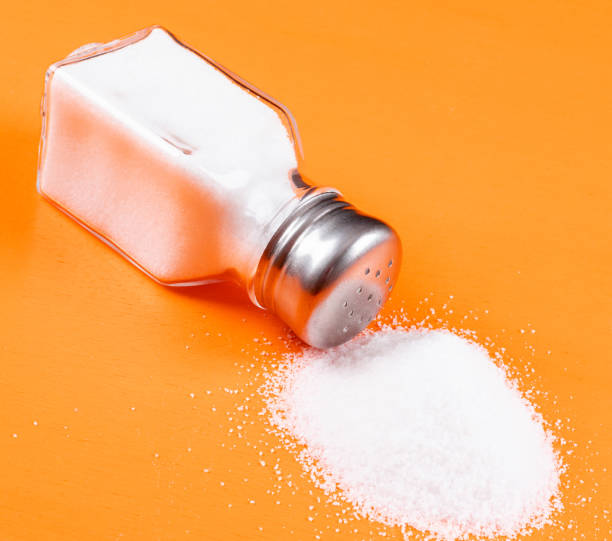
salt

If you have heart failure (currently Blacks have the highest incidence and prevalence of heart failure with the worst clinical outcomes), there's good news and bad news on how much it would help you to cut back on salt.

New research finds that while it doesn't prevent death or hospitalization among patients, it does appear to improve their quality of life.

RELATED: Are Salt Substitutes Safe?

You May Also Like

Psoriatic Arthritis Can Feel Beyond Your Control. Consider a Different Direction. Learn More Here. Psoriatic Arthritis Can Feel Beyond Your Control. Consider a Different Direction. Learn More Here.

How low salt intake can improve quality of life

Patients with heart failure have been told for years to reduce the salt in their diet as a way to help prolong life, but among more than 800 patients from six countries, reducing salt intake didn't prevent deaths, visits to the emergency room, or hospitalizations, the researchers found.

Still, "we do think that there is a small amount to be gained by reducing the amount of sodium in the diet," says researcher Dr. Justin Ezekowitz, a professor in the division of cardiology at the University of Alberta in Edmonton, Canada.

The patients in the study were already eating a lot less salt than most Americans consume, although they had not achieved the optimal goal of the amount of salt recommended, he explains.

You May Also Like

Get GLP-1s Delivered to You As Low As $99/Month! Get GLP-1s Delivered to You As Low As $99/Month!

"The expected goal is not reducing clinical events necessarily, but it does improve quality of life, which might be very important for individual patients," Ezekowitz shares.

For the study, the research team followed heart failure patients from 26 medical centers in Australia, Canada, Colombia, Chile, Mexico and New Zealand. Half were randomly assigned to receive usual care, and the rest received nutritional counseling on how to further reduce their dietary salt intake.

Patients who received counseling were given menu suggestions and encouraged to cook at home and not add salt. They were also urged to avoid salty foods.

Patients were asked to keep their salt intake to 1,500 milligrams (mg) per day — about two-thirds of a teaspoon. Before the study, patients added an average of 2,217 mg per day, or about one teaspoon. After one year, those not receiving nutritional advice ate an average of 2,072 mg of salt daily, while those who received nutritional guidance ate 1,658 mg per day.

Although Ezekowitz's group didn't find significant differences in deaths or hospitalizations between the two groups of patients, those on the low-salt diet did show improvement in quality of life and in the severity of their heart failure.

Ezekowitz thinks that these results might have been different if the study had gone on longer or if the levels of salt consumption had been even lower.

RELATED: Could Chinen Salt Be Good For You?

Uncertainty about the benefits of reducing salt

The findings are not a license to eat as much salt as you like, he adds.

"People should continue to be concerned about the amount of salt in their diet and continue to reduce the sodium in their diet overall," Ezekowitz notes. "There may be benefits that we didn't measure in our clinical trial that they might get from reducing salt in the diet. A low-salt diet may actually improve their overall quality of life. The real take-home is that a low-sodium diet remains an important part for most patients."

Dr. Gregg Fonarow, interim chief of the division of cardiology at University of California, Los Angeles, says for decades patients with heart failure have been advised to restrict their salt intake.

"This longstanding, widely accepted recommendation was based on a physiologic rationale, clinical observation and expert opinion rather than having been demonstrated in prospective, randomized clinical trials," he notes.

While more recent guidelines for heart failure have acknowledged the uncertainty about the benefits of reducing salt, many patients have still been told to reduce their salt to very low levels, Fonarow says.

"The evidence from this very important randomized clinical trial suggests that dietary sodium restriction to a target of less than 1,500 mg per day in patients with heart failure did not reduce mortality, cardiovascular-related hospitalization or cardiovascular-related emergency room visits," he adds.

For patients with heart failure, it remains unclear whether any level of salt restriction offers clinical benefits, Fonarow notes.

"Yet it is important to keep in mind the usual care comparison group was consuming a little over 2,000 mg of sodium daily, which is still lower than the 3,400 mg of sodium that is the average amount consumed in the U.S. by the general population," he shares.

Living with heart failure

The key to living with heart failure is to follow the proven treatment advice, he adds.

"Importantly, use and adherence to disease-modifying guidelines and medical therapy have been shown to be the best and safest way to improve clinical outcomes for patients with heart failure," Fonarow concludes.

If you have heart failure, you should discuss how these new findings might apply to you with your doctor.


By Jason Henderson, BDO Staff Writer | Published April 6, 2022

The Latest In Living with Heart Failure

congestive heart failure

What Is Congestive Heart Failure?

Congestive heart failure is a scary diagnosis nobody wants to hear, but what is the condition, and how do you manage it? Plenty of people are affected: Roughly 5.7 million Americans are living with congestive heart failure, with 670,000 new read more about What Is Congestive Heart Failure?
SCAD

‘It Still Affects Me’—The Lasting Impact of a Heart Attack at 28

For Taelur Littlejohn, the birth of her child on January 2nd was supposed to be a joyous occasion. But just hours after returning home from the hospital, her world took a terrifying turn. "...I started feeling like a very tight read more about ‘It Still Affects Me’—The Lasting Impact of a Heart Attack at 28
heart failure

‘The Scariest Year of My Life’: How I Survived Heart Failure and a Stroke

When Matt Lewis first experienced an unusual episode of dizziness and confusion while driving down the highway, he had no idea it was the beginning of a life-altering health battle. What followed was a harrowing year-long journey filled with unanswered read more about ‘The Scariest Year of My Life’: How I Survived Heart Failure and a Stroke
Heart Health Clinical Trials: A Black Doctor's Perspective

Heart Health Clinical Trials: A Black Doctor’s Perspective

Heart disease remains one of the leading causes of death among Black Americans. Clinical trials are crucial in developing effective treatments and prevention strategies as we strive to address this health disparity. However, the underrepresentation of Black Americans in these read more about Heart Health Clinical Trials: A Black Doctor’s Perspective
This Heart Failure Gene Therapy May Be on It's Way to Clinical Trials

This Heart Failure Gene Therapy May Be on It’s Way to Clinical Trials

(HealthDay News) — Failing hearts nearly returned to full function in laboratory pigs after they received an experimental gene therapy. New research shows the gene therapy didn’t just prevent heart failure, a condition disproportionately affecting Black Americans, from worsening in four read more about This Heart Failure Gene Therapy May Be on It’s Way to Clinical Trials
health problems

The 12 Most Common Health Problems for People 55+

Thanks to new medications and surgical techniques, people are living longer. However, a 35-year-old body will be a very different body than a 75-year-old one. Many issues, both genetic and environmental, affect how we age. The most widespread condition affecting read more about The 12 Most Common Health Problems for People 55+

Primary Sidebar

Subscribe to our newsletter

Icon

Caring for You, Too - Caregiver Workbook

1 file(s) 297 KB
Download

Trending Articles

Weight Loss Challenge: Lose 10 Pounds In 2 Weeks!

lose 10 pounds in 2 weeks

Stage 4 Lung Cancer: Why I Said Yes to a Clinical Trial

Stage 4 Lung Cancer: Why I Said Yes to a Clinical Trial

Top 10 Ways to Improve Your Digestion Naturally

digestion

This Clinical Trial Is Making HIV Treatment Easier for Black People

This Clinical Trial Is Making HIV Treatment Easier for Black People

A Clinical Trial Extended the Life of Women With Hard-to-Treat Breast Cancer

A Clinical Trial Extended the Life of Women With Hard-to-Treat Breast Cancer
Find a Culturally Sensitive Doctor

Footer

Where Wellness & Culture Connect

BDO is the world’s largest and most comprehensive online health resource specifically targeted to African Americans. BDO understands that the uniqueness of Black culture - our heritage and our traditions - plays a role in our health. BDO gives you access to innovative new approaches to the health information you need in everyday language so you can break through the disparities, gain control and live your life to its fullest.

Connect With Us

Resource Centers

  • Top Blacks in Healthcare
  • Clinical Trials
  • Wellness on the Yard
  • Cancer
  • Immunocompromised Care
  • About Us
  • Privacy Policy
  • Cookie Policy
  • Terms of Service
  • Careers
  • Advertise With Us
  • Advertising & Sponsorship Policy
  • Daily Vitamina
  • TBH

Copyright © 2025, Black Doctor, Inc. All rights reserved.