
Living with multiple sclerosis (MS) presents a unique set of challenges, from the physical symptoms to the emotional toll it takes on individuals and their families. For every 100,000 people in the general population, 298.4 of them are Black and living with more aggressive disease progression and greater disability.
For many, the journey begins with a diagnosis that can be both bewildering and isolating.
Los Angeles and Gold Coast, Australia-based poet and advocate Azure was living with MS for nearly a decade before receiving a diagnosis.
“It took a few years to receive a full diagnosis, and initially, it was harrowing due to the lack of information. The available information felt vague yet final and fatal, which was a major struggle,” Azure shares, adding that for many years she lacked the courage to talk about her diagnosis with friends and family.
You May Also Like

“If I could do it over again, I would have sought more encouraging spaces. I wanted a community to help me cope, breathe, and educate myself, but I couldn’t find one.”
One of the biggest challenges Azure faced was the lack of access to healthcare and resources.
“The lack of access and agency is still very prominent today. When I first got diagnosed, I did not know the disparity between symptoms or how the disease manifests itself in Black patients. That was a new revelation just a few years ago, which has been a mind-blowing experience. Your basic MRI was $750, and I didn’t have any healthcare,” she shares.
For many patients, this lack of access often means delayed diagnosis and missed opportunities for early intervention, which is crucial in managing MS. It is even more crucial for Black patients who face more aggressive disease progression and greater disability, including:
- Walking, balance, and coordination problems
- Cognitive and visual symptoms
- Frequent relapses with poorer recovery
- Earlier disability onset
“I didn’t find out about the disparity in multiple sclerosis until Dr. [Mitzi Joi] Williams became my doctor. We were joined together on another initiative, and I found out myself less than five years ago. That’s a problem, a massive oversight.”
You May Also Like

The initiative Azure is referring to is the #MSVisibility: Breaking Barriers campaign by Genentech, which sheds light on the Black MS experience and offers educational resources and tips.
“Had I known at the time that something was wrong before we got the diagnosis, I could have been in a space where I didn’t have a preexisting condition. However, we didn’t even know what was wrong for so many years. This speaks to the inequity in healthcare, particularly for people of color. It’s not a typical experience for Black households to go to the doctor when you’re not feeling well. All of the research today points to early detection helping to slow down the disease or make it more manageable, but that’s not always available, especially for people of color,” Azure adds. “Taking time off work to go to the doctor, paying for the visit and prescriptions, and regular MRIs are not cheap expenses. It’s a constant evaluation of priorities: pay rent or go to the doctor. Unfortunately, this is still an issue today. My family and I work hard to ensure I have what I need, but the disease presents enormous challenges.”
This lack of representation in research and healthcare settings meant Azure had to advocate even harder for proper care and support.
“I live in Australia full time, and here they don’t believe any of the research about Black patients. I was told that specifically by a triple PhD MS specialist out of Melbourne; he said point blank, ‘That wouldn’t affect you differently, that has nothing to do with your skin color.’ This is not just a developing world issue; it’s happening in the United States, in the UK, and elsewhere. There’s not enough mobilization and representation behind our stories,” Azure says.
Despite these challenges, Azure has found strength in her community and her passion for advocacy.
“[I’m] really trying to be a vehicle to get more communities of color open to the concept that you can have a medical community and healthcare team that doesn’t need to be mutually exclusive with having the socioeconomics to support it. We need to push back on big pharma and industry leaders about ensuring that testing, clinical trials, information, and literature include us so that when you go to the doctors, you’re not just looking at literature that looks nothing like you, or commercials where you’re never represented,” she notes.
“I love to read as much as I possibly can. I also do a lot of work in tech. I was never able to find any info, so it does beg the question: ‘what’s happening in societal and inequity spaces?’ If you go to Google today and you type in MS and click images, we are not represented there.”
Although Azure’s MS journey started out rocky, she feels well-supported. “Managing the disease is still challenging at times. I have good communities in place now, which help me manage many of the symptoms, but frustrations still arise,” she shares. “It’s knowing that you’ve got family support, clientele, whatever it’s going to be, [that] don’t make you apologize for something that you didn’t cause.”
Azure shares some of the things that get her through challenging times or painful flare-ups:
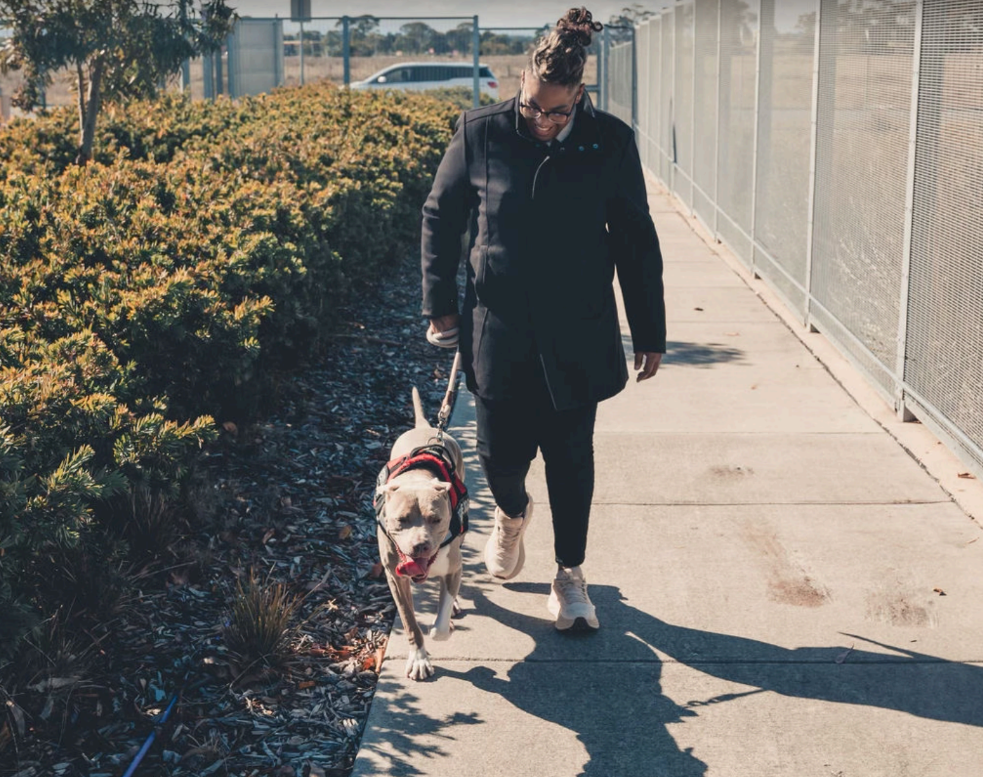
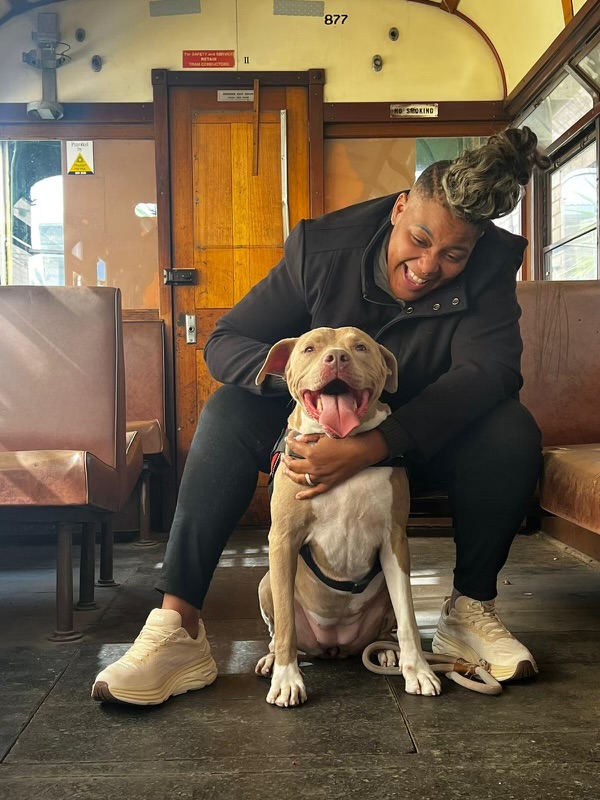
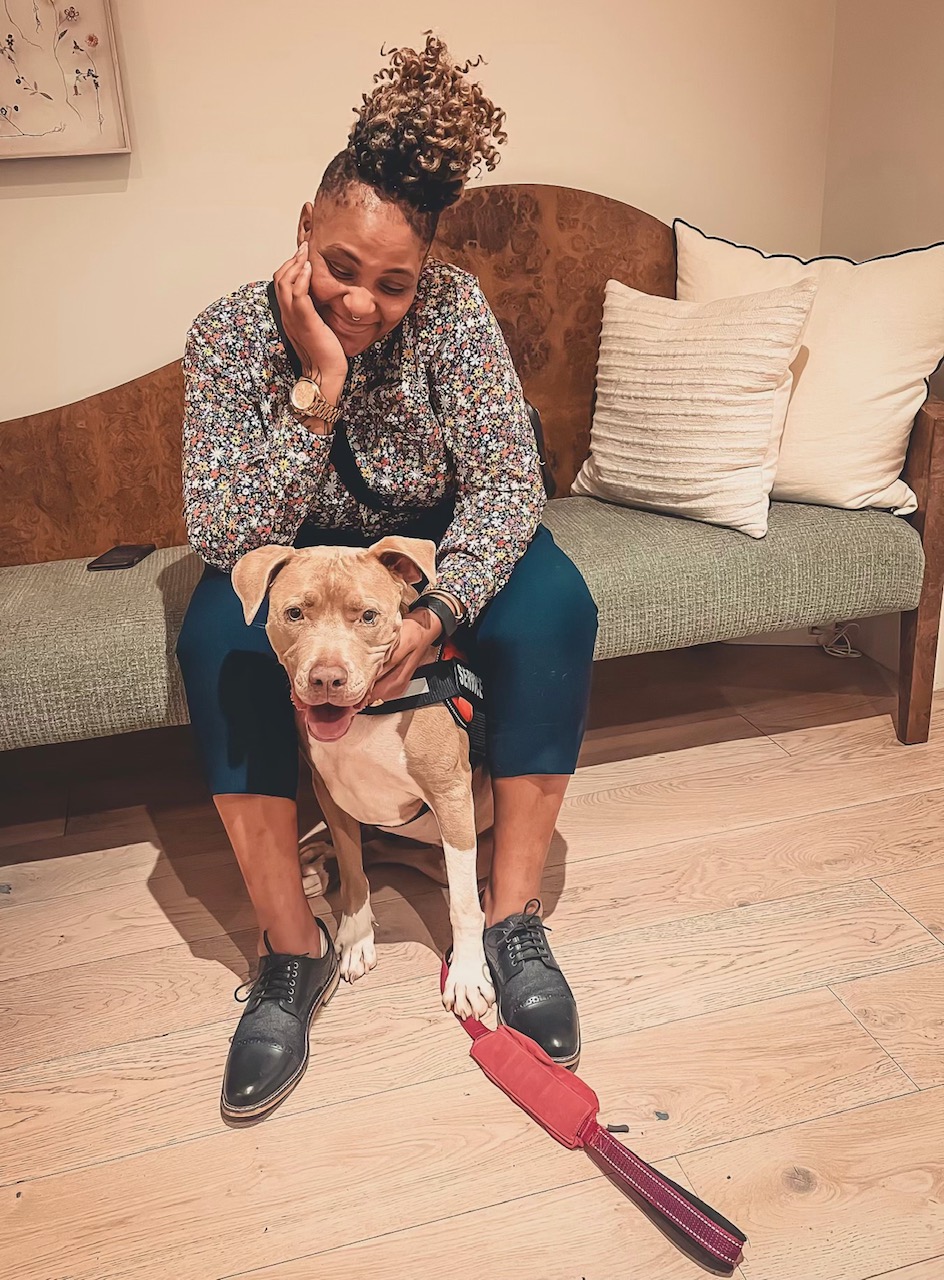
- Her support dog Bella. “My dog is a big help emotionally, and she’s been super helpful to help me know when storms are coming.”
- Spousal support. “My wife is incredible, the support of having people that you can just talk to or can anticipate your needs is massive.”
- Finding joy in her surroundings. “There’s not enough emphasis placed on your surroundings, what you do for joy or relaxation.”
- Acceptance and Grace. “Knowing that you have a support system in place that accepts you as you are and cares enough about you to kind of see some of those spaces that you may not be able to identify yourself, that’s been the biggest flex and the biggest win for me.”
Azure’s advice for those navigating life with MS? Get the right people around you and keep them.
As Azure continues her journey with MS, she’s focused on advocacy and raising awareness.
“My goal is to continue raising awareness for MS and advocating for better access to healthcare and representation in research. I’m excited to launch my podcast, ‘What The Health,’ and host a TEDx event next year to amplify stories of resilience in managing chronic illnesses. Additionally, I’m working on a comedy special called ‘Stand Up for MS’ to bring humor and levity to the narrative around MS,” she concludes.