

Your body can go through a lot of changes when you’re pregnant. Still, you might not expect how much your skin can change when you’re expecting. Some of these issues can be attributed to hormonal fluctuations that normally happen with pregnancy. Your skin may become more acne-prone, itchy, or have dark patches. Under normal circumstances, your usual skincare routine might be enough to keep your skin healthy. However, pregnancy can make you more sensitive to certain skincare ingredients, so it’s a good idea to know which ones to avoid and what’s safe.
10 Skincare Ingredients to Put on Hold
1. Retinol
This Vitamin A derivative can be found in many anti-aging products. You may also see it listed as retinyl palmitate, retin-A, retinyl acetate, retinoic acid, and tretinoin. While Vitamin A is essential for your baby’s organ development, you need it in the form of carotenoids. In that way, your body can convert it to the Vitamin A that you need. However, the Vitamin A in retinol-based products is preformed and studies show that being exposed to high levels of retinol can lead to birth defects or miscarriages.
2. Parabens
Parabens are widely used to prevent the growth of bacteria in skincare products, such as foundation, sunscreen, tinted moisturizers, blush, and moisturizing face creams. You may also see them listed as propylparaben, butylparaben, methylparaben, or isopropylparaben. According to several studies, parabens are easily absorbed through the skin and can interfere with your hormone regulation. As a result, they can interrupt the development of your baby’s organs.
You May Also Like

3. Essential Oils
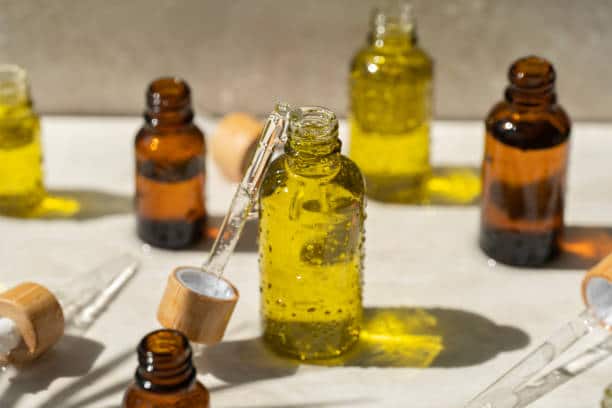
While some essential oils can be used during pregnancy, others can be harmful. Since they’re considered to be natural, essential oils usually aren’t regulated by the Food and Drug Administration (FDA), so they’re not held to any specific standards. Researchers also state that these oils can easily seep into your system to affect your baby. Some of the oils that are best avoided are aniseed, basil (estragole CT), birch, camphor, caraway, cinnamon, clary sage, fennel, hyssop, mugwort, parsley seed or leaf, pennyroyal, sage, tansy, tarragon, thuja, wintergreen, and wormwood.
4. Salicylic Acid
In this case, doctors advise you to avoid oral salicylic acid. Although it can be found in many topical cleansers that are designed to treat acne, there is also an oral form. Sometimes, doctors prescribe them for people who have significant issues with acne. However, it’s been shown that taking salicylic acid during pregnancy can cause intracranial bleeding.
You May Also Like

RELATED: 6 Ways To Prep Your Body & Home For Breastfeeding
5. Tazarotene
This is a Vitamin A derivative that’s only available through a prescription. As with retinol-based products, using it during pregnancy can lead to intracranial bleeding.
7. Formaldehyde
Though you may have heard of formaldehyde, you may not know that this preservative has been found in more than 50 percent of skincare products. This can include lotions, creams, and nail polish. While the amount in one product may be too small to have side effects, using a combination of products with formaldehyde over time can lead to a build-up in your body. As a result, you’ll have a higher risk of developing certain cancers and having a miscarriage.
8. Toluene
Toluene is widely used as a solvent and stabilizer in many products, including nail polish, moisturizers, concealers, and foundations. Some studies suggest that not only can exposure to toluene irritate your skin, but it can also increase your risk of developing cancer. Additionally, it can affect your respiratory and immune systems, which can be particularly hard on pregnant women.
9. Hydroquinone
This is a common ingredient in many skin-lightening products. Some pregnant women may be tempted to use them because they’re more likely to develop dark spots and patches. However, some studies on animals have shown that hydroquinone can harm your baby.
10. Tetracycline
Many people use tetracycline to treat severe acne because it’s safe and effective. However, when you’re pregnant, studies show that’s not the case–especially after the first trimester. When used after the fourth month, tetracycline can affect the color of your baby’s teeth as well as how well their teeth and bones harden while developing in the womb.
RELATED: Cleaning While Pregnant: 5 Tips To Keep It Safe
11. Oxybenzone
Although sunscreen is important, you have to be careful which ones you choose. Many of them contain oxybenzone, an ingredient that effectively absorbs UV rays. Unfortunately, recent studies show that this chemical can interfere with hormone regulation and is also small enough to be absorbed through the skin. Some tests have even found oxybenzone in the blood of pregnant women, fetuses, and breastmilk. It’s better to use sunscreen that contains titanium dioxide or zinc oxide.

What Works Well When You’re Pregnant
Though it may seem that the list of ingredients to avoid is long enough to include every single product you can think of, that’s not the case. There are still quite a few products that you can safely use while pregnant. Generally, glycolic acid is safe, as are antibiotics that contain erythromycin.
Where foundations, concealers, and exfoliators are concerned, beauty balm or blemish balm (BB) and color correcting or complexion corrector (CC) creams may work well. BB creams are usually lighter, while CC creams have more pigment for better coverage. Both of these options typically have fewer ingredients than the average product. When looking for BB and CC creams, it’s best to avoid those that contain parabens. You may also opt for products that have natural ingredients like honey, chamomile, or turmeric.
Natural ingredients like sunflower oil and peppermint can be great in your lip balm as they can moisturize your lips without causing side effects. For eye shadow and mascara, it’s a good idea to avoid products that contain talc and artificial dyes. Fortunately, there are a few options that are completely made from plant-based materials.
Finding an alternative to sunscreen can be a little trickier, but the experts suggest trying moisturizers that have sunscreen included. Some of these also have hydrating ingredients such as sunflower, jojoba, and coconut oil. Of course, if you’ve had allergic reactions to any of these oils, you shouldn’t use them.
It’s also important to note that you don’t have to figure out your pregnancy skincare routine on your own. Consulting a dermatologist can be helpful for determining what would work best for your skin.
General Skincare Tips for Pregnancy
When it comes to healthy skin, prevention is still a great place to start. For example, some of the steps you can take to prevent acne include washing your face regularly with gentle soaps that contain pregnancy-safe ingredients and using non-comedogenic products that don’t encourage the development of acne. Staying hydrated can also help prevent acne.
If you’re dealing with dark spots, consider avoiding too much direct sunlight and using broad-spectrum sunscreen that’s at least SPF 30 whenever you’re outside. Apart from sunscreen, dermatologists recommend wearing a wide-brim hat to protect your face. Natural products such as aloe vera and turmeric can also help with darkening skin.
For itchy skin, it’s a good idea to avoid harsh cleansers that can irritate your skin, use fragrance-free moisturizers regularly, and wear loose clothing. When bathing or washing your face, it’s best to use lukewarm water so that your skin doesn’t get too dry. This is another instance where staying hydrated can soothe your skin.
According to the experts, taking care of your skin during pregnancy isn’t just about the products you use. The right diet can help to promote healthy skin that isn’t as prone to blemishes, itchiness, and dryness. Some of the foods you should consider incorporating into your diet include avocados, nuts, oranges, salmon, berries, flaxseeds, eggs, leafy greens, herbal teas, and copious amounts of water.
Unfortunately, having a great diet and skincare routine isn’t enough for some people. Sometimes, you need to talk to your doctor or a dermatologist to get the issues under control. A few of the signs you need to see a doctor include having severe acne, unexplained rashes, sudden allergies, aggressively darkening skin patches, blisters, changes in your skin’s texture, and excessively dry skin. These problems usually need medical intervention to get them under control.
Pregnancy can take its toll on your skin–causing acne, itchy skin, and dark spots. To make things more difficult, you might not be able to use your usual skincare products to tackle the problems. To make sure you’re doing the right thing, avoid the products that are listed here and replace them with pregnancy-safe alternatives. If they don’t make a difference, it’s time to talk to your doctor about your options.