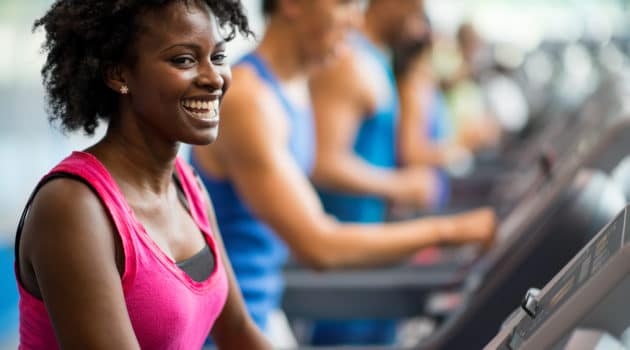
Every year around this time, we all do the same dance when it comes to our health goals: fresh sneakers, a shiny new gym membership, big intentions… and somehow, the same burnout by February.
It’s not like we don’t care about our health.
We do. But sometimes real life has other plans. Work piles up. The kids need things. Our knees start acting funny. Our energy dips. And, suddenly, that perfectly planned fitness routine feels like it was designed for someone with way more time — and way fewer responsibilities.
But 2026 doesn’t have to follow that script.
This year can be different, not because you magically transform overnight, but because you build a plan that actually fits the life you’re living — one that respects your body, your schedule, and your energy.
RELATED: NYE Resolutions: Easy Steps to Get Back on Track
If New Year’s fitness goals keep falling apart, the issue usually isn’t motivation; it’s strategy. According to Black health and wellness experts we spoke with, the most common mistake is aiming at the idea of fitness without addressing what’s actually standing in the way.
“Most New Year’s resolutions don’t fail because you’re undisciplined,” says Chanel Dokun, co-founder of the Midtown Manhattan–based group therapy and coaching practice Healthy Minds NYC. “They fail because they’re aimed at the wrong problem.”
Committing to five workouts a week or training for the Chicago Marathon might sound solid. But if exhaustion, boredom, or unrealistic expectations are what’s really holding you back, that motivation won’t last.
Dokun encourages people to take three steps:
From the physical side, LaVonn Gilbert, founder of BCF Wellness and a certified fitness and nutrition professional, sees a similar pattern: big goals without a clear plan.
“Consistency doesn’t come from willpower alone,” Gilbert says. “It comes from having a structure.”
Taken together, Dokun and Gilbert’s messages are clear: this isn’t the year to push harder just for the heck of it.
It’s the year to get smarter.
A realistic fitness plan starts with honesty, flexibility, and movement that works with your body, so you can keep showing up long term.
And the good news? You’ve got options. Let’s get into them below!
RELATED: Find the Right Fitness Tracker

If getting started feels overwhelming, the solution isn’t doing everything at once. It’s about finding movement that excites you, fits your body, and fits your life. Variety and accessibility are key. That means mixing workouts that build strength, flexibility, endurance, and yes, ya’ll, some joy!
Pilates has earned its moment, and for good reason. Reformer Pilates — which uses a special machine (a reformer) with a sliding carriage — delivers serious strength without beating up your joints. No jumping. No slamming. Just controlled, intentional movement that wakes up muscles you didn’t even know were slacking.
For adults in their 30s through 60s, Pilates improves core strength, balance, and posture, all things that matter more as the years go by. Many studios offer beginner or foundation classes, so you don’t need prior experience.
You can also do Pilates without a reformer, Mat Pilates, which focuses on bodyweight exercises, core strength, and flexibility, and often uses small props like light weights, slider discs, a Pilates ring, and resistance bands.
It’s effective strength training that’s respectful of your body.
RELATED: How Black-Owned Studios Are Reclaiming and Redefining Pilates
Yoga isn’t about twisting yourself into a pretzel. It’s about moving, breathing, and releasing tension — physically and mentally.
There are many yoga styles to choose from, so whether it’s vinyasa, restorative, or beginner-level classes, yoga supports flexibility, balance, and joint health. It’s especially helpful if stress, stiffness, or mental overload is part of your day.
Start slow. This isn’t about perfection. It’s about feeling better when you leave than when you walked in.
Sometimes, the best motivation is a good playlist.
Dance-based workouts — from hip-hop and Afrobeats to Caribbean dance and stepping — make cardio feel less like work and more like a release. You’re sweating, yes. But you’re also smiling, laughing, grooving, and forgetting you’re “working out.”
Dance improves heart health, coordination, and mood. And let’s be real: a Stevie Wonder playlist is sometimes exactly what your body and spirit need.
And it’s one of the easiest ways to stay consistent because it taps into joy.
HIIT doesn’t have to mean doing burpees until you see stars. At its core, it’s just interval training — short bursts of effort followed by rest.
That’s what makes it so effective.
If you’re short on time, HIIT gets the job done. If you have joint issues, there are low-impact versions with no jumping. If you get bored easily, intervals keep things moving.
The key is choosing the right level and the right instructor. HIIT should challenge you — not punish you.
Routine can get old. New experiences keep things fresh.
Classes like MJ vs Prince spin classes, Afrobeats workouts, line dancing, and aerial yoga turn movement into something you actually look forward to. They offer community, energy, and a break from the same old routine.
When exercise feels like an event, showing up gets easier.
If you’re managing joint pain, mobility issues, or recovering from injury, high-impact workouts may not be the move, and that’s okay.
Try these workouts to protect your joints while still improving strength, circulation, and stamina:
Low-impact doesn’t mean low effort. It means sustainable. And sustainability is what keeps you moving long-term.

Stretching is usually the first thing people skip — until their body forces the issue.
Tight hips can lead to knee pain. Tight calves can contribute to plantar fasciitis. Tight hamstrings can pull on your lower back. A lot of what we call “aging pain” is really just muscles begging for attention.
Regular stretching keeps your body moving better and helps prevent injuries that knock you off track. Professional stretching services, like StretchLab, are a great resource for guided support.
“Stretching keeps everything working — and your body feels the difference when it’s missing.”
Think of stretching as maintenance. It keeps everything else working.
If your workouts feel stale, it might be time to try something new. Many local studios now offer creative, themed classes that make fitness fun again.
Look for options like:
Trap Spin
Afrobeats dance or step fusion
R&B yoga
Twerk fitness
Aerial yoga for beginners
Glow-in-the-dark Zumba or hip-hop nights
These classes bring energy, culture, and community into the mix — and that matters.
Your health goals don’t need to look like anyone else’s. You’re not competing with folks on Instagram or chasing some fantasy version of yourself.
The best plan is the one you actually come back to.
Pilates twice a week? Great.
Dance workouts in your living room? Perfect.
Chair yoga while rebuilding strength? It all counts.
Stretching every night so your body feels human again? Absolutely.
Consistency isn’t about doing the most. It’s about doing what fits.
And as LaVonn Gilbert reminds us, “With more people entering midlife, recovering from physical activity will be key to staying active.” Rest, stretching, and recovery aren’t signs you’re slowing down; they’re how you keep going.
If you fall off? You start again. No shame. No guilt. Just the next right step.
2026 can be your strongest, healthiest year yet, not because you pushed harder, but because you finally worked smarter.
And maybe because the playlist was fire, too.

By subscribing, you consent to receive emails from BlackDoctor.com. You may unsubscribe at any time. Privacy Policy & Terms of Service.