

According to the Alzheimer’s Association, over seven million Americans will live with Alzheimer’s disease in 2025. Most of them will be over 65, and astonishingly, 73 percent of that number will be over 75. This illness not only has a significant death toll, but it can also have a tremendous economic impact because of the cost of care. In fact, it’s estimated that caring for those with Alzheimer’s disease may cost just short of $400 billion in 2025 alone. One factor that doctors feel can make a difference in these numbers is having an effective early detection tool. For years, this has seemed unlikely, but now a new blood test is offering hope.
How This Blood Test Works
This new blood test uses what is known as biomarkers to identify a person’s Alzheimer’s disease status. Biomarkers are specific molecules or proteins in someone’s blood that can indicate the presence, progression, or risk of certain diseases. By testing for biomarkers, doctors can diagnose illnesses, make decisions about treatment options, and measure a patient’s response to treatment. Though this is a new step for Alzheimer’s disease, biomarker blood tests are already being used in the diagnosis and treatment of diseases like cancer, diabetes, and cardiovascular disease.
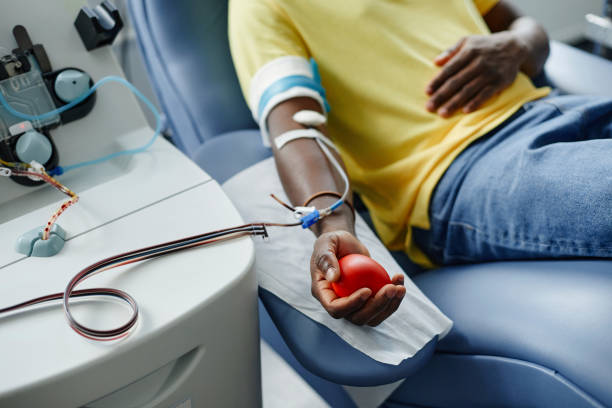
This blood test for Alzheimer’s disease will be used to detect the proteins amyloid beta 42/40 and p-tau217. Studies show that these proteins are linked to the buildup of plaque in the brain, which is a characteristic of Alzheimer’s disease. When studying these biomarkers, researchers found that looking for these biomarkers showed a 95 percent accuracy for people who had issues with their memory. They were also able to rule out people who didn’t have any form of dementia with 82 percent accuracy.
You May Also Like

RELATED: Is Your Parent Showing Signs Of Alzheimer’s? How To Tell…
Why the Test is a Game-changer
While there are diagnostic tests available for Alzheimer’s disease, they may not be able to pick up on the early changes that signal you’re in danger. In the early stages, the condition may have no symptoms or only mild ones, which might lead your doctor to determine that invasive or costly tests are not necessary for diagnosis.
For example, the earliest stage of the disease is known as the preclinical stage, where changes have already started in the brain, but you’re unlikely to see any changes. This stage can last for several years. In the next stage, you might have mild forgetfulness where you can’t recall people’s names as well as issues with concentrating. Again, this might not seem serious enough to warrant intensive testing.
You May Also Like

However, your doctor might not have an issue referring you for a blood test if this is happening. This is where this biomarker blood test is a game-changer for those who need it. It’s the point at which doctors would prefer to start treatment, but it’s also so subtle that it can be missed. It can also be great for those who aren’t in the particular age group that’s usually affected by Alzheimer’s disease.
Though the condition can mostly affect those who are over 65, the early stages can start in the 40s and 50s for some people. This can be true for Black Americans who may have a higher risk of developing Alzheimer’s disease. With the blood test in play, it would be easier for Black people to get tested at an earlier age.
RELATED: Is it Alzheimer’s or Forgetfulness? 5 Signs to Tell
How to Get the Test Done
The blood test to look for the protein biomarkers associated with Alzheimer’s disease has been approved by the Food and Drug Administration (FDA) for use in clinical settings. The first place to start would be to consult with your doctor. If you’ve never discussed being tested for Alzheimer’s before, then you’ll need to undergo an initial assessment where you can detail your medical history and concerns.
You should also let your doctor know if you have any of the risk factors that can influence the development of the condition. While aging is a major contributor to Alzheimer’s disease, you may be at a higher risk if you have a history of it in your family. Studies show that there can be a link between the condition and health issues such as hearing loss, depression, and traumatic brain injuries. Studies also show that Black Americans may have a higher risk of developing Alzheimer’s disease.
Though the early stages of Alzheimer’s disease may not have any symptoms, it will be important to let your doctor know about any signs you may be experiencing. Some of the symptoms that people with Alzheimer’s disease may notice include an impaired memory where you might not remember important events or people’s names, having trouble with problem-solving, having problems concentration, getting confused about where you are, being unable to find the right words when speaking, showing poor judgement when making decisions, having trouble with spacial analysis such as understanding how far things are, and showing significant mood changes.
With this in mind, your doctor will likely still suggest other tests in conjunction with the biomarker blood test. Some of the tests that are used to diagnose Alzheimer’s disease are cerebrospinal fluid tests and types of brain imaging tests. However, if you are in the early stages of the disease, the blood test is more likely to provide a diagnosis than the other tests. If this happens, your doctor will be able to determine how to proceed.
There are a variety of medications that doctors can prescribe when Alzheimer’s disease is diagnosed early. While the condition is incurable, an effective medical regimen can slow its progression and help you to maintain your mental acuity for a longer period.
Alzheimer’s disease can’t be cured, but doctors have long said that there are ways to keep your health from declining as quickly if there’s an early diagnosis. Unfortunately, it’s not easy to get one for a long time. The good news is that this new blood test may offer an opportunity for an early diagnosis to those who need it the most.