
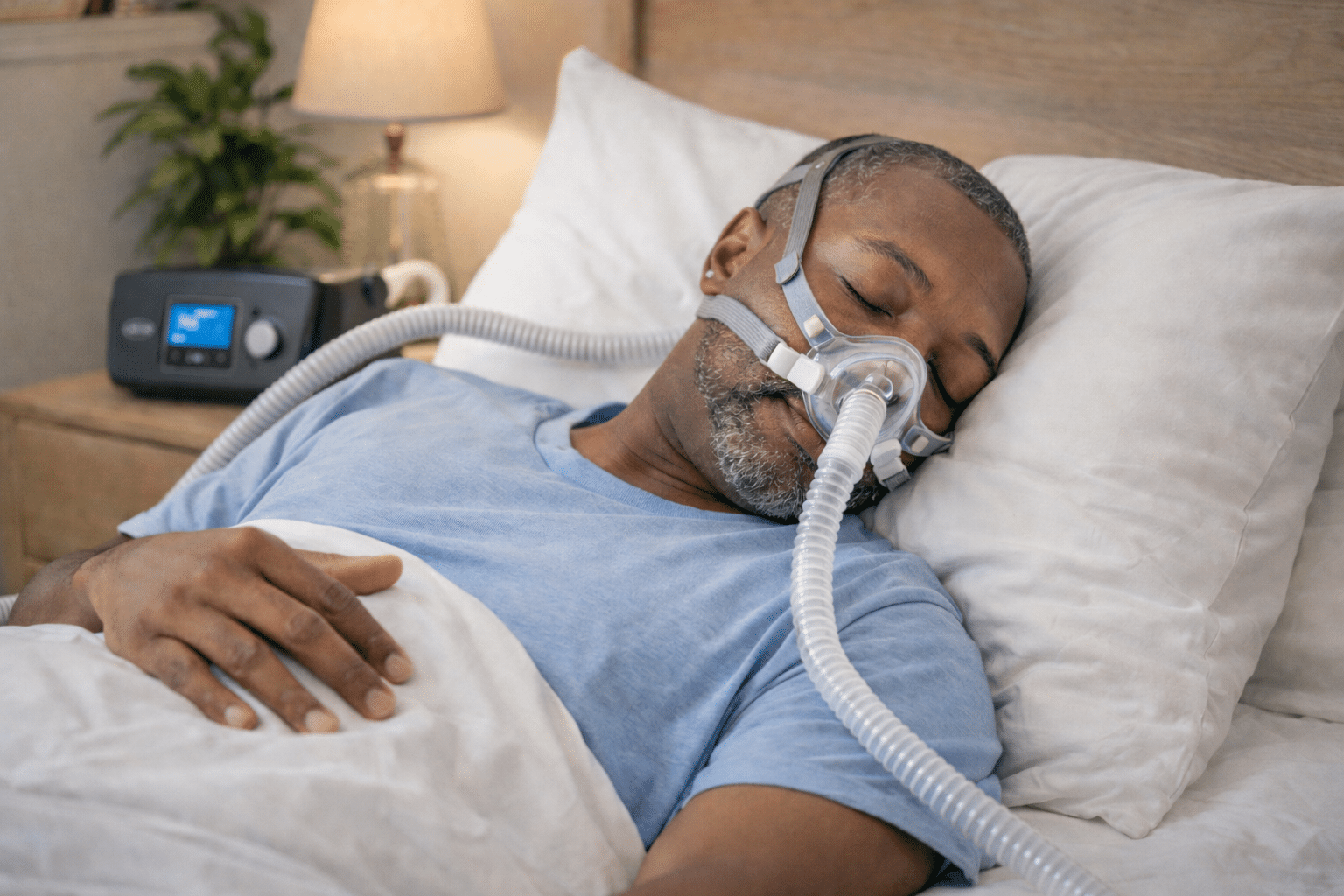
Studies show that over 30 million Americans are living with sleep apnea. Worse yet, another 24 million Americans may not even know they have the potentially crippling sleep disorder. Although this may seem like a small percentage of the population, it’s more significant than you think. To put it in perspective, the number of people dealing with sleep apnea is similar to those who are living with diabetes. They also outnumber those who have been diagnosed with asthma. Fortunately, it can be managed, and the type of treatment depends on the severity of your symptoms.
Common Symptoms and Treatment for Sleep Apnea
When you’re dealing with sleep apnea, you usually stop breathing in your sleep. This may happen because of obstructive sleep apnea, where something blocks your airway, or central sleep apnea, where your brain isn’t controlling your breathing as it should. As a result, you don’t get the oxygen you need, and you spring awake. Depending on how severe your sleep apnea is, this may happen several times per night and affect your sleep cycle.
Some of the symptoms you may experience if you have sleep apnea are waking multiple times per night, incessant snoring, waking up feeling as if you’re choking, feeling restless at night, waking up with headaches, and having night sweats. If you have a partner, they may notice that you stop breathing in your sleep or that you have unusual breathing patterns where it goes from shallow to deeper to shallow again.
You May Also Like

Once you’ve talked to your doctor about your symptoms, they may arrange for a few tests. This can include home testing or a polysomnogram. With the results, your doctor can diagnose as well as stage the level of sleep apnea you’re dealing with. At the first stage, you may have five to 14 incidents per hour when you stop breathing. At the third and most severe stage, you may have over 30 incidents.
Usually, mild forms of sleep apnea can be treated or managed using breathing devices, oral mouthpieces, changing your sleeping positions, medication, and neuromuscular electrical stimulation. For the most severe cases, though, doctors often recommend surgery on your nose, mouth, or throat to remove blockages.
RELATED: Sleep Apnea 101: Everything You Need To Know For A Better Sleep
You May Also Like

How One Sleep Apnea Treatment Has Changed
One of the treatment options for obstructive sleep apnea is hypoglossal nerve stimulation (HNS). In this procedure, a device is implanted to stimulate the hypoglossal nerve, which controls the tongue. Doing this ensures that your tongue doesn’t interfere with your breathing when you sleep. It’s meant to be a more permanent fix than using a continuous positive airway pressure (CPAP) machine.
Typically, the device that’s used for HNS is bulky. It also has to be implanted in a long and invasive surgery. This can lead to a lengthy recovery time. In a new study, researchers experimented with doing the procedure with a smaller electrode that doesn’t require the same time-consuming or invasive surgery. It’s also easier to manage once in place. Better yet, the results showed that it was effective in 13 of 14 participants. It was also significantly helpful for some patients who had stopped breathing entirely during the night, before undergoing treatment.

What This Means for Those With Sleep Apnea
The modified HNS could be life-changing for various reasons. Since it’s less invasive, it should have a shorter recovery time, which is great news for those who undergo the procedure. It can also mean fewer complications from the surgery. Currently, HNS can result in nerve damage, bleeding, blood vessel damage, and a pneumothorax, or where air enters the chest to collapse the lung.
Additionally, it opens the way for more people to be eligible for the procedure. Since the current surgery is so invasive, doctors often have certain criteria that people need to meet to qualify for it. You need to have a body mass index (BMI) of 35 or less and be healthy enough to undergo a two-hour surgery. Given that obesity is one of the factors that can lead to sleep apnea, this can mean that people who need the help can’t get it.
This modified HNS only lasts for 90 minutes and uses an ultrasound to implant the device that’s needed. That means it can be placed in people who may not be able to undergo an invasive surgery or have a higher BMI. Researchers are also excited that the procedure can be tweaked so that it suits the individual who needs it. That may be beneficial to a wider range of people.
RELATED: This Weight Loss Drug Could Also Treat Sleep Apnea
Are You Unaware of Your Sleep Apnea?
Even though sleep apnea affects your breathing at night, it doesn’t mean that you’ll always know that you have it. A few of the other common symptoms of sleep apnea are also associated with various conditions. For example, snoring is normal for some people, and when it’s abnormal, it may be caused by a cold or sinus problems. If you’re entering menopause, you may also experience night sweats that have nothing to do with how well you’re sleeping.
To make things more complicated, you may not remember all the times you jump awake from not being able to breathe. It’s a reflex, so your brain may still be fuzzy when you wake up, and it doesn’t necessarily make it hard for you to fall asleep again. Some symptoms also won’t be apparent if you don’t have a partner who notices how your breathing changes.
That doesn’t mean there’s no hope for identifying other signs of sleep apnea, though. Some of the signs that you may be dealing with the condition are having a headache in the morning, feeling consistently tired every day, having mood changes during the day, having trouble focusing throughout the day, having unusual night sweats, and waking with a dry or sore throat. Over time, sleep apnea can also result in high blood pressure. Your libido may also take a hit from not sleeping well.
If you’re dealing with any of these issues, it’s best to talk to your doctor. Even if the problem isn’t sleep apnea, you may be living with a condition that needs to be investigated.
Millions of Americans have been diagnosed with sleep apnea, and for some of them, the condition is so severe that they need surgery. While this treatment option is typically invasive, a recent modification may prove to be a long-needed change that will help more people.