
• Skip to main content
  • Skip to secondary menu
  • Skip to primary sidebar
  • Skip to footer
BlackDoctor.org
Where Wellness & Culture Connect

Where Wellness & Culture Connect

  • Conditions
  • Wellness
  • Lifestyle
  • Longevity
  • Clinical Trials
  • Resources
    • Generational Health
    • Top Blacks in Healthcare 2025
    • Hall Of Fame
    • Clinical Trials Resource Center
    • Obesity Resource Center
    • Cancer Resource Center
    • Wellness on the Yard
    • Immunocompromised Care
    • BDO Resource Library
  • Find A Doctor
  • BDO TV
Home / Health Conditions / Breast Cancer / Screening Too Late For Black Women? One Doctor’s Expert Opinion On Latest Mammogram Guidelines

Screening Too Late For Black Women? One Doctor’s Expert Opinion On Latest Mammogram Guidelines

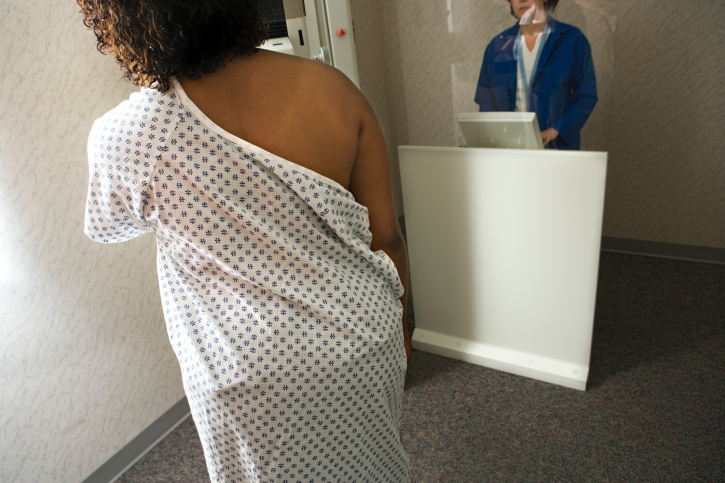
woman getting mammogramThere are many “silent killer” medical conditions that we never know we have unless we have our complete physical exams and labs done. Screening tests exist for a reason: to screen. You don’t wait until you have a problem to get tested for the major medical conditions—you get preventive testing.

So, I decided, I’m going to get an early mammogram. I’m 37 years old, without any significant family history of breast cancer, fortunately, which generally puts me at low risk. I’ve recently stopped birth control pills and breastfed two babies, which also puts me at low risk. However, I was still nervous.

I treat many female patients, of all ages, and I’ve diagnosed a handful with breast cancer. Some of these women had “classic” or “textbook” risks, such as being in their late 40-60s with a family history or having an abnormal lump they found during a self exam. However, at least two or three patients within the past couple of years had zero risks. As a matter of fact, one that struck me as a surprise was one of my patients who was healthy as a horse. She was in her 30s, didn’t smoke, wasn't on birth control, worked out all the time and no medical issues other than bloody discharge from the nipple. We sent her for an ultrasound and mammogram, her first one ever, really just as a precaution, and it was positive for cancer. I was as astounded as she was. She looked just like me.

I’ve asked friends and family and the majority of them know someone who has been affected by cancer in their 30s or 40s, without any family history of cancer.

You May Also Like

Psoriatic Arthritis Can Feel Beyond Your Control. Consider a Different Direction. Learn More Here. Psoriatic Arthritis Can Feel Beyond Your Control. Consider a Different Direction. Learn More Here.

Screening Guideline Changes: Too Late?

What has caused controversy recently is the change in the recommendations for when to start and how often to do mammograms. Within the last five years, the guidelines have changed, stating that we should wait until age 50 to start doing mammograms. This would mean not starting at 40, which is what I was accustomed to doing. The frequency was to do them every other year, which would be different from my practice as well.

Generally speaking, I would start at age 40 and do them every year or every other year for screening. For those who have significant family history, I would start at age 35. With the new guidelines and waiting, what happens to all of the 30 and 40 year olds that we may miss? Needless to say, I’ve been a bit of a rebel with these new rules. Now, I say maybe waiting until the early 40s is ok, but I’m definitely not waiting until 50 to screen my patients.

You May Also Like
Get GLP-1s Delivered to You As Low As $99/Month! Get GLP-1s Delivered to You As Low As $99/Month!

Then, there’s this thing with self-exams. In general, I would teach all women how to examine their own breasts beginning with young adulthood. You would think, “The earlier, the better,” with being comfortable and becoming comfortable with feeling your breasts. However, with the new mammogram guidelines also came the recommendation AGAINST doing self exams. Yes, you read correctly—-against. I don’t feel great about that one either.

My First Mammogram

Thankfully my self exam was normal without any lumps. I asked my friend, who is also an OB/GYN my age, about mammograms and she’s already had her first one. So, I went.

It wasn’t bad at all! I had the new and improved 3D version, which gives a little less squeeze but does last a little longer. It didn’t hurt at all. For my ladies that have had to wear a really tight bra or for those who have breastfed, this was nothing. The tech that I had was lovely.

I’m sure it makes a difference to have a nice tech to talk you through the procedure and laugh with you a little bit. I asked her what she thought the fear was with getting mammograms, and she said it had a lot to do with a patient’s anxiety level. The more afraid a woman was to get one done or what might be found, the more painful it seemed to be.  Sure, I was nervous, too. You never know what you might find in there. However, as far as physical pain goes, it did not hurt.

She also forewarned me that since it was my first one, I would likely be called for a follow up. There was no previous one to compare this one to, so if anything is found, most women get called back after their first mammogram. Fortunately, mine was normal.

Wouldn’t you rather know than not know?

By Derrick Lane | Published October 17, 2016

The Latest In Breast Cancer

Why I Did a Trial for TNBC: "It Very Likely Saved And Extended My Life"

Why I Did Clinical Trials for TNBC: “It Very Likely Saved And Extended My Life”

My cancer journey began in 2015 during a routine mammogram that revealed a mass in my breast, which turned out to be Triple-Negative Breast Cancer (TNBC), a rare and aggressive form of the disease. In my 50s and coming from read more about Why I Did Clinical Trials for TNBC: “It Very Likely Saved And Extended My Life”
dense breasts

Have Dense Breasts? Here’s Why a Standard Mammogram Might Not Be Enough

Breast cancer is the most common cancer in women globally. In the United States, about one in eight women will be diagnosed with breast cancer at some point in their lives.  Breast cancer screenings—such as self-exams and mammograms—are crucial for read more about Have Dense Breasts? Here’s Why a Standard Mammogram Might Not Be Enough
Understanding Breast Cancer Clinical Trials for Black Women

Understanding Breast Cancer Clinical Trials for Black Women

Breast cancer is a type of cancer that starts with the growth of cells within the breast tissue.  Several types of breast cancer exist, including:  Ductal carcinoma in situ Invasive breast cancer Triple-negative breast cancer Inflammatory breast cancer Paget disease read more about Understanding Breast Cancer Clinical Trials for Black Women
inflammatory breast cancer

Inflammatory Breast Cancer Symptoms: What Every Woman Should Know

  Inflammatory breast cancer is rare, but it’s aggressive and fast-growing. It can show up suddenly, progress quickly, and may be harder to detect early than other forms of breast cancer. That's why knowing the inflammatory breast cancer symptoms can read more about Inflammatory Breast Cancer Symptoms: What Every Woman Should Know
breast cancer

Fewer Black Women Are Dying from Breast Cancer—Here’s Why

The numbers are stark: Black women are about 40 percent more likely to die from breast cancer compared to white women, even though they are diagnosed at similar rates. This isn't just a statistic; it represents systemic barriers that Susan read more about Fewer Black Women Are Dying from Breast Cancer—Here’s Why
This Black Woman Went From Stage 3 Breast Cancer to Clinical Trials Advocate

This Black Woman Went From Stage 3 Breast Cancer to Clinical Trials Advocate

Javonne Williams' life took an unexpected turn in 2022 when she received a devastating diagnosis: stage three breast cancer. The news was a shock, but Williams faced her diagnosis with determination. She underwent an aggressive treatment plan, including a double read more about This Black Woman Went From Stage 3 Breast Cancer to Clinical Trials Advocate

Primary Sidebar

Subscribe to our newsletter

Icon

Caring for You, Too - Caregiver Workbook

1 file(s) 297 KB
Download

Trending Articles

7 Things You Should Never Do To Lose Weight!

lose weight

12 Reasons Why It Feels Like Your Heart Rate Won’t Slow Down

congestive heart failure symptoms

How to Treat Hidradenitis Suppurativa in Black People

How to Treat Hidradenitis Suppurativa in Black People

What Is Congestive Heart Failure?

congestive heart failure

5 Early Signs of Bed Bugs You Need To Know

early signs of bed bugs
Find a Culturally Sensitive Doctor

Footer

Where Wellness & Culture Connect

BDO is the world’s largest and most comprehensive online health resource specifically targeted to African Americans. BDO understands that the uniqueness of Black culture - our heritage and our traditions - plays a role in our health. BDO gives you access to innovative new approaches to the health information you need in everyday language so you can break through the disparities, gain control and live your life to its fullest.

Connect With Us

Resource Centers

  • Top Blacks in Healthcare
  • Clinical Trials
  • Wellness on the Yard
  • Cancer
  • Immunocompromised Care
  • About Us
  • Privacy Policy
  • Cookie Policy
  • Terms of Service
  • Careers
  • Advertise With Us
  • Advertising & Sponsorship Policy
  • Daily Vitamina
  • TBH

Copyright © 2025, Black Doctor, Inc. All rights reserved.