• Skip to main content
  • Skip to secondary menu
  • Skip to primary sidebar
  • Skip to footer
BlackDoctor.org
Where Wellness & Culture Connect

Where Wellness & Culture Connect

  • Conditions
  • Wellness
  • Lifestyle
  • Longevity
  • Clinical Trials
  • Resources
    • Generational Health
    • Top Blacks in Healthcare 2025
    • Hall Of Fame
    • Clinical Trials Resource Center
    • Obesity Resource Center
    • Cancer Resource Center
    • Wellness on the Yard
    • Immunocompromised Care
    • BDO Resource Library
  • Find A Doctor
  • BDO TV
Home / Health Conditions / Brain and Nervous System / Actress Tamala Jones’ Life-Threatening Brain Aneurysm: “My Doctor Said It’s A Miracle I’m Still Alive”

Actress Tamala Jones’ Life-Threatening Brain Aneurysm: “My Doctor Said It’s A Miracle I’m Still Alive”

TAMALA JONES

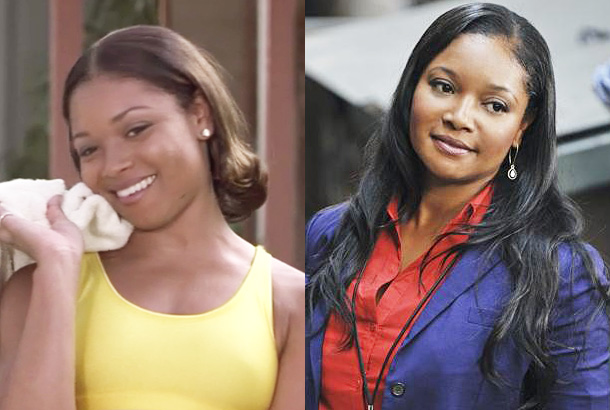
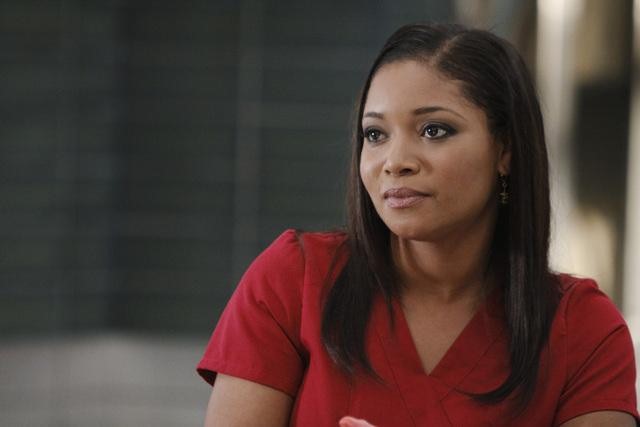
Actress Tamala Jones has been in some of our favorite movies and TV shows. From being in the movies, The Wood and The Brothers with Morris Chestnut and Shemar Moore, plus numerous TV shows, her youthful face is a welcome sight on the big and small screen. On the hit television show Castle, actress Tamala Jones played the role of Lanie Parish, a smart, sarcastic medical examiner who solves some of New York City’s most heinous murders by unraveling complex medical mysteries.

In real life, Jones is committed to eradicating a different kind of villain: brain aneurysms. According to the Brain Aneurysm Foundation, an estimated 6 million people in the United States live with an unruptured brain aneurysm.

Over a decade after being diagnosed with a ruptured brain aneurysm, actress Tamala Jones has made it her mission to educate the community on the importance of personal health. Surviving a swollen and spouted blood vessel at the young age of 23, Jones is a prime example that this medical condition can happen to anyone.

You May Also Like
Psoriatic Arthritis Can Feel Beyond Your Control. Consider a Different Direction. Learn More Here. Psoriatic Arthritis Can Feel Beyond Your Control. Consider a Different Direction. Learn More Here.

After being overly self-conscious thinking herself to be weak for undergoing a possibly life-threatening condition, the Hollywood starlet recently decided to go public with her past health issues. Remembering the brutal pain and divine blessing of her aneurysm, Jones shares her near-fatal health scare in her own words.

“[I woke] up one morning with a massive headache; feeling like I had to use the bathroom, like I had to urinate really bad. When I got out of bed I had no balance. I was walking on my toes and I was stomping. I had no control over my body weight. I looked in the mirror and I’m telling you two seconds after I looked in that mirror I dropped and hit the floor.

I kept hearing myself tell myself, ‘Get up, get up now. Get up, get up, get up…,’ and I kind of woke up as if somebody shook me out of a sleep, and the whole right side of my body was numb. I called work and I told them, ‘Something’s wrong with me. I can’t come in. I have to go to the hospital.’ They told me, ‘You need to come into work. This is the last day of shooting for this season, and we don’t have time to wait for you to go to the doctor’s office.’”

You May Also Like
Get GLP-1s Delivered to You As Low As $99/Month! Get GLP-1s Delivered to You As Low As $99/Month!

“I went to the hospital after work and the doctor thought that it was a miracle that I was even alive, walking or talking, or that I even worked an entire day before I got to him. After that, I started having seizures. I had MRIs [and] cat scans, and they found out that my aneurysm actually burst. Had it been on another side of my brain I probably would have been paralyzed forever—it was on the left side of my brain and was the size of a 50-cent piece. They said once that blood dried up I would get my feeling back.”

What Was Her Symptoms She Ignored?

“I had headaches for like three weeks. I took everything, and nothing helped—from sinus medicine to migraine medicine. I say that if you get it checked out right away when you have this headache and it’s continuously going and nothing works then you can save yourself. They can give you something to help you or they can remove it or whatever they need to do. But I felt like it was my duty as a survivor to speak about it.”

“At the time, I thought I was suffering from sinus headaches because we have a lot of sinus issues in my family,” Jones says. “Looking back, I should have seen my doctor then, because the headaches were persistent and felt as if someone were stretching a rubber band around my head and pulling it tighter every day. Even Tylenol didn’t help.”

For Jones, who experienced seizures while in the hospital, recovery took several months. An MRI revealed she had hemorrhaged on the right side of her brain, which left her paralyzed on that side. Her doctor told her that once the blood dried, she would regain function on the right side of her body.

What Is a Brain Aneurysm?

A brain aneurysm is a bulge or weakness in the wall of a blood vessel in the brain.

Causes:

The exact cause of most brain aneurysms is unknown. However, some risk factors include:

  • High blood pressure
  • Smoking
  • Atherosclerosis (hardening of the arteries)
  • Trauma to the head
  • Family history of aneurysms
  • Certain genetic disorders

Types of Brain Aneurysms:

Saccular aneurysms: The most common type, they are round or oval-shaped bulges that typically form at a branch point in a blood vessel.
Fusiform aneurysms: Elongated bulges that affect a wider section of the blood vessel.
Dissecting aneurysms: Tears in the inner layers of the blood vessel wall.

Symptoms:

Many brain aneurysms do not cause any symptoms until they rupture. A ruptured aneurysm can lead to a sudden, severe headache, often described as the “worst headache of my life,””. Other symptoms may include:
Nausea and vomiting, Stiff neck, Confusion, Loss of consciousness, and Seizures.

Diagnosis:

Brain aneurysms can be diagnosed using imaging tests such as:
CT scan, MRI scan, and Cerebral angiography.

Treatment:

Treatment for brain aneurysms depends on whether they have ruptured or not.

Unruptured aneurysms: May be monitored closely with imaging or treated with surgery or endovascular coiling to prevent rupture.
Ruptured aneurysms: Require immediate medical attention to stop the bleeding and prevent further brain damage. Treatment options include surgery to clip the aneurysm, endovascular coiling, or medication to control blood pressure and prevent re-bleeding.

How She Eventually Recovered

“My mom and grandmother, Roxanne and Laverne Jones, took care of me and helped nurse me back to health,” Jones says. “The first few days were pretty much a blur—my mom and grandma would wake me up to feed me and bathe me. It took a full three months before I got my full strength back and was able to work again.”

Today, 16 years after being diagnosed with a ruptured brain aneurysm, Jones has signed on to become the national spokesperson for the Brain Aneurysm Foundation. She hopes to use her personal experience to raise awareness of aneurysms as well as funding for additional research.

“I didn’t go public with my story for many years because I didn’t want to show weakness or vulnerability, especially as I was trying to succeed as an actress,” Jones says. “Yet after hearing many stories of young people suffering from a brain aneurysm and dying, I wanted to share my story.”

“I mention the aneurysm to anybody that I can. Whenever I have a platform for people there that are listening. Because it’s something that happened to me and something that can happen to anybody in this world, if you are given warning then you can probably save your own life. So, I tell anybody. It doesn’t matter why I’m there speaking. I always bring up health some type of way—I segue into having a brain aneurysm at an early age. Whether it’s your heart or your head or your legs or your arms, if it’s too much pain, the doctor’s the only place to go. Not staying at home and wondering if this is ever going to go away. I just thought it was selfish of me not to even say what I survived or what I felt.”


By Derrick Lane | Published November 12, 2024

November 12, 2024 by Aria Ellise, BDO Special Contributor

The Latest In Brain and Nervous System

lewy body dementia

Think It’s Alzheimer’s? It Could Be Lewy Body Dementia

Lewy Body Dementia (LBD) is a brain disease that’s often misunderstood. It’s actually the second most common type of progressive dementia after Alzheimer’s disease (AD). For patients and families, learning what LBD is, how it differs from other dementias, and read more about Think It’s Alzheimer’s? It Could Be Lewy Body Dementia

9 Serious Conditions Dizziness May Be a Symptom Of

Dizziness is one of those symptoms that almost everyone has experienced at some point. Maybe you stood up too quickly, skipped a meal, or spun around one too many times on a carnival ride. But while occasional dizziness might seem read more about 9 Serious Conditions Dizziness May Be a Symptom Of

Eating Like This Could be a Sign of Dementia

Signs of dementia, like forgetting important names and dates or seeing things that aren't there, are pretty common. But new studies show that how you eat your food could indicate whether or not you've got a condition called frontotemporal dementia. read more about Eating Like This Could be a Sign of Dementia

I Was Hit by a Car at 48 MPH, Here’s How I’m Redefining Disability

Despite nearly four in 10 U.S. adults reporting symptoms of a traumatic brain injury (TBI) at some point in their lives, a new national survey by the Brain Injury Association of America reveals a troubling truth: most Americans still don’t read more about I Was Hit by a Car at 48 MPH, Here’s How I’m Redefining Disability
autism therapy

Support That Looks Like Us: Therapies, Groups, and Programs for Black Families

When a Black child is diagnosed with autism, the journey doesn’t stop at the diagnosis. In many ways, that’s just the beginning. What comes next—autism therapy, support, community—can make all the difference. But here’s the truth: many therapies weren’t designed read more about Support That Looks Like Us: Therapies, Groups, and Programs for Black Families
autism in black children

Our Babies Aren’t ‘Bad’—Understanding Autism in Black Children

From Misbehavior to Misunderstood Let’s start with the truth: too many Black children—especially our Black boys—are being labeled as “bad,” “defiant,” or “disruptive” before they’re even given a chance to be understood. And when those behaviors are actually early signs read more about Our Babies Aren’t ‘Bad’—Understanding Autism in Black Children

Primary Sidebar

Subscribe to our newsletter

Icon

Caring for You, Too - Caregiver Workbook

1 file(s) 297 KB
Download

Trending Articles

7 Things You Should Never Do To Lose Weight!

lose weight

12 Reasons Why It Feels Like Your Heart Rate Won’t Slow Down

congestive heart failure symptoms

What Is Congestive Heart Failure?

congestive heart failure

5 Reasons Your Hair Texture Changes

hair texture

Top 10 Dirtiest Places in Your Home

dirtiest places in your home
Find a Culturally Sensitive Doctor

Footer

Where Wellness & Culture Connect

BDO is the world’s largest and most comprehensive online health resource specifically targeted to African Americans. BDO understands that the uniqueness of Black culture - our heritage and our traditions - plays a role in our health. BDO gives you access to innovative new approaches to the health information you need in everyday language so you can break through the disparities, gain control and live your life to its fullest.

Connect With Us

Resource Centers

  • Top Blacks in Healthcare
  • Clinical Trials
  • Wellness on the Yard
  • Cancer
  • Immunocompromised Care
  • About Us
  • Privacy Policy
  • Cookie Policy
  • Terms of Service
  • Careers
  • Advertise With Us
  • Advertising & Sponsorship Policy
  • Daily Vitamina
  • TBH

Copyright © 2025, Black Doctor, Inc. All rights reserved.