
Being diagnosed with fatty liver disease can come as a surprise to many. Fortunately, depending on the stage of the condition, there are several ways to keep your symptoms from worsening. One thing most doctors recommend is keeping your weight in a healthy range. While the exact route to accomplishing this can vary, it usually includes a combination of exercise and diet changes. When you think of exercise, different kinds of routines may come to mind. Do any of them include resistance bands? If not, you may be missing out on some of the easiest and most effective exercises to do at home.
Why Weight Management is an Essential Part of Treatment
Although your doctor will likely prescribe medication to treat or manage the symptoms of fatty liver disease, they’ll also recommend managing your weight. That’s because losing weight can reduce the buildup of fat on your liver–especially if you have non-alcoholic fatty liver disease (NAFLD). Studies show that reducing fat in your liver can not only reverse the damage of the early stages of liver disease, but it can also increase your body’s ability to fight the disease.
Even if you’re in the later stages of liver disease where the damage to your liver is more severe, studies show that changing your diet can make your medications more effective. For example, if you’re taking medication to reduce the level of liver scarring caused by cirrhosis, several studies show that it’s more successful with lifestyle changes.
You May Also Like

Before you jump into a weight loss program, though, it’s best to talk to your doctor. They will help to determine your weight management goals. It’s also important to note that some people need medical intervention to keep their weight in check. This can include surgery or medication such as GLP-1 agonists.

5 Exercises With Resistance Bands You’ll Love
1. Spanish Squat
- Stand facing a sturdy anchor with a long band looped behind both knees, the opposite end fixed by the anchor.
- Step back until the band is taut and set your feet shoulder-width apart.
- Brace your core and keep your chest up.
- Sit straight down, your knees traveling over your mid-foot while your heels stay heavy and fixed to the floor.
- Pause briefly, then drive through your whole foot to stand tall, keeping tension on the band.
- Make sure your knees track in line with your toes throughout the movement.
- Start with a shallow squat, if needed, and add depth as your strength and control improve.
- Try 3 sets of 8-12 reps.
- You can use a thicker band with more resistance to help offset your weight as you squat or use a smaller range of motion, if you want to make the exercise easier.
- If you want to make the squat harder, consider adding a kettlebell or dumbbell for extra load, slow the tempo so that you’re doing three counts down, one count hold at the bottom, one count to return to standing, or use wedges to elevate your heels.
RELATED: How to Maintain Muscle While Losing Weight
You May Also Like

2. Pallof Press
- Set a band at chest height and stand sideways to the anchor.
- Hold the band at your sternum with both hands, feet positioned hip-width apart.
- Brace your core lightly, ribs stacked over your hips.
- Press your hands straight out in front of your chest without allowing your torso to rotate toward the anchor as the tension increases.
- Hold for a beat, then bring your hands back to your chest, keeping the movement under control.
- Check to make sure your shoulders don’t rise and that your pelvis remains level.
- Progress by moving farther from the anchor to increase the band’s tension or switching to a split- or half-kneeling stance.
- Try 3 sets of 10-15 reps per side or 10-20-second holds.
- If you want to make it easier, stand closer to the anchor point or use a lighter band.
- Using a thicker band while standing farther away from the anchor can make the exercise harder.
3. Banded Overhead Triceps Extension
- Anchor the band low, close to your feet, and sit down on a bench or sturdy chair.
- Grip the band behind your shoulders at your spine, making sure the band is taut, but not tight.
- Pin your elbows near your temples.
- Extend your elbows up to straighten the arms, squeezing your triceps at lockout.
- Lower the band back to the starting position, keeping the movement under control without letting your elbows drift apart.
- Keep your neck neutral and avoid arching your lower back.
- Use a smooth tempo and a full range of motion you can control.
- Try 2-4 sets of 10-15 reps.
- A lighter band would make the exercise easier.
- If you’d like to make it harder, use one arm at a time or slow down the eccentric (lowering) phase.
4. Band Pull-apart
- Stand tall and hold a light band at chest height with straight elbows, palms facing up.
- Set your ribs down and relax your shoulders away from your ears.
- Pull the band apart by moving your shoulder blades back and slightly down as your arms reach out toward the sides.
- Pause 1-2 seconds at the end range, feeling the mid-back squeeze.
- Return slowly, keeping your elbows mostly straight and ribs quiet.
- Start with a lighter band so you can “feel” the scapula glide as you perform the exercise.
- Try 3 sets of 12-20 reps.
- Using a lighter band will make the exercise easier.
- If you’d like to make it harder, use a thicker band or slow the tempo where you do 2 counts to pull apart, 2 counts to hold, 2 counts to return to start.
5. Banded Good Morning
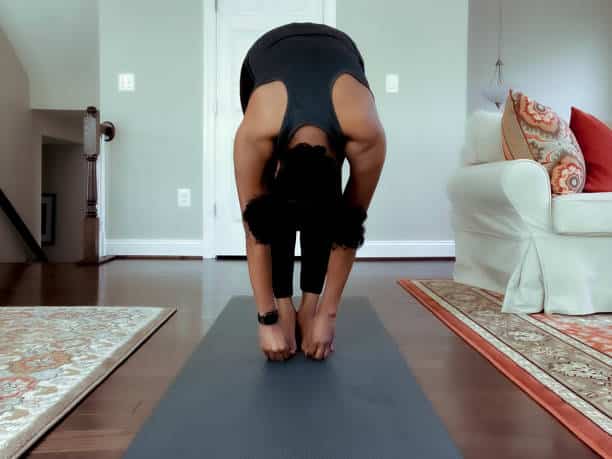
- Stand on the band with feet hip-width apart and loop it across your upper back and shoulders (not on your neck).
- Soften your knees and brace your core lightly.
- Press your hips back while keeping a long, neutral spine and your shins nearly vertical (little to no forward angle).
- Stop when you feel a stretch along your hamstrings — make sure your back remains straight and steady.
- Squeeze your glutes and drive your hips forward to stand tall.
- Keep the band’s path close to your body and avoid locking your knees at the top of the movement.
- Start with a small range of motion and build depth as your control improves.
- Try 3 sets of 8-15 reps.
- Using a lighter band or a shorter range of motion can make the exercise easier.
- If you’d like to make the exercise harder, slow down the eccentric (lowering) phase or use a thicker band.

RELATED: 10 Foods Your Liver Wishes You Would Stop Eating
How to Maximise Your Results With Diet Changes
Even though exercise is essential, doctors generally recommend supplementing it with changes in your diet. Not only will eating the right foods complement weight management, but it can also help your liver stay healthy. Some of the foods that you should stay away from include fatty poultry, full-fat cheese, full-fat yogurt, red meat, fried foods, baked goods, soda, sweets, and processed foods.
On the other hand, some of the foods that can help your liver are fish, seafood, fruits, nuts, whole grains, vegetables, legumes, avocados, and olive oil. You can also eat more foods that contain antioxidants, as these nutrients reduce cell damage. That list includes coffee, garlic, green tea, berries, and vegetables. Supplements may help, but you should always ask your doctor for recommendations, as supplements aren’t regulated.
Treating liver disease can include different factors. However, most doctors ask their patients to manage their weight to reduce their symptoms. Doing this usually includes a combination of eating well and exercising regularly. If you’re looking for a good exercise routine, consider trying resistance bands.