Let’s face it: traditional cardio can often feel like a monotonous slog. The standard routine is all too familiar. You select a piece of equipment—perhaps a treadmill or a stationary bike—and begin to plod along, watching the seconds tick by agonizingly slowly. Mentally, you impose a strict rule upon yourself: you are not allowed to check the time. You persevere, driving yourself forward, going and going until you’re absolutely drenched in sweat. You cycle through a colossal number of songs on your playlist, yet despite the high effort, it remains the same old routine. You’re merely ticking a box, focusing solely on burning calories without feeling like you’re truly building or sculpting your body.
Step Up Your Game: The Transformative Power of the StairMaster
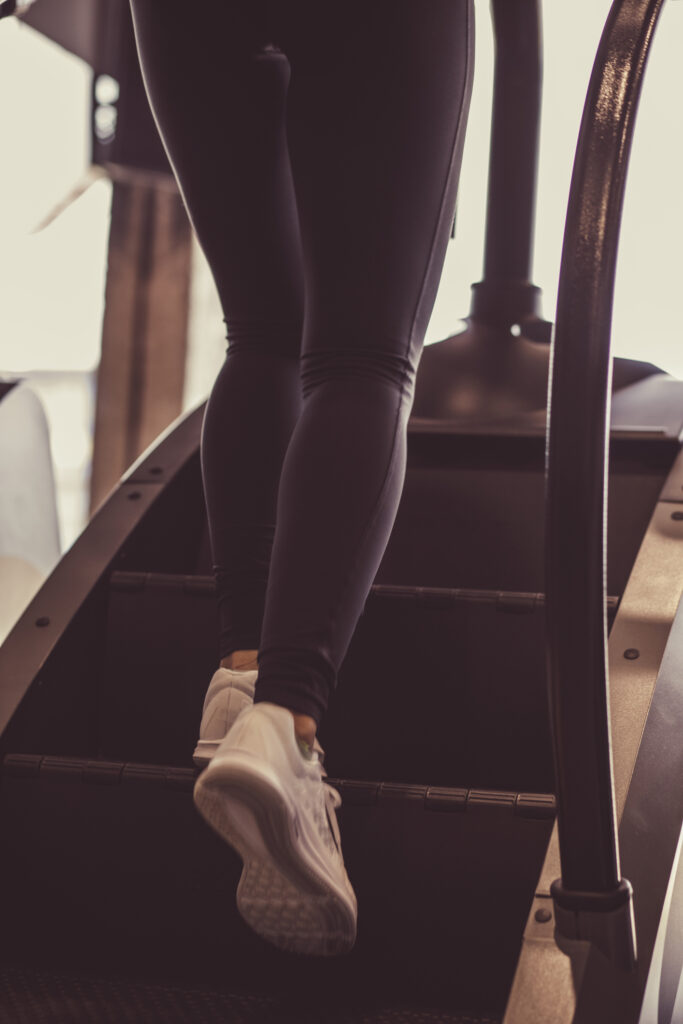
There’s a powerful antidote to this cardio malaise: the simple but effective StairMaster or elliptical workout. Who would have guessed that the seemingly straightforward act of simply raising and lowering your leg as if you were constantly ascending a very long flight of stairs could deliver SO much for your entire lower body? This type of workout engages major muscle groups in a way that flat-surface cardio often misses, leading to significant body transformation.
Even if you don’t have access to a dedicated StairMaster machine or a StairMill, this workout is still accessible. If you have stairs—at home, in an office building, or at a local track—you can perform this routine. Get ready for a focused 25-minute workout routine that can transform your body and redefine your cardio experience.
You May Also Like

Essential Principles Before You Climb
Before you dive into the workout, there are a few crucial things to remember to ensure you maximize your effort and maintain safety:
1. Posture is Everything!
Your physical alignment is the key to activating the correct muscles. Remember to stand tall with your heart forward. Look around the gym, and you’ll notice so many people are hunched over on these machines, often resting their weight on the console or railings. You wouldn’t walk or run through life in that slouched position, so why train that way? Stand tall! By keeping your torso upright and your core engaged, you force your glutes and hamstrings to do the primary work.
2. Listen to Your Body!
If this is your first time on the StairMill or performing an extended stair workout, you might be genuinely surprised by how winded you will get. The continuous nature of the climb elevates your heart rate rapidly and challenges your cardiorespiratory system. Don’t push yourself to the point of lightheadedness. Start slowly and gradually increase your pace and duration as your endurance improves. Pay attention to any unusual fatigue or discomfort.
You May Also Like

3. Don’t Hold On (It’s Cheating)
You know the move: that tendency to grip the sides of the machine for dear life. While it might feel necessary, understand that this practice is not helping your body work harder—it’s essentially cheating. By leaning on the railings, you are transferring a significant portion of your body weight away from your legs and into your arms, which reduces the load of your body on the stairs and weakens your workout. If you momentarily feel off-balance, lightly grasping the sides will help you get steady. However, make a conscious effort not to rely on them to hold you up for the duration of the climb. Let your legs carry your weight.
RELATED: 8 Ways To Walk Off The Weight…Fast!
The 25-Minute Stair Workout Routine
This routine incorporates three dynamic movements designed to hit your lower body from multiple angles, maximizing muscle engagement and calorie burn.
I. Skip a Step (The Glute and Quad Sculptor)
This variation is an absolute booty and quad burner. The extended stride forces your muscles to work through a greater range of motion.
-
Execution:
-
Pick a lead leg to begin the sequence.
-
Use that lead leg to step over the second step to the third step. This long stride is the core of the movement.
-
Next, bring your back leg up to meet the lead leg on that third step.
-
Then, without pause, quickly step your lead leg up and over the next step to the third step again.
-
Continue pulling your body up on the same lead leg for the prescribed duration or number of steps.
-
Once complete, switch lead legs and repeat the sequence.
-
-
Focus Points:
-
Consciously squeeze through the glute when you pull your back leg up.
-
Press through your heels on the steps to activate your butt muscles even more effectively. This ensures the powerful posterior chain is doing the heavy lifting.
-
RELATED: Toned Thighs…In 15 Minutes!
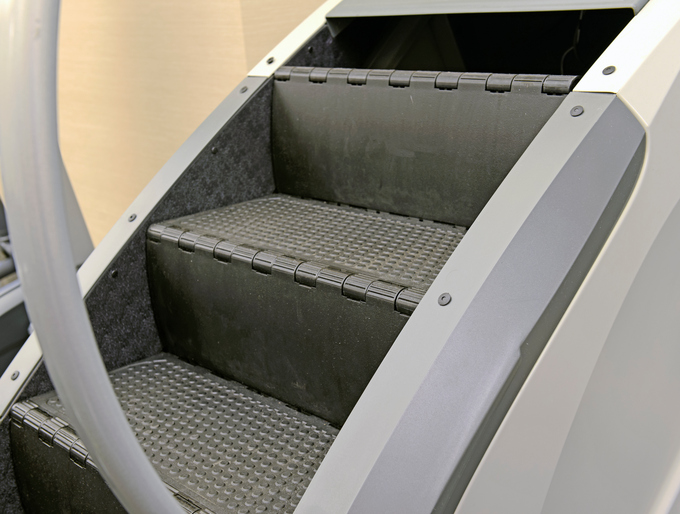
II. Side Step (The Hip and Outer Thigh Carver)
This movement is great for targeting the hips and quads, particularly the smaller stabilizing muscles often neglected during forward motion.
-
Execution:
-
Turn sideways on the machine (or stairs) and take a moment to get your bearings and stabilize yourself.
-
Hold the middle bar (on a StairMaster) or the side railing with your inside hand for balance. This is a light touch, not a grip for support.
-
When you’re ready, lift your inside foot to the next step.
-
Quickly move your outside foot to meet it on the same step. This is a smooth, lateral lift.
-
Then, lift your outside foot again to the next step, followed by the inside foot, and so on.
-
Complete the set, then switch sides to work the other leg and hip equally.
-
-
Focus Points:
-
Maintain a slight bend in your knees and keep your hips stable.
-
Feel the burn primarily in your outer glutes (gluteus medius) and the side of your quads.
-
RELATED: 5 Easy Ways To Get Your 10,000 Steps Daily
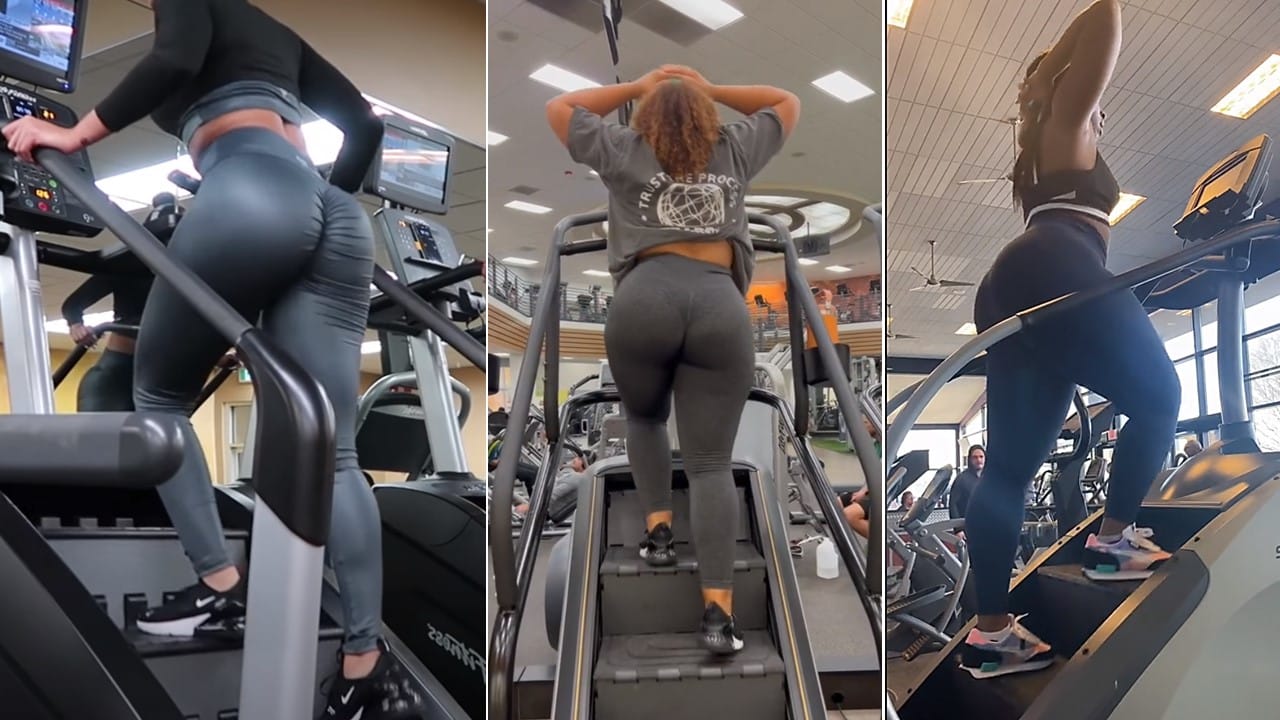
III. Reverse Climb (The Backwards Burn)
This challenging variation shifts the load distribution, which works the quads, hammies, and calves a little more intensely and uniquely compared to the forward climb.
-
Execution:
-
Hold the railings securely, but be mindful without leaning on them. Your hands are for stability and safety only.
-
Lower the speed of the machine (if applicable) until you’re moving pretty slowly. This is essential for safety and control.
-
Carefully turn around backward and begin to climb in reverse. You will be stepping down onto the moving stairs.
-
It is crucial to hold the railings in case you miss a step or slip. Take your time.
-
This one takes some getting used to, so be patient with yourself and go slowly. Focus on placing your foot securely before transferring your weight.
-
-
Focus Points:
-
Engage your core to help with balance.
-
The reverse motion places a heavy emphasis on the front of your legs, so concentrate on pressing through your whole foot to protect your knees.
-