
• Skip to main content
  • Skip to secondary menu
  • Skip to primary sidebar
  • Skip to footer
BlackDoctor.org
Where Wellness & Culture Connect

Where Wellness & Culture Connect

  • Conditions
  • Wellness
  • Lifestyle
  • Longevity
  • Clinical Trials
  • Resources
    • Generational Health
    • Top Blacks in Healthcare 2025
    • Hall Of Fame
    • Clinical Trials Resource Center
    • Obesity Resource Center
    • Cancer Resource Center
    • Wellness on the Yard
    • Immunocompromised Care
    • BDO Resource Library
  • Find A Doctor
  • BDO TV
Home / Health Conditions / Brain and Nervous System / Woman’s Runny Nose Was Actually Leaking Brain Fluid

Woman’s Runny Nose Was Actually Leaking Brain Fluid

(Photo credit: KETV.com)

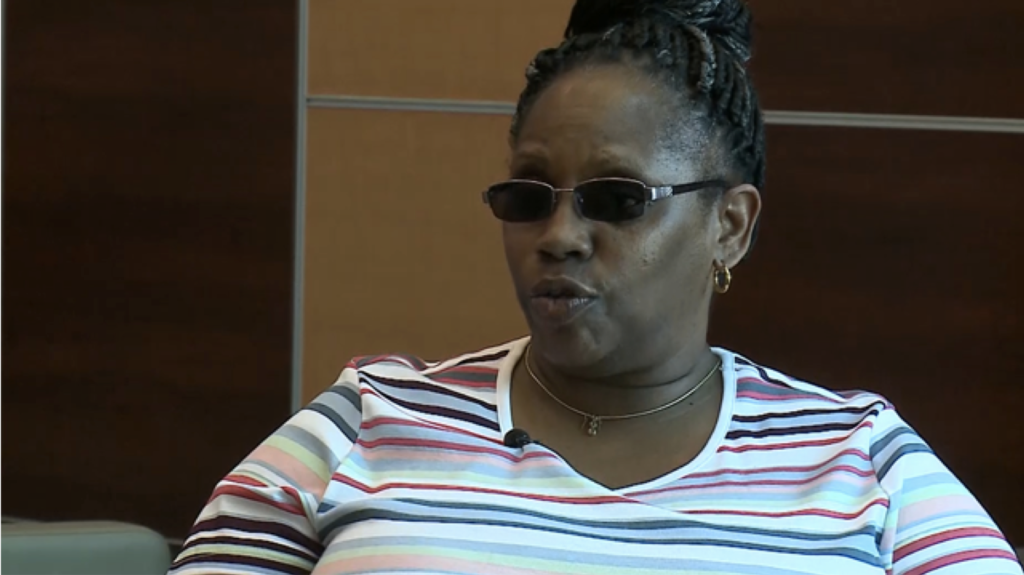
She thought it may have been allergies, or maybe even a bad cold, but for the past two years, 52-year-old Kendra Jackson of Omaha, Nebraska, had been living with cold/flu-like symptoms in a constant runny nose. That is, until she discovered her runny nose was actually fluid from inside her brain.

Yes, fluid leaking from her brain.

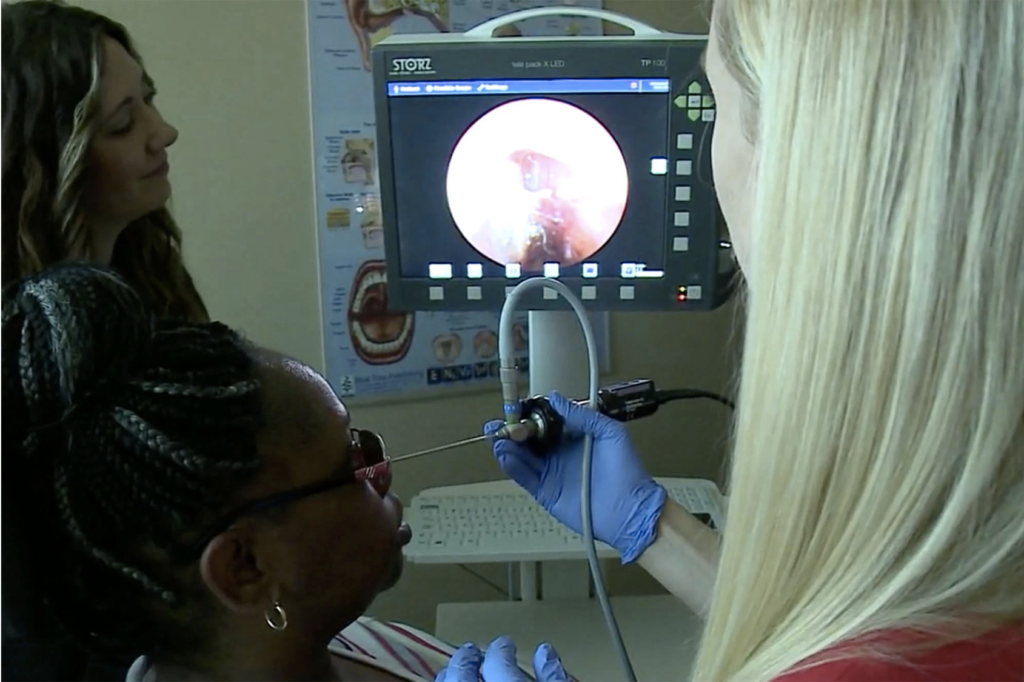
Doctors had dismissed it as allergies whenever Jackson would bring it up. In Spring 2018, physician assistant Carla Schneider from Nebraska Medicine in Omaha said it was not allergies at all. It was actually a cerebrospinal fluid leak caused by a hole in her skull. Cerebrospinal fluid acts as a protective layer to the brain. And Jackson was losing half a liter of the fluid a day.

You May Also Like

Psoriatic Arthritis Can Feel Beyond Your Control. Consider a Different Direction. Learn More Here. Psoriatic Arthritis Can Feel Beyond Your Control. Consider a Different Direction. Learn More Here.

(Photo credit: KETV.com)

Jackson described her runny nose like "a waterfall," telling KETV she always kept tissues with her. She also suffered from chronic headaches that made it nearly impossible to sleep. It began after she was in a car crash in 2013, when her face hit the dashboard.

“When it didn’t go away, I kept going back and forth to the doctors, and they prescribed every kind of medicine you can think of, and my nose just kept on running,” Jackson told CNN. It was reported that there were times Kendra would be suicidal because of the constant issue.

You May Also Like
Get GLP-1s Delivered to You As Low As $99/Month! Get GLP-1s Delivered to You As Low As $99/Month!

Jackson’s doctors believe the hole formed on the thin bone that separates the cranial and nasal cavities after she was involved in a serious car accident that caused her to hit her face on the dashboard. “She was rear-ended and had head trauma, so it’s certainly possible,” Dr. Christie Barnes, a rhinologist and Jackson’s lead surgeon, told CNN. “It may have caused a bit of a thin area there. Her symptoms actually started a little bit after (the accident), so for her, I think there’s probably a combination of both the trauma and the increased pressure.”

Cerebral spinal fluid leak results when the fluid around the brain leaks through a hole through the skull bone. This fluid can either drain from the ear or the nose, depending on where the skull bone is damaged.
(Photo credit: KETV.com)

Patients typically complain of clear, watery drainage usually from only one side of the nose or one ear. Drainage can increase with tilting the head forward or straining. Other symptoms can include...

... headaches, vision changes, and hearing loss.

CSF leaks can be separated into two groups. Spontaneous leaks occur without any known cause. Traumatic leaks are most commonly related to a history of head injury, surgery, or tumors.

(Photo credit: KETV.com)

Along with neurosurgeon Dan Surdell, Barnes surgically fixed the "potentially dangerous problem" several weeks ago, Nebraska Medicine released in a statement.

If left untreated, the leak could have caused a life-threatening infection, because bacteria from the nose could have passed to the brain.


By Dr. Phillip Gould | Published May 15, 2018

The Latest In Brain and Nervous System

lewy body dementia

Think It’s Alzheimer’s? It Could Be Lewy Body Dementia

Lewy Body Dementia (LBD) is a brain disease that’s often misunderstood. It’s actually the second most common type of progressive dementia after Alzheimer’s disease (AD). For patients and families, learning what LBD is, how it differs from other dementias, and read more about Think It’s Alzheimer’s? It Could Be Lewy Body Dementia

9 Serious Conditions Dizziness May Be a Symptom Of

Dizziness is one of those symptoms that almost everyone has experienced at some point. Maybe you stood up too quickly, skipped a meal, or spun around one too many times on a carnival ride. But while occasional dizziness might seem read more about 9 Serious Conditions Dizziness May Be a Symptom Of

Eating Like This Could be a Sign of Dementia

Signs of dementia, like forgetting important names and dates or seeing things that aren't there, are pretty common. But new studies show that how you eat your food could indicate whether or not you've got a condition called frontotemporal dementia. read more about Eating Like This Could be a Sign of Dementia

I Was Hit by a Car at 48 MPH, Here’s How I’m Redefining Disability

Despite nearly four in 10 U.S. adults reporting symptoms of a traumatic brain injury (TBI) at some point in their lives, a new national survey by the Brain Injury Association of America reveals a troubling truth: most Americans still don’t read more about I Was Hit by a Car at 48 MPH, Here’s How I’m Redefining Disability
autism therapy

Support That Looks Like Us: Therapies, Groups, and Programs for Black Families

When a Black child is diagnosed with autism, the journey doesn’t stop at the diagnosis. In many ways, that’s just the beginning. What comes next—autism therapy, support, community—can make all the difference. But here’s the truth: many therapies weren’t designed read more about Support That Looks Like Us: Therapies, Groups, and Programs for Black Families
autism in black children

Our Babies Aren’t ‘Bad’—Understanding Autism in Black Children

From Misbehavior to Misunderstood Let’s start with the truth: too many Black children—especially our Black boys—are being labeled as “bad,” “defiant,” or “disruptive” before they’re even given a chance to be understood. And when those behaviors are actually early signs read more about Our Babies Aren’t ‘Bad’—Understanding Autism in Black Children

Primary Sidebar

Subscribe to our newsletter

Icon

Caring for You, Too - Caregiver Workbook

1 file(s) 297 KB
Download

Trending Articles

7 Things You Should Never Do To Lose Weight!

lose weight

4 Ways To Boost Your Metabolism & Prevent Weight Gain During The Holidays

how to boost your metabolism

What Is Congestive Heart Failure?

congestive heart failure

5 Reasons Your Hair Texture Changes

hair texture

Top 10 Dirtiest Places in Your Home

dirtiest places in your home
Find a Culturally Sensitive Doctor

Footer

Where Wellness & Culture Connect

BDO is the world’s largest and most comprehensive online health resource specifically targeted to African Americans. BDO understands that the uniqueness of Black culture - our heritage and our traditions - plays a role in our health. BDO gives you access to innovative new approaches to the health information you need in everyday language so you can break through the disparities, gain control and live your life to its fullest.

Connect With Us

Resource Centers

  • Top Blacks in Healthcare
  • Clinical Trials
  • Wellness on the Yard
  • Cancer
  • Immunocompromised Care
  • About Us
  • Privacy Policy
  • Cookie Policy
  • Terms of Service
  • Careers
  • Advertise With Us
  • Advertising & Sponsorship Policy
  • Daily Vitamina
  • TBH

Copyright © 2025, Black Doctor, Inc. All rights reserved.